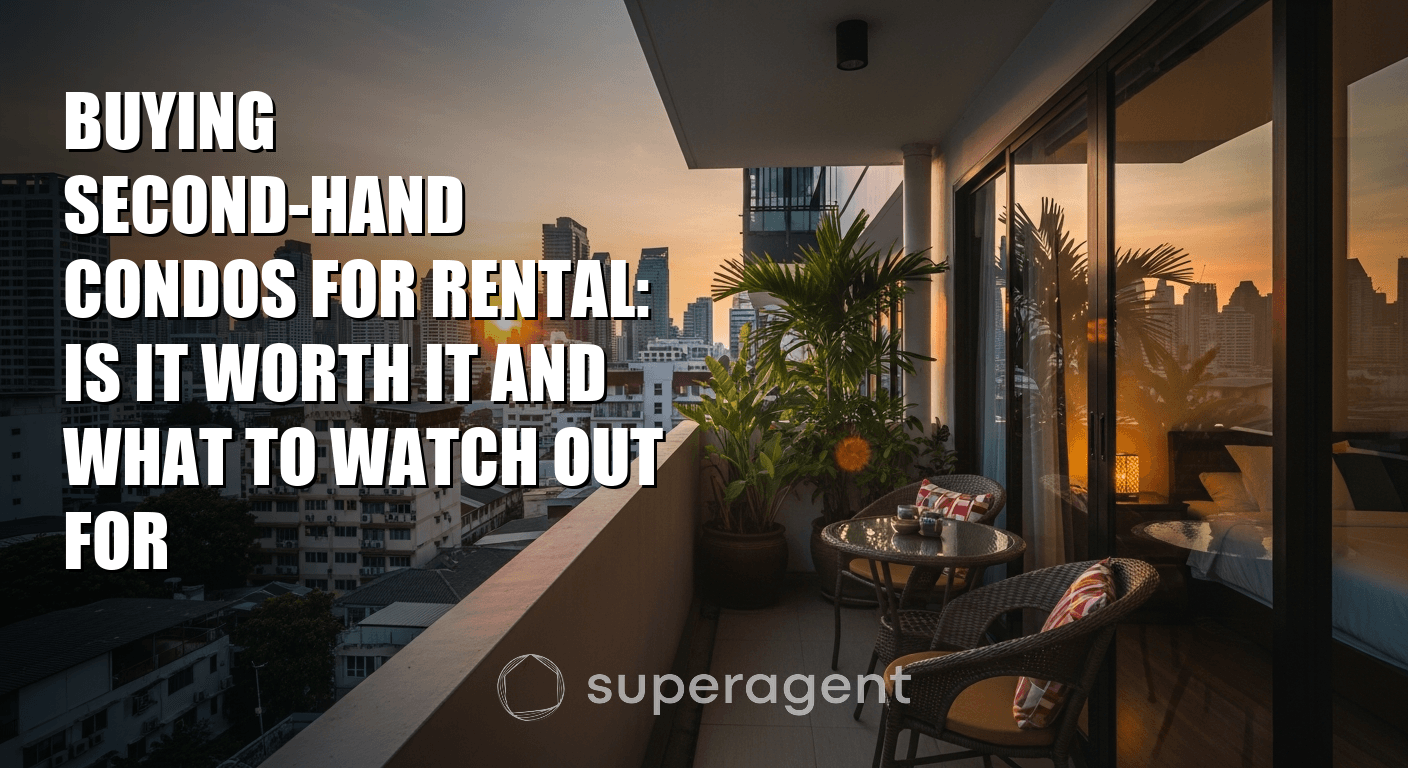
Buying Second-Hand Condos for Rental: Is It Worth It and What to Watch Out For
Guides
Buying Second-Hand Condos for Rental: Is It Worth It and What to Watch Out For
Learn if investing in pre-owned Bangkok condos for rental income makes financial sense.
Summary
ซื้อคอนโดมือสองปล่อยเช่า can be profitable, but requires careful analysis of condition, location, and tenant demand. Discover key risks and benefits.
Buying a second-hand condo to rent out in Bangkok sounds like a smart move on paper. You find a deal on a 5-year-old unit in a decent building, run the numbers, and it looks like you could pull in steady rental income every month. But here's the thing: second-hand condo rental investing in Bangkok is not as straightforward as it seems. The market is crowded, building regulations are stricter than ever, and tenant problems can turn your "passive income" into a headache fast. So is it worth it? That depends on what you actually know before you sign on the dotted line.
The Real Numbers: What Does a Second-Hand Condo Actually Rent For?
Let's be honest about the Bangkok rental market. If you buy a second-hand 1-bedroom condo for 2.5 to 3.2 million baht in a mid-tier building near BTS Phrom Phong or BTS Thong Lo, you're looking at rental income of around 18,000 to 25,000 baht per month. That sounds okay until you do the math. Your mortgage might be 15,000 to 18,000 baht monthly if you finance it over 20 years. Add in building maintenance fees (3,000 to 5,000 baht), property tax, insurance, and repairs, and your actual profit margin shrinks to almost nothing in year one.
A 2-bedroom unit in the same areas might rent for 28,000 to 40,000 baht, but it costs more to buy. Near Rama 9 or Bearing BTS, second-hand 2-bedrooms can run 3.8 to 4.5 million baht, which puts you in a similar squeeze. The real winner is location. A newer second-hand condo (built around 2015-2018) in a branded building with strong expat demand, like near BTS Ari or Sukhumvit Soi 49, will rent faster and at higher rates than an older unit in a building with maintenance issues.
According to DDproperty, average rental yields on second-hand Bangkok condos hover between 3 and 5 percent annually, depending on location. That's before your holding costs. For comparison, stock market returns in Thailand average 8 to 12 percent over longer periods. The condo route is slower and requires more active management.
Building Condition and Hidden Repair Costs: The Real Problem
When you buy second-hand, you don't get the warranty that comes with a new unit. I've seen investors buy what looked like a solid deal in a 12-year-old building, only to discover the building's water system was failing and the developer had skipped the structural inspection. Suddenly you're facing a special levy of 200,000 to 500,000 baht for building repairs, and your tenant is complaining about water pressure.
Before you buy, always request the building's maintenance fund audit. Thai law requires condominiums to keep 10 to 20 percent of their annual collection in a reserve fund, but not all buildings do. If the reserve is low and the building is aging (more than 10 years), expect a special assessment within five years. Buildings in areas like Sukhumvit near BTS Asok or BTS Nana, where units turn over quickly and older buildings are common, have a higher risk of this.
Also check the building's history with the Condo Office under the Land Department. Look for disputes between the owners' association and management company. A building with constant management changes is a red flag. You want your tenant to be in a stable, well-run building, or they will leave, and finding a replacement rental tenant in Bangkok takes 30 to 60 days minimum.
Tenant Issues and Legal Headaches You Cannot Ignore
This is where things get real. Thailand's rental laws favor the tenant more than many landlords expect. If you rent to someone on a verbal agreement (common in Bangkok), removing them without a formal termination letter is legally risky. Even with a written contract, evicting a tenant who stops paying usually takes three to six months and requires a court order.
I know a Swedish investor who rented his unit near BTS Bearing to a tenant for two years. The tenant stopped paying rent after month 18, claiming the air conditioner was broken. The investor had to hire a lawyer, file at the district court (Amphoe), wait for multiple hearings, and eventually get a court judgment. By the time he regained the unit, six months had passed and it needed 40,000 baht in repairs. His annual rental income for that year was effectively zero.
Protect yourself: always use a written rental contract in Thai and English, require a security deposit (one to two months' rent, standard), and do background checks on tenants through employment verification. Some investors use property management companies like Superagent to handle tenant screening and rent collection, which costs 8 to 10 percent of rent but removes a lot of headache.
Tax and Legal Obligations: What You Owe the Thai Government
Rental income in Thailand is taxable. Personal income tax on rental earnings runs 5 to 37 percent depending on your total income, and you must file annually with the Thai Revenue Department. Many foreign investors skip this or underreport, which is a mistake. A tax audit can result in penalties, back taxes, and fines of 100 to 200 percent of unpaid tax.
You also need to hold a lease agreement registered at the Land Department office (Khet) for legal rental periods over three years. Registration costs about 1 percent of the annual rental value, but it provides legal proof. The Thai Revenue Department now cross-checks rental registrations with income filings, so they will catch mismatches.
If you're a foreigner, your visa status matters. If you're on a Non-Immigrant B visa (work permit) or Thai Elite, you can own and rent one condo. If you're on a tourist visa or retirement visa, you can technically own the property, but the government is tightening rules on foreign ownership and rental income reporting. Always consult a Thai tax accountant before you buy if you're not sure of your status.
Comparing Locations: Where Second-Hand Condo Rental Actually Works
- Sukhumvit Soi 49 (BTS Thong Lo): 2.8 to 3.3M THB | 22,000 to 28,000 THB | 3.5 to 4.2% | High (expat professionals)
- Sukhumvit Soi 33 (BTS Phrom Phong): 2.6 to 3.1M THB | 20,000 to 26,000 THB | 3.2 to 4.0% | High (mixed tenant base)
- Rama 9 (near MRT Rama 9): 2.0 to 2.6M THB | 16,000 to 22,000 THB | 3.8 to 4.5% | Moderate (improving)
- Bearing (BTS Bearing): 1.9 to 2.4M THB | 15,000 to 20,000 THB | 3.5 to 4.2% | Moderate (growing)
- Ari (BTS Ari): 2.2 to 2.9M THB | 18,000 to 24,000 THB | 3.4 to 4.1% | High (young professionals)
The best locations for second-hand condo rentals are areas with BTS or MRT access, proximity to embassies or international schools, and a mix of expat and Thai tenants. Sukhumvit corridor near Thong Lo and Phrom Phong consistently attracts renters, but you'll pay full price for that privilege. The yield is marginal. Better deals exist further out near Rama 9, Bearing, or Ari if you can accept 30 to 60-day vacancy periods between tenants.
The Bottom Line: When It Makes Sense to Buy Second-Hand
Second-hand condo rental investing works if you meet three conditions. First, you have cash reserves to cover at least six months of payments if the unit sits vacant. Second, you're buying in a location with high expat concentration and low vacancy rates, like Sukhumvit near BTS Phrom Phong or near international schools. Third, you have the time or budget to use a professional property manager to handle tenant screening, rent collection, and maintenance coordination.
If you're looking at a 3 percent yield hoping to flip it in five years or cash out quickly, don't buy. If you're buying purely for passive income without management support, reconsider. If you're buying because you believe the Bangkok rental market will explode, remember that supply has grown faster than demand in recent years. The units sitting empty in new developments near MRT Bang Na and MRT Hua Mark prove the market is tightening for average properties.
The smart move: use tools like Superagent to study actual rental rates in buildings you're considering, get at least three comparable sales for your target building, and always hire an independent inspector. Bangkok's condo market is efficient but not transparent. The sellers who know the market best have already bought the good deals. What you're looking at is what's left over. That doesn't mean it's bad, but it means you need to know exactly what you're buying and why.
If you're serious about investing, start by renting a unit in the building you want to buy. Live there for three to six months. Talk to other renters. Watch the tenant turnover. See how management responds to complaints. Then decide. And when you're ready to list your unit or find your first rental property, Superagent makes it simple to connect with vetted tenants in Bangkok who actually pay on time.
Buying a second-hand condo to rent out in Bangkok sounds like a smart move on paper. You find a deal on a 5-year-old unit in a decent building, run the numbers, and it looks like you could pull in steady rental income every month. But here's the thing: second-hand condo rental investing in Bangkok is not as straightforward as it seems. The market is crowded, building regulations are stricter than ever, and tenant problems can turn your "passive income" into a headache fast. So is it worth it? That depends on what you actually know before you sign on the dotted line.
The Real Numbers: What Does a Second-Hand Condo Actually Rent For?
Let's be honest about the Bangkok rental market. If you buy a second-hand 1-bedroom condo for 2.5 to 3.2 million baht in a mid-tier building near BTS Phrom Phong or BTS Thong Lo, you're looking at rental income of around 18,000 to 25,000 baht per month. That sounds okay until you do the math. Your mortgage might be 15,000 to 18,000 baht monthly if you finance it over 20 years. Add in building maintenance fees (3,000 to 5,000 baht), property tax, insurance, and repairs, and your actual profit margin shrinks to almost nothing in year one.
A 2-bedroom unit in the same areas might rent for 28,000 to 40,000 baht, but it costs more to buy. Near Rama 9 or Bearing BTS, second-hand 2-bedrooms can run 3.8 to 4.5 million baht, which puts you in a similar squeeze. The real winner is location. A newer second-hand condo (built around 2015-2018) in a branded building with strong expat demand, like near BTS Ari or Sukhumvit Soi 49, will rent faster and at higher rates than an older unit in a building with maintenance issues.
According to DDproperty, average rental yields on second-hand Bangkok condos hover between 3 and 5 percent annually, depending on location. That's before your holding costs. For comparison, stock market returns in Thailand average 8 to 12 percent over longer periods. The condo route is slower and requires more active management.
Building Condition and Hidden Repair Costs: The Real Problem
When you buy second-hand, you don't get the warranty that comes with a new unit. I've seen investors buy what looked like a solid deal in a 12-year-old building, only to discover the building's water system was failing and the developer had skipped the structural inspection. Suddenly you're facing a special levy of 200,000 to 500,000 baht for building repairs, and your tenant is complaining about water pressure.
Before you buy, always request the building's maintenance fund audit. Thai law requires condominiums to keep 10 to 20 percent of their annual collection in a reserve fund, but not all buildings do. If the reserve is low and the building is aging (more than 10 years), expect a special assessment within five years. Buildings in areas like Sukhumvit near BTS Asok or BTS Nana, where units turn over quickly and older buildings are common, have a higher risk of this.
Also check the building's history with the Condo Office under the Land Department. Look for disputes between the owners' association and management company. A building with constant management changes is a red flag. You want your tenant to be in a stable, well-run building, or they will leave, and finding a replacement rental tenant in Bangkok takes 30 to 60 days minimum.
Tenant Issues and Legal Headaches You Cannot Ignore
This is where things get real. Thailand's rental laws favor the tenant more than many landlords expect. If you rent to someone on a verbal agreement (common in Bangkok), removing them without a formal termination letter is legally risky. Even with a written contract, evicting a tenant who stops paying usually takes three to six months and requires a court order.
I know a Swedish investor who rented his unit near BTS Bearing to a tenant for two years. The tenant stopped paying rent after month 18, claiming the air conditioner was broken. The investor had to hire a lawyer, file at the district court (Amphoe), wait for multiple hearings, and eventually get a court judgment. By the time he regained the unit, six months had passed and it needed 40,000 baht in repairs. His annual rental income for that year was effectively zero.
Protect yourself: always use a written rental contract in Thai and English, require a security deposit (one to two months' rent, standard), and do background checks on tenants through employment verification. Some investors use property management companies like Superagent to handle tenant screening and rent collection, which costs 8 to 10 percent of rent but removes a lot of headache.
Tax and Legal Obligations: What You Owe the Thai Government
Rental income in Thailand is taxable. Personal income tax on rental earnings runs 5 to 37 percent depending on your total income, and you must file annually with the Thai Revenue Department. Many foreign investors skip this or underreport, which is a mistake. A tax audit can result in penalties, back taxes, and fines of 100 to 200 percent of unpaid tax.
You also need to hold a lease agreement registered at the Land Department office (Khet) for legal rental periods over three years. Registration costs about 1 percent of the annual rental value, but it provides legal proof. The Thai Revenue Department now cross-checks rental registrations with income filings, so they will catch mismatches.
Talk to us about renting
Share your details and keep reading — we’ll get back to you.
If you're a foreigner, your visa status matters. If you're on a Non-Immigrant B visa (work permit) or Thai Elite, you can own and rent one condo. If you're on a tourist visa or retirement visa, you can technically own the property, but the government is tightening rules on foreign ownership and rental income reporting. Always consult a Thai tax accountant before you buy if you're not sure of your status.
Comparing Locations: Where Second-Hand Condo Rental Actually Works
- Sukhumvit Soi 49 (BTS Thong Lo): 2.8 to 3.3M THB | 22,000 to 28,000 THB | 3.5 to 4.2% | High (expat professionals)
- Sukhumvit Soi 33 (BTS Phrom Phong): 2.6 to 3.1M THB | 20,000 to 26,000 THB | 3.2 to 4.0% | High (mixed tenant base)
- Rama 9 (near MRT Rama 9): 2.0 to 2.6M THB | 16,000 to 22,000 THB | 3.8 to 4.5% | Moderate (improving)
- Bearing (BTS Bearing): 1.9 to 2.4M THB | 15,000 to 20,000 THB | 3.5 to 4.2% | Moderate (growing)
- Ari (BTS Ari): 2.2 to 2.9M THB | 18,000 to 24,000 THB | 3.4 to 4.1% | High (young professionals)
The best locations for second-hand condo rentals are areas with BTS or MRT access, proximity to embassies or international schools, and a mix of expat and Thai tenants. Sukhumvit corridor near Thong Lo and Phrom Phong consistently attracts renters, but you'll pay full price for that privilege. The yield is marginal. Better deals exist further out near Rama 9, Bearing, or Ari if you can accept 30 to 60-day vacancy periods between tenants.
The Bottom Line: When It Makes Sense to Buy Second-Hand
Second-hand condo rental investing works if you meet three conditions. First, you have cash reserves to cover at least six months of payments if the unit sits vacant. Second, you're buying in a location with high expat concentration and low vacancy rates, like Sukhumvit near BTS Phrom Phong or near international schools. Third, you have the time or budget to use a professional property manager to handle tenant screening, rent collection, and maintenance coordination.
If you're looking at a 3 percent yield hoping to flip it in five years or cash out quickly, don't buy. If you're buying purely for passive income without management support, reconsider. If you're buying because you believe the Bangkok rental market will explode, remember that supply has grown faster than demand in recent years. The units sitting empty in new developments near MRT Bang Na and MRT Hua Mark prove the market is tightening for average properties.
The smart move: use tools like Superagent to study actual rental rates in buildings you're considering, get at least three comparable sales for your target building, and always hire an independent inspector. Bangkok's condo market is efficient but not transparent. The sellers who know the market best have already bought the good deals. What you're looking at is what's left over. That doesn't mean it's bad, but it means you need to know exactly what you're buying and why.
If you're serious about investing, start by renting a unit in the building you want to buy. Live there for three to six months. Talk to other renters. Watch the tenant turnover. See how management responds to complaints. Then decide. And when you're ready to list your unit or find your first rental property, Superagent makes it simple to connect with vetted tenants in Bangkok who actually pay on time.
Share this article
Properties you may like
![[For Rent] CONDO I Aguston Sukhumvit 22 I Pet Friendly I 2 Beds I 2 Baths I Rent 55,000THB/mo](/_next/image?url=https%3A%2F%2Fstorage.googleapis.com%2Fsuperagent-web%2Fattachments%2Flistings%2F2266%2Fd3afcd25-6b79-46cb-9f1f-396acdc3dd10-955-3.jpg&w=3840&q=75)
฿55,000
2 Bed295 sqm
[For Rent] CONDO I Aguston Sukhumvit 22 I Pet Friendly I 2 Beds I 2 Baths I Rent 55,000THB/mo
Phrom Phong
Condo![[For Rent] CONDO I SUPALAI PLACE Sukhumvit 39 I 2 Beds I 2 Baths (1 Jacuzzi) I 55,555THB/mo](/_next/image?url=https%3A%2F%2Fstorage.googleapis.com%2Fsuperagent-web%2Fattachments%2Flistings%2F6743%2Fba530743-48b9-4ac6-92d3-c2247e743cf6-01-supalai-place-skv39-2b-link-heaven.jpg&w=3840&q=75)
฿55,555
2 Bed2142 sqm
[For Rent] CONDO I SUPALAI PLACE Sukhumvit 39 I 2 Beds I 2 Baths (1 Jacuzzi) I 55,555THB/mo
Phrom Phong
Condo![[For Rent] CONDO I Maru Ekkamai 2 I Pet friendly I 2 Beds I 2 Baths I 68,000 THB/mo](/_next/image?url=https%3A%2F%2Fstorage.googleapis.com%2Fsuperagent-web%2Fattachments%2Flistings%2F6602%2F9f1d8f71-ee43-435f-9a44-da16c4092c92-968-1.jpg&w=3840&q=75)
฿68,000
2 Bed360 sqm
[For Rent] CONDO I Maru Ekkamai 2 I Pet friendly I 2 Beds I 2 Baths I 68,000 THB/mo
Ekkamai
Condo![[For Rent] CONDO I Noble State 39 I 2 Beds I 2 Baths I 63,000THB/mo](/_next/image?url=https%3A%2F%2Fstorage.googleapis.com%2Fsuperagent-web%2Fattachments%2Flistings%2F2237%2F60eb58f3-eae5-41ed-a80b-406e004f05d8-940-1.jpg&w=3840&q=75)
฿63,000
2 Bed260 sqm
[For Rent] CONDO I Noble State 39 I 2 Beds I 2 Baths I 63,000THB/mo
Phrom Phong
Condo![[For Rent] CONDO I Rhythm Sukhumvit 36-38 I 2 Beds I 2 Baths I 38,999THB/mo](/_next/image?url=https%3A%2F%2Fstorage.googleapis.com%2Fsuperagent-web%2Fattachments%2Flistings%2F1788%2F942a0215-4128-4c2c-a064-f607e84e7aa4-656-2.jpg&w=3840&q=75)
฿38,999
2 Bed256 sqm
[For Rent] CONDO I Rhythm Sukhumvit 36-38 I 2 Beds I 2 Baths I 38,999THB/mo
Thonglor
Condo![[For Rent] CONDO I CLOUD Thonglor-Phetchaburi I 1 Bed I 1 Bath I 22,500THB/mo](/_next/image?url=https%3A%2F%2Fstorage.googleapis.com%2Fsuperagent-web%2Fattachments%2Flistings%2F6742%2F6cef5361-0dac-4dba-98f1-b0d187559c84-1118-1.jpg&w=3840&q=75)
฿22,500
1 Bed132 sqm
[For Rent] CONDO I CLOUD Thonglor-Phetchaburi I 1 Bed I 1 Bath I 22,500THB/mo
Thonglor
Condo![[For Rent] CONDO I City Smart Sukhumvit 18 I 3 Beds I 3 Baths I 65,000mo/THB](/_next/image?url=https%3A%2F%2Fstorage.googleapis.com%2Fsuperagent-web%2Fattachments%2Flistings%2F6741%2Fd371c89d-a913-42c4-a673-e540afae4f46-1116-1.jpg&w=3840&q=75)
฿65,000
3 Bed3125 sqm
[For Rent] CONDO I City Smart Sukhumvit 18 I 3 Beds I 3 Baths I 65,000mo/THB
Condo![[For Rent] CONDO I The Coast Bangkok I 1 Bed I 1 Bath I 20,000mo/THB](/_next/image?url=https%3A%2F%2Fstorage.googleapis.com%2Fsuperagent-web%2Fattachments%2Flistings%2F6740%2F498477ce-4ffa-4e4c-ab08-0e565d9c4bbe-1115-3.jpg&w=3840&q=75)
฿20,000
1 Bed146 sqm
[For Rent] CONDO I The Coast Bangkok I 1 Bed I 1 Bath I 20,000mo/THB
Bang Na
Condo![[For Rent] CONDO I IDEO Sukhumvit-RAMA 4 I 2 Beds I 2 Baths I 55,000mo/THB](/_next/image?url=https%3A%2F%2Fstorage.googleapis.com%2Fsuperagent-web%2Fattachments%2Flistings%2F6739%2F15df221d-5b8e-497c-b7ce-a6b9b6412cab-1113-1.jpg&w=3840&q=75)
฿55,000
2 Bed265 sqm
[For Rent] CONDO I IDEO Sukhumvit-RAMA 4 I 2 Beds I 2 Baths I 55,000mo/THB
Phra Khanong
Condo![[For Rent] CONDO I Downtown 49 I Pet Friendly I 1 Bed I 1 Bath I 23,000mo/THB](/_next/image?url=https%3A%2F%2Fstorage.googleapis.com%2Fsuperagent-web%2Fattachments%2Flistings%2F6738%2F11cf2ffe-1f01-4ccc-991c-2ad608f1ba73-1112-1.jpg&w=3840&q=75)
฿23,000
1 Bed135 sqm
[For Rent] CONDO I Downtown 49 I Pet Friendly I 1 Bed I 1 Bath I 23,000mo/THB
Thonglor
CondoMore like this
 In Guides · Superagent EditorialHidden Costs of Renting a Condo in Bangkok Nobody Warns You AboutBangkok condo rent looks affordable until month one hits. Here are the real costs beyond the headline figure that catch most renters off guard.25 May 20261 min read
 In Guides · Superagent EditorialWhat a Long-Vacant Bangkok Condo Unit Is Actually Telling YouA Bangkok condo vacant for months signals overpricing, landlord issues, or real problems. Here is how to read the signs.25 May 20261 min read
 In Guides · Superagent EditorialRed Flags in a Bangkok Rental Contract to Watch Out ForBangkok rental contracts often hide risky clauses. Here are the red flags every tenant must catch before signing any lease.25 May 20261 min read
 In Guides · Superagent EditorialWorking Online from a Condo: How to Choose the Perfect Room for ProductivityLearn how to choose the best condo room for working online with tips on lighting, noise, and furniture setup to maximize productivity.9 May 20261 min read