Condo Building Fund Fees: How Much Do Owners Pay?
Guides
Condo Building Fund Fees: How Much Do Owners Pay?
Understanding condo maintenance fees and what owners should budget annually
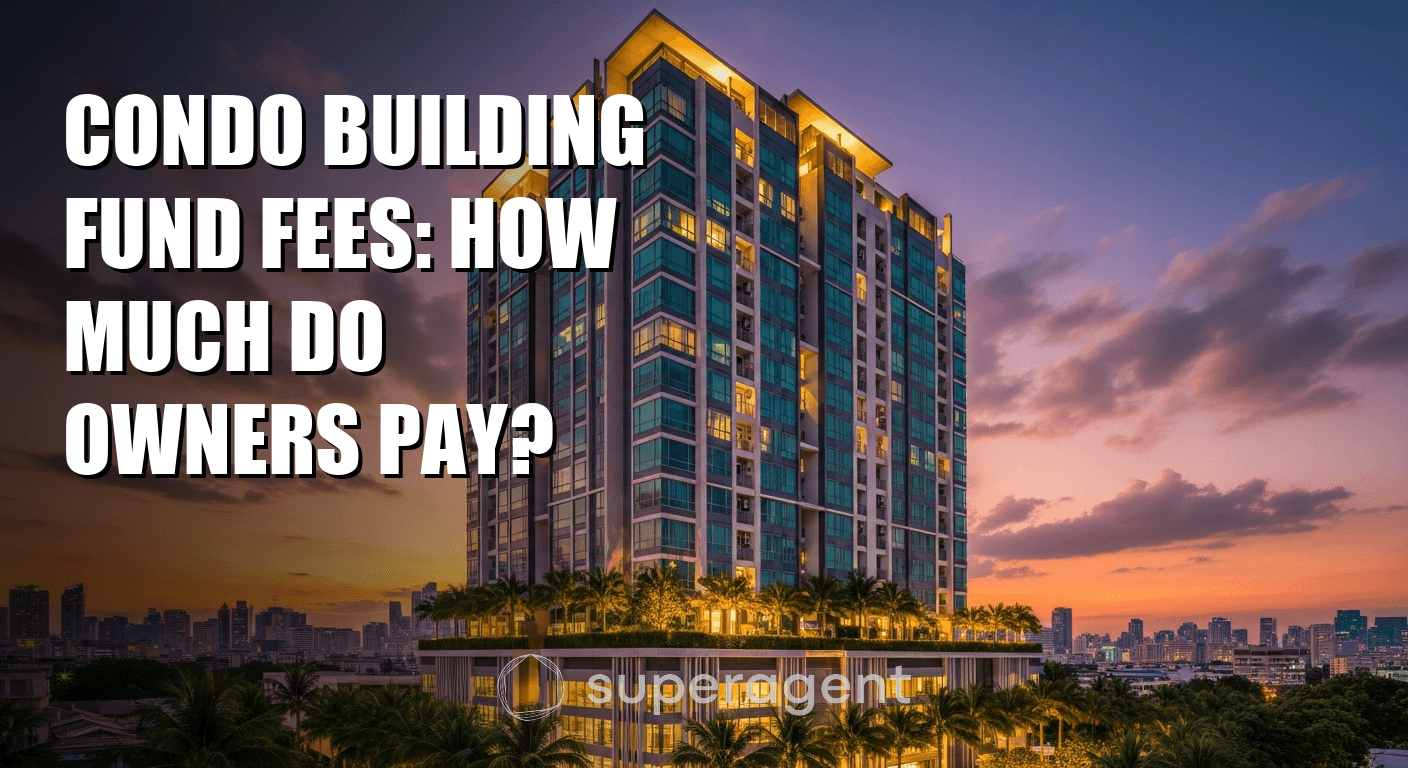
Summary
ค่าธรรมเนียมนิติบุคคลคอนโด covers essential building maintenance. Learn typical costs, what's included, and how to manage your condo expenses effectively.
If you have ever owned a condo in Bangkok, you have probably stared at that line item on your monthly bill and wondered exactly what you are paying for. Condo association fees, or what we call building juristic person fees in Thailand, are one of those costs that catch a lot of owners off guard. You buy a 2.5 million baht unit in a nice tower along Sukhumvit, and suddenly there is a bill for 4,000 to 8,000 baht every month just to keep the lights on in the lobby.
The truth is, these fees are not optional, they are not flexible, and they matter a lot when you are figuring out the real cost of owning property in Bangkok. Whether you own your condo outright, rent it out to tenants, or live there yourself, understanding what these fees cover and how they are calculated is essential. This guide breaks down exactly what Bangkok condo owners need to know about juristic person fees, what they typically run, and how they affect your rental income if you are in the market to earn from your unit.
What Exactly Is a Juristic Person Fee?
A juristic person fee is the monthly charge that every condo unit owner in Thailand must pay to the building's management and maintenance fund. Think of it as the price of living in a managed community. The money goes toward common areas, security, elevator maintenance, water systems, insurance, staff salaries, and reserve funds for major repairs.
The juristic person, or "niti buk khon" in Thai, is technically the legal entity that owns and operates the building on behalf of all unit owners. When you buy a condo, you automatically become part of this association. You do not get to opt out. If the building needs the money, you pay your share, period.
In Bangkok condos, this structure is standard across nearly every high-rise, mid-rise, and even some low-rise developments. From a modest 500-unit tower in Ari to a luxury complex with 1,000 units near Chidlom BTS, the concept is the same. You own your unit, but you share responsibility for everything outside it.
How Much Do You Actually Pay Each Month?
The amount varies wildly depending on the building, the location, and the amenities offered. A basic, older condo in a less central area might charge 1,500 to 2,500 baht per month. A mid-range building in a good location like Phrom Phong or On Nut typically runs 3,500 to 6,000 baht. A luxury high-rise with a gym, pool, concierge, and frequent renovations can hit 8,000 to 15,000 baht or even higher per month.
Here is a real example. A 2-bedroom unit in a 10-year-old building on Soi 23, Sukhumvit (near Asoke BTS) might have a fee of 4,500 baht per month. The building has a small pool, gym, 24-hour security, lobby lounge, parking, and basic maintenance staff. Same size unit in a newer, fancier building three blocks away with rooftop facilities and a larger fitness center could run 7,500 baht.
According to data from property market reports, the average juristic person fee in Bangkok's prime rental areas ranges from 3,500 to 6,500 baht per month for units that actually attract quality tenants. This is important if you are renting out your condo.
What Does the Fee Actually Cover?
Your money goes to several specific areas, and most buildings break this down in their annual budget report (which the juristic person committee should provide, even if you have to ask).
Building maintenance accounts for a big chunk. This covers regular servicing of elevators, water pressure systems, electrical systems, roof repairs, and common area upkeep. Security is another major line item, whether that is guards, CCTV systems, access card readers, or all of the above. Staff salaries for cleaners, maintenance workers, and office administrators come out of these fees.
Utilities in common areas, insurance for the building structure, and depreciation reserves for future major repairs also eat into the fee. A well-run building will set aside money every month for eventual elevator replacement, painting the exterior, or major plumbing work. A poorly-managed building will ignore this and then hit owners with a special assessment later when something breaks down.
Some luxury buildings include additional services like a concierge, valet parking, or landscaping. These will push your fee higher. A building near Emporium BTS with premium services might charge 10,000 to 12,000 baht because owners expect that level of service.
Who Pays This Fee If You Rent Out Your Unit?
This is where it gets tricky for landlords. The juristic person fee is the responsibility of the registered owner. That is you, the person on the deed. Your tenant does not pay it directly to the building management, you do.
However, most landlords in Bangkok factor this fee into the rent they charge. If the building fee is 5,000 baht and the market rent is 25,000 baht, you set the rent at 25,000 to 30,000 baht and absorb the fee as part of your ownership cost. Alternatively, some landlords try to pass it on to the tenant, making the rent 30,000 baht and telling the tenant the fee is extra. This is less common and harder to enforce, since the bill officially comes to you.
When you are shopping around to rent your unit on Superagent or other platforms, always calculate net income after the building fee. A unit advertised at 30,000 baht with a 5,000 baht fee actually generates only 25,000 baht of profit for you if you absorb the cost.
How Is the Fee Calculated and Can You Negotiate It?
The calculation is straightforward. The building's annual budget is divided by the number of units and by 12 months. So if a 200-unit building spends 12 million baht per year, that is 60,000 baht per unit annually, or 5,000 baht per month.
In theory, you cannot negotiate your individual fee. It is the same for every unit regardless of size, floor, or owner wealth. That said, larger units (penthouse-sized) or units with multiple parking spots sometimes have a slightly higher fee to reflect extra services or parking spot maintenance. But there is no haggling.
What you can do is review the budget and push back at the annual owner meeting if you think fees are too high or mismanaged. You have voting rights as an owner. If the committee is spending too much on unnecessary items or not collecting enough reserve funds, you can voice this and vote accordingly.
Buildings in good standing with transparent accounting tend to have more stable fees that grow slowly year to year. Buildings with poor management often see sudden fee jumps when major repairs come due and there is no reserve fund to cover them. This is one reason experienced Bangkok property investors always ask for the past three years of building budgets before buying a condo.
Comparing Fees Across Bangkok's Popular Neighborhoods
The range of juristic person fees varies significantly by location. Here is a snapshot of typical ranges you will encounter when shopping for condos to own or rent out across Bangkok's main expat and professional hubs.
- Sukhumvit 15-20 (Asoke BTS): Mid-range, 10-15 years old | 4,000 to 5,500 | 25,000 to 35,000
- Phrom Phong (Phrom Phong BTS): Modern high-rise, luxury | 6,500 to 9,000 | 35,000 to 50,000
- Ari (Ari BTS): Mixed, boutique and mid-range | 2,500 to 4,500 | 18,000 to 28,000
- On Nut (On Nut BTS): Newer, mixed amenities | 3,500 to 5,500 | 20,000 to 30,000
- Sathorn (Sala Daeng BTS): Modern, premium | 7,000 to 10,000 | 30,000 to 45,000
- Thonglor (Thonglor BTS): Luxury, new | 8,000 to 12,000 | 35,000 to 55,000
This table gives you a real feel for what different areas cost. Notice that Phrom Phong and Thonglor fees are higher, but rents are also higher. Ari is more affordable on both sides. The fee-to-rent ratio is roughly similar across these neighborhoods, which makes sense. Property investors will not buy units where fees eat up too much of rental income.
What Happens If You Do Not Pay?
Do not skip your juristic person fees. Unlike water or electric bills, which can be cut off if unpaid, the condo association can place a lien on your unit. If you keep not paying, they can eventually force a sale of the property to recover the debt.
The juristic person committee has legal backing to collect. They send payment reminders, then formal notices, then escalate to a lawyer. Once a lien is filed with the Land Department, your unit cannot be sold or refinanced until the debt is cleared. This has happened to real owners who ignored the bills thinking it was optional. It is not.
If you are renting out your unit and a tenant stops paying rent, that is between you and the tenant. The building fee still hits your name and bank account. You cannot tell the management "my tenant did not pay me so I am not paying you." You are legally responsible.
How to Verify and Reduce Your Building Fees
If you own a condo and think your fees are too high, start by requesting a detailed budget breakdown from the juristic person committee. You have a legal right to this information. Review it carefully. Compare it to what similar buildings in the area charge.
Attend the annual owner meeting (most buildings hold these once a year). Ask questions about budget line items, staff salaries, and reserve fund policies. If a large chunk of the budget goes to vendor contracts, ask if those contracts are competitive or if they were negotiated properly.
Some buildings allow owners to vote on cost reduction measures, like reducing frequency of common area cleaning, renegotiating security contracts, or deferring non-essential repairs. You cannot eliminate the fee, but you can influence how it is spent.
For prospective condo buyers in Bangkok, always inspect the building's financial statements and fee history before signing. A building with rising fees that keeps borrowing or running deficits is a red flag. A building with stable fees and adequate reserves is a safer investment.
The bottom line is this. Your juristic person fee is not going away, and it is not negotiable on an individual basis. What you can control is buying into a well-managed building with transparent accounting, realistic fees, and good maintenance. When you are evaluating a condo to buy or rent out, factor the building fee into your total costs. A slightly lower purchase price at a building with higher fees might actually cost you more in the long run.
If you are searching for condo rentals in Bangkok or looking to understand the real costs of properties before you buy, Superagent can help you compare buildings, locations, and actual expenses. Check out superagent.co to see how different neighborhoods and buildings stack up.
If you have ever owned a condo in Bangkok, you have probably stared at that line item on your monthly bill and wondered exactly what you are paying for. Condo association fees, or what we call building juristic person fees in Thailand, are one of those costs that catch a lot of owners off guard. You buy a 2.5 million baht unit in a nice tower along Sukhumvit, and suddenly there is a bill for 4,000 to 8,000 baht every month just to keep the lights on in the lobby.
The truth is, these fees are not optional, they are not flexible, and they matter a lot when you are figuring out the real cost of owning property in Bangkok. Whether you own your condo outright, rent it out to tenants, or live there yourself, understanding what these fees cover and how they are calculated is essential. This guide breaks down exactly what Bangkok condo owners need to know about juristic person fees, what they typically run, and how they affect your rental income if you are in the market to earn from your unit.
What Exactly Is a Juristic Person Fee?
A juristic person fee is the monthly charge that every condo unit owner in Thailand must pay to the building's management and maintenance fund. Think of it as the price of living in a managed community. The money goes toward common areas, security, elevator maintenance, water systems, insurance, staff salaries, and reserve funds for major repairs.
The juristic person, or "niti buk khon" in Thai, is technically the legal entity that owns and operates the building on behalf of all unit owners. When you buy a condo, you automatically become part of this association. You do not get to opt out. If the building needs the money, you pay your share, period.
In Bangkok condos, this structure is standard across nearly every high-rise, mid-rise, and even some low-rise developments. From a modest 500-unit tower in Ari to a luxury complex with 1,000 units near Chidlom BTS, the concept is the same. You own your unit, but you share responsibility for everything outside it.
How Much Do You Actually Pay Each Month?
The amount varies wildly depending on the building, the location, and the amenities offered. A basic, older condo in a less central area might charge 1,500 to 2,500 baht per month. A mid-range building in a good location like Phrom Phong or On Nut typically runs 3,500 to 6,000 baht. A luxury high-rise with a gym, pool, concierge, and frequent renovations can hit 8,000 to 15,000 baht or even higher per month.
Here is a real example. A 2-bedroom unit in a 10-year-old building on Soi 23, Sukhumvit (near Asoke BTS) might have a fee of 4,500 baht per month. The building has a small pool, gym, 24-hour security, lobby lounge, parking, and basic maintenance staff. Same size unit in a newer, fancier building three blocks away with rooftop facilities and a larger fitness center could run 7,500 baht.
According to data from property market reports, the average juristic person fee in Bangkok's prime rental areas ranges from 3,500 to 6,500 baht per month for units that actually attract quality tenants. This is important if you are renting out your condo.
What Does the Fee Actually Cover?
Your money goes to several specific areas, and most buildings break this down in their annual budget report (which the juristic person committee should provide, even if you have to ask).
Building maintenance accounts for a big chunk. This covers regular servicing of elevators, water pressure systems, electrical systems, roof repairs, and common area upkeep. Security is another major line item, whether that is guards, CCTV systems, access card readers, or all of the above. Staff salaries for cleaners, maintenance workers, and office administrators come out of these fees.
Utilities in common areas, insurance for the building structure, and depreciation reserves for future major repairs also eat into the fee. A well-run building will set aside money every month for eventual elevator replacement, painting the exterior, or major plumbing work. A poorly-managed building will ignore this and then hit owners with a special assessment later when something breaks down.
Some luxury buildings include additional services like a concierge, valet parking, or landscaping. These will push your fee higher. A building near Emporium BTS with premium services might charge 10,000 to 12,000 baht because owners expect that level of service.
Who Pays This Fee If You Rent Out Your Unit?
This is where it gets tricky for landlords. The juristic person fee is the responsibility of the registered owner. That is you, the person on the deed. Your tenant does not pay it directly to the building management, you do.
However, most landlords in Bangkok factor this fee into the rent they charge. If the building fee is 5,000 baht and the market rent is 25,000 baht, you set the rent at 25,000 to 30,000 baht and absorb the fee as part of your ownership cost. Alternatively, some landlords try to pass it on to the tenant, making the rent 30,000 baht and telling the tenant the fee is extra. This is less common and harder to enforce, since the bill officially comes to you.
When you are shopping around to rent your unit on Superagent or other platforms, always calculate net income after the building fee. A unit advertised at 30,000 baht with a 5,000 baht fee actually generates only 25,000 baht of profit for you if you absorb the cost.
How Is the Fee Calculated and Can You Negotiate It?
The calculation is straightforward. The building's annual budget is divided by the number of units and by 12 months. So if a 200-unit building spends 12 million baht per year, that is 60,000 baht per unit annually, or 5,000 baht per month.
In theory, you cannot negotiate your individual fee. It is the same for every unit regardless of size, floor, or owner wealth. That said, larger units (penthouse-sized) or units with multiple parking spots sometimes have a slightly higher fee to reflect extra services or parking spot maintenance. But there is no haggling.
What you can do is review the budget and push back at the annual owner meeting if you think fees are too high or mismanaged. You have voting rights as an owner. If the committee is spending too much on unnecessary items or not collecting enough reserve funds, you can voice this and vote accordingly.
Buildings in good standing with transparent accounting tend to have more stable fees that grow slowly year to year. Buildings with poor management often see sudden fee jumps when major repairs come due and there is no reserve fund to cover them. This is one reason experienced Bangkok property investors always ask for the past three years of building budgets before buying a condo.
Talk to us about renting
Share your details and keep reading — we’ll get back to you.
Comparing Fees Across Bangkok's Popular Neighborhoods
The range of juristic person fees varies significantly by location. Here is a snapshot of typical ranges you will encounter when shopping for condos to own or rent out across Bangkok's main expat and professional hubs.
- Sukhumvit 15-20 (Asoke BTS): Mid-range, 10-15 years old | 4,000 to 5,500 | 25,000 to 35,000
- Phrom Phong (Phrom Phong BTS): Modern high-rise, luxury | 6,500 to 9,000 | 35,000 to 50,000
- Ari (Ari BTS): Mixed, boutique and mid-range | 2,500 to 4,500 | 18,000 to 28,000
- On Nut (On Nut BTS): Newer, mixed amenities | 3,500 to 5,500 | 20,000 to 30,000
- Sathorn (Sala Daeng BTS): Modern, premium | 7,000 to 10,000 | 30,000 to 45,000
- Thonglor (Thonglor BTS): Luxury, new | 8,000 to 12,000 | 35,000 to 55,000
This table gives you a real feel for what different areas cost. Notice that Phrom Phong and Thonglor fees are higher, but rents are also higher. Ari is more affordable on both sides. The fee-to-rent ratio is roughly similar across these neighborhoods, which makes sense. Property investors will not buy units where fees eat up too much of rental income.
What Happens If You Do Not Pay?
Do not skip your juristic person fees. Unlike water or electric bills, which can be cut off if unpaid, the condo association can place a lien on your unit. If you keep not paying, they can eventually force a sale of the property to recover the debt.
The juristic person committee has legal backing to collect. They send payment reminders, then formal notices, then escalate to a lawyer. Once a lien is filed with the Land Department, your unit cannot be sold or refinanced until the debt is cleared. This has happened to real owners who ignored the bills thinking it was optional. It is not.
If you are renting out your unit and a tenant stops paying rent, that is between you and the tenant. The building fee still hits your name and bank account. You cannot tell the management "my tenant did not pay me so I am not paying you." You are legally responsible.
How to Verify and Reduce Your Building Fees
If you own a condo and think your fees are too high, start by requesting a detailed budget breakdown from the juristic person committee. You have a legal right to this information. Review it carefully. Compare it to what similar buildings in the area charge.
Attend the annual owner meeting (most buildings hold these once a year). Ask questions about budget line items, staff salaries, and reserve fund policies. If a large chunk of the budget goes to vendor contracts, ask if those contracts are competitive or if they were negotiated properly.
Some buildings allow owners to vote on cost reduction measures, like reducing frequency of common area cleaning, renegotiating security contracts, or deferring non-essential repairs. You cannot eliminate the fee, but you can influence how it is spent.
For prospective condo buyers in Bangkok, always inspect the building's financial statements and fee history before signing. A building with rising fees that keeps borrowing or running deficits is a red flag. A building with stable fees and adequate reserves is a safer investment.
The bottom line is this. Your juristic person fee is not going away, and it is not negotiable on an individual basis. What you can control is buying into a well-managed building with transparent accounting, realistic fees, and good maintenance. When you are evaluating a condo to buy or rent out, factor the building fee into your total costs. A slightly lower purchase price at a building with higher fees might actually cost you more in the long run.
If you are searching for condo rentals in Bangkok or looking to understand the real costs of properties before you buy, Superagent can help you compare buildings, locations, and actual expenses. Check out superagent.co to see how different neighborhoods and buildings stack up.
Share this article
Properties you may like
![[For Rent] CONDO I Aguston Sukhumvit 22 I Pet Friendly I 2 Beds I 2 Baths I Rent 55,000THB/mo](/_next/image?url=https%3A%2F%2Fstorage.googleapis.com%2Fsuperagent-web%2Fattachments%2Flistings%2F2266%2Fd3afcd25-6b79-46cb-9f1f-396acdc3dd10-955-3.jpg&w=3840&q=75)
฿55,000
2 Bed295 sqm
[For Rent] CONDO I Aguston Sukhumvit 22 I Pet Friendly I 2 Beds I 2 Baths I Rent 55,000THB/mo
Phrom Phong
Condo![[For Rent] CONDO I SUPALAI PLACE Sukhumvit 39 I 2 Beds I 2 Baths (1 Jacuzzi) I 55,555THB/mo](/_next/image?url=https%3A%2F%2Fstorage.googleapis.com%2Fsuperagent-web%2Fattachments%2Flistings%2F6743%2Fba530743-48b9-4ac6-92d3-c2247e743cf6-01-supalai-place-skv39-2b-link-heaven.jpg&w=3840&q=75)
฿55,555
2 Bed2142 sqm
[For Rent] CONDO I SUPALAI PLACE Sukhumvit 39 I 2 Beds I 2 Baths (1 Jacuzzi) I 55,555THB/mo
Phrom Phong
Condo![[For Rent] CONDO I Maru Ekkamai 2 I Pet friendly I 2 Beds I 2 Baths I 68,000 THB/mo](/_next/image?url=https%3A%2F%2Fstorage.googleapis.com%2Fsuperagent-web%2Fattachments%2Flistings%2F6602%2F9f1d8f71-ee43-435f-9a44-da16c4092c92-968-1.jpg&w=3840&q=75)
฿68,000
2 Bed360 sqm
[For Rent] CONDO I Maru Ekkamai 2 I Pet friendly I 2 Beds I 2 Baths I 68,000 THB/mo
Ekkamai
Condo![[For Rent] CONDO I Noble State 39 I 2 Beds I 2 Baths I 63,000THB/mo](/_next/image?url=https%3A%2F%2Fstorage.googleapis.com%2Fsuperagent-web%2Fattachments%2Flistings%2F2237%2F60eb58f3-eae5-41ed-a80b-406e004f05d8-940-1.jpg&w=3840&q=75)
฿63,000
2 Bed260 sqm
[For Rent] CONDO I Noble State 39 I 2 Beds I 2 Baths I 63,000THB/mo
Phrom Phong
Condo![[For Rent] CONDO I Rhythm Sukhumvit 36-38 I 2 Beds I 2 Baths I 38,999THB/mo](/_next/image?url=https%3A%2F%2Fstorage.googleapis.com%2Fsuperagent-web%2Fattachments%2Flistings%2F1788%2F942a0215-4128-4c2c-a064-f607e84e7aa4-656-2.jpg&w=3840&q=75)
฿38,999
2 Bed256 sqm
[For Rent] CONDO I Rhythm Sukhumvit 36-38 I 2 Beds I 2 Baths I 38,999THB/mo
Thonglor
Condo![[For Rent] CONDO I CLOUD Thonglor-Phetchaburi I 1 Bed I 1 Bath I 22,500THB/mo](/_next/image?url=https%3A%2F%2Fstorage.googleapis.com%2Fsuperagent-web%2Fattachments%2Flistings%2F6742%2F6cef5361-0dac-4dba-98f1-b0d187559c84-1118-1.jpg&w=3840&q=75)
฿22,500
1 Bed132 sqm
[For Rent] CONDO I CLOUD Thonglor-Phetchaburi I 1 Bed I 1 Bath I 22,500THB/mo
Thonglor
Condo![[For Rent] CONDO I City Smart Sukhumvit 18 I 3 Beds I 3 Baths I 65,000mo/THB](/_next/image?url=https%3A%2F%2Fstorage.googleapis.com%2Fsuperagent-web%2Fattachments%2Flistings%2F6741%2Fd371c89d-a913-42c4-a673-e540afae4f46-1116-1.jpg&w=3840&q=75)
฿65,000
3 Bed3125 sqm
[For Rent] CONDO I City Smart Sukhumvit 18 I 3 Beds I 3 Baths I 65,000mo/THB
Condo![[For Rent] CONDO I The Coast Bangkok I 1 Bed I 1 Bath I 20,000mo/THB](/_next/image?url=https%3A%2F%2Fstorage.googleapis.com%2Fsuperagent-web%2Fattachments%2Flistings%2F6740%2F498477ce-4ffa-4e4c-ab08-0e565d9c4bbe-1115-3.jpg&w=3840&q=75)
฿20,000
1 Bed146 sqm
[For Rent] CONDO I The Coast Bangkok I 1 Bed I 1 Bath I 20,000mo/THB
Bang Na
Condo![[For Rent] CONDO I IDEO Sukhumvit-RAMA 4 I 2 Beds I 2 Baths I 55,000mo/THB](/_next/image?url=https%3A%2F%2Fstorage.googleapis.com%2Fsuperagent-web%2Fattachments%2Flistings%2F6739%2F15df221d-5b8e-497c-b7ce-a6b9b6412cab-1113-1.jpg&w=3840&q=75)
฿55,000
2 Bed265 sqm
[For Rent] CONDO I IDEO Sukhumvit-RAMA 4 I 2 Beds I 2 Baths I 55,000mo/THB
Phra Khanong
Condo![[For Rent] CONDO I Downtown 49 I Pet Friendly I 1 Bed I 1 Bath I 23,000mo/THB](/_next/image?url=https%3A%2F%2Fstorage.googleapis.com%2Fsuperagent-web%2Fattachments%2Flistings%2F6738%2F11cf2ffe-1f01-4ccc-991c-2ad608f1ba73-1112-1.jpg&w=3840&q=75)
฿23,000
1 Bed135 sqm
[For Rent] CONDO I Downtown 49 I Pet Friendly I 1 Bed I 1 Bath I 23,000mo/THB
Thonglor
CondoMore like this
 In Guides · Superagent EditorialHidden Costs of Renting a Condo in Bangkok Nobody Warns You AboutBangkok condo rent looks affordable until month one hits. Here are the real costs beyond the headline figure that catch most renters off guard.25 May 20261 min read
 In Guides · Superagent EditorialWhat a Long-Vacant Bangkok Condo Unit Is Actually Telling YouA Bangkok condo vacant for months signals overpricing, landlord issues, or real problems. Here is how to read the signs.25 May 20261 min read
 In Guides · Superagent EditorialRed Flags in a Bangkok Rental Contract to Watch Out ForBangkok rental contracts often hide risky clauses. Here are the red flags every tenant must catch before signing any lease.25 May 20261 min read
 In Guides · Superagent EditorialWorking Online from a Condo: How to Choose the Perfect Room for ProductivityLearn how to choose the best condo room for working online with tips on lighting, noise, and furniture setup to maximize productivity.9 May 20261 min read