Condo Flooding: Who's Responsible and How to Prepare
Guides
Condo Flooding: Who's Responsible and How to Prepare
Know your rights and protect your Bangkok condo from water damage
Summary
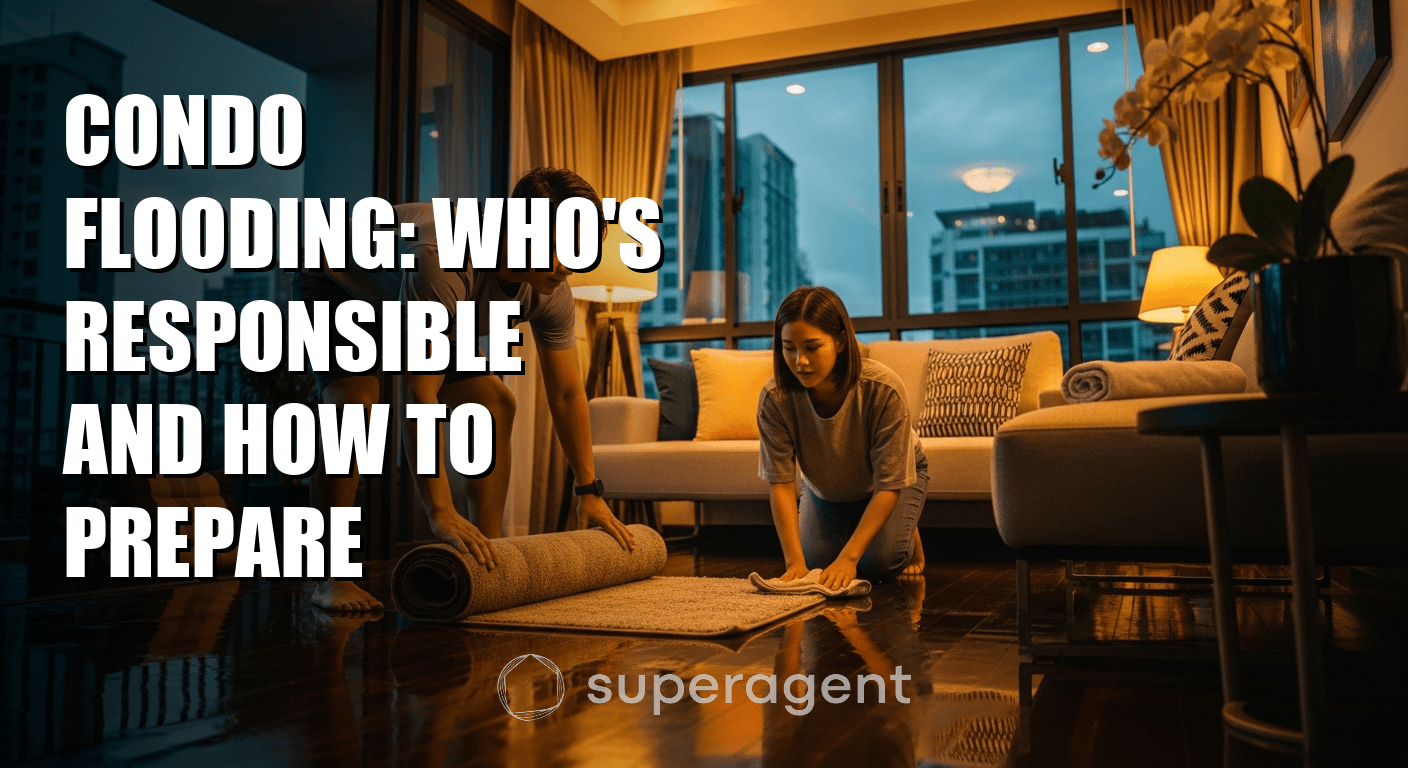
น้ำท่วมคอนโด can cause major damage. Learn who's liable, what your condo law says, and practical steps to protect your unit and valuables today.
Bangkok floods are not a question of if, but when. If you live in a condo here, whether you're in Thonglor, Rama 9, or Bang Chak, you've probably thought about it at least once during rainy season. Water damage can cost thousands in repairs, destroy your belongings, and create headaches that last months. The real question nobody asks clearly enough: who actually pays for it?
The answer depends on where the water came from, what your lease says, and whether your building management knew about the problem beforehand. This guide breaks down your actual rights and responsibilities as a condo renter in Bangkok, with real scenarios you'll recognize.
Where Does Responsibility Start and Stop?
In Bangkok's condo market, responsibility splits between three parties: you (the tenant), the condo management, and sometimes the building owner. The critical factor is the source of the water.
If water comes from outside the building during heavy rain or flooding, what locals call "namman ton" (external flood), the management should have systems in place. If it comes from a burst pipe inside your unit, that's your problem. If it comes from a pipe in the common area that nobody maintained, that falls on management.
Here's where it gets tricky: Thai law doesn't have one clear "condo tenant protection" rule book the way some countries do. Instead, your protection depends on three things: your lease agreement, the building's house rules, and whether management acted negligently.
Your Lease Is Your Real Contract
Most condo leases in Bangkok are painfully vague about water damage. They say things like "tenant is responsible for damages caused by negligence" but don't define negligence. You might be renting a 25,000 to 35,000 THB per month unit in Ari or Phetchaburi and never know what happens if the building floods.
Read your lease right now for these specific clauses: Who maintains pipes and drainage systems? Who pays for water damage from external sources? What counts as "force majeure" (acts of God)? If your lease doesn't mention these, ask your landlord or management company in writing to clarify before signing.
A stronger lease says: "Management is responsible for maintaining all common pipes and drainage systems. Tenant is only responsible for damages caused by tenant's direct action or negligence within the unit." Get this in writing if possible.
Real example: A tenant in a Sukhumvit soi 26 condo had water seep through the wall from a shared pipe on the other side. Management had ignored maintenance complaints for six months. When she asked them to pay, they refused. Because her lease said "tenant responsible for unit damage," she had no legal ground. She ended up paying 35,000 THB herself for wall repair and repainting.
When Management is Actually Responsible
Thai condo law does hold management liable for negligence. If the building had a known flooding problem, had been told about it, and did nothing, management is liable. Same if pipes burst because of poor maintenance, or if drainage systems haven't been cleaned in years.
The problem: proving negligence is your job, not management's. You need evidence. Keep every message, repair request, and complaint in writing. Photos of previous water marks or damage help. If neighbors had the same problem, ask them to document it too.
Management must maintain "reasonable standards" for the building. What counts as reasonable? In Bangkok's 2023 rainy season, some condos in Rama 4 and Phetchaburi areas flooded because their sump pumps hadn't been tested in two years. That's negligence. A pipe that bursts once in 15 years despite regular maintenance? That might not be.
Here's what actually holds weight with Thai courts: evidence that management ignored written complaints, failed to maintain required systems, or knew about a problem and did nothing. Verbal complaints alone won't work.
What Insurance Actually Covers (and Doesn't)
Most condo management in Bangkok carries building insurance, but it almost never covers tenant belongings. Your TV, bed, laptop, clothes, not covered by their policy. You need renter's insurance, but hardly anyone in Bangkok has it.
Building insurance typically covers structural damage if a pipe bursts. It doesn't cover water from external flooding unless the policy specifically includes "flood cover," which most Bangkok condos don't. That's because insurance companies consider Bangkok a flood-risk zone.
Real number: According to CBRE Thailand's property research, fewer than 20% of Bangkok condo renters carry renter's insurance. Of those who do, about 60% are expats in the 50,000+ THB per month range. Thai renters rarely insure their belongings.
If you want real protection, buy renter's insurance. AIS Insurance and Thai Reinsurance both offer policies covering water damage for about 2,000 to 5,000 THB per year. Read the fine print for flood exclusions.
Practical Steps if Your Condo Floods
First 24 hours: Document everything with photos and video. Open windows to dry out the space. Move electronics and valuables to high ground. Don't throw away damaged items yet, insurance adjusters need to see them.
Within 48 hours: Send a written message (Line, email, or letter) to management and your landlord describing the damage and asking them to inspect. Keep a copy. Ask them in writing: Is this covered by building insurance? Who will pay for repairs?
If they ignore you: File a complaint with the local property management association or contact a lawyer. Thailand has a tenant rights hotline at 1199 that handles housing disputes, though it focuses more on evictions than water damage.
For major damage: Contact your insurance company immediately if you have renter's insurance. They'll send an adjuster. If not, get a professional water damage company to assess (costs about 2,000 to 5,000 THB). Their report is valuable evidence if you need to claim against management later.
A tenant in a Bang Rak condo near the BTS Lumphini station had water enter from the building's basement pump room failure. She documented everything and sent formal complaint letters. Management initially refused to pay. Three months later, after she contacted a lawyer, they settled for 80,000 THB in damages. The lawyer cost her 15,000 THB.
Prevention: Your Actual Best Strategy
Don't rent a ground-floor unit in Bangkok if you can help it. First, second, and third floors flood far more often, especially in areas near canals or low-lying zones like some parts of Rama 9, Samsen, or Ladprao.
Before signing any lease, ask management: Has this building flooded in the past three years? Where? What did they do about it? Ask neighbors directly. Check DDproperty reviews for flood complaints.
Visit the unit during or just after rain. See where water might collect. Check the drainage around the building. Is the parking lot higher or lower than street level? Are gutters clean?
Request in your lease that management maintains drainage, tests sump pumps quarterly, and clears gutters before rainy season. Get this written in. It costs management nothing and protects both of you.
- External flooding (outside water entering building): Management if negligent; otherwise shared or tenant | Photos of water entry points, maintenance records showing neglect, neighbor complaints | 5,000 to 50,000 THB
- Burst pipe in common area: Management (they maintain common infrastructure) | Photos, management inspection report, written complaint confirmation | Management covers; tenant claims back
- Burst pipe inside your unit: Tenant (you maintain your space) | Lease terms, landlord inspection | 10,000 to 80,000 THB depending on damage
- Blocked drainage or gutter: Management if not maintained; tenant if caused by tenant | Maintenance records showing management neglect, photos | 3,000 to 25,000 THB
Bottom line for Bangkok renters: Water damage happens. Your job is to know your lease cold, document everything in writing, and have some kind of insurance. Management's job is to maintain the building properly. Make sure your lease makes that clear before you sign.
Don't assume management will do the right thing. They often won't, especially if your lease is vague. Bangkok's rainy season runs May through October, with peak flooding typically in September and October. Before that hits, check your unit, clarify your lease, and consider renter's insurance if you own valuables.
If you're looking for a condo with a track record of good management and proper maintenance, Superagent helps you find verified rentals with clear lease terms and responsive management. Browse listings and compare buildings by their maintenance practices and tenant reviews.
Bangkok floods are not a question of if, but when. If you live in a condo here, whether you're in Thonglor, Rama 9, or Bang Chak, you've probably thought about it at least once during rainy season. Water damage can cost thousands in repairs, destroy your belongings, and create headaches that last months. The real question nobody asks clearly enough: who actually pays for it?
The answer depends on where the water came from, what your lease says, and whether your building management knew about the problem beforehand. This guide breaks down your actual rights and responsibilities as a condo renter in Bangkok, with real scenarios you'll recognize.
Where Does Responsibility Start and Stop?
In Bangkok's condo market, responsibility splits between three parties: you (the tenant), the condo management, and sometimes the building owner. The critical factor is the source of the water.
If water comes from outside the building during heavy rain or flooding, what locals call "namman ton" (external flood), the management should have systems in place. If it comes from a burst pipe inside your unit, that's your problem. If it comes from a pipe in the common area that nobody maintained, that falls on management.
Here's where it gets tricky: Thai law doesn't have one clear "condo tenant protection" rule book the way some countries do. Instead, your protection depends on three things: your lease agreement, the building's house rules, and whether management acted negligently.
Your Lease Is Your Real Contract
Most condo leases in Bangkok are painfully vague about water damage. They say things like "tenant is responsible for damages caused by negligence" but don't define negligence. You might be renting a 25,000 to 35,000 THB per month unit in Ari or Phetchaburi and never know what happens if the building floods.
Continue reading after that.
Looking for a condo
to rent?
Leave your name and phone. We'll follow up while you keep reading.
100% Secure
Fast Response
Free Consultation
Read your lease right now for these specific clauses: Who maintains pipes and drainage systems? Who pays for water damage from external sources? What counts as "force majeure" (acts of God)? If your lease doesn't mention these, ask your landlord or management company in writing to clarify before signing.
A stronger lease says: "Management is responsible for maintaining all common pipes and drainage systems. Tenant is only responsible for damages caused by tenant's direct action or negligence within the unit." Get this in writing if possible.
Real example: A tenant in a Sukhumvit soi 26 condo had water seep through the wall from a shared pipe on the other side. Management had ignored maintenance complaints for six months. When she asked them to pay, they refused. Because her lease said "tenant responsible for unit damage," she had no legal ground. She ended up paying 35,000 THB herself for wall repair and repainting.
When Management is Actually Responsible
Thai condo law does hold management liable for negligence. If the building had a known flooding problem, had been told about it, and did nothing, management is liable. Same if pipes burst because of poor maintenance, or if drainage systems haven't been cleaned in years.
The problem: proving negligence is your job, not management's. You need evidence. Keep every message, repair request, and complaint in writing. Photos of previous water marks or damage help. If neighbors had the same problem, ask them to document it too.
Management must maintain "reasonable standards" for the building. What counts as reasonable? In Bangkok's 2023 rainy season, some condos in Rama 4 and Phetchaburi areas flooded because their sump pumps hadn't been tested in two years. That's negligence. A pipe that bursts once in 15 years despite regular maintenance? That might not be.
Here's what actually holds weight with Thai courts: evidence that management ignored written complaints, failed to maintain required systems, or knew about a problem and did nothing. Verbal complaints alone won't work.
What Insurance Actually Covers (and Doesn't)
Most condo management in Bangkok carries building insurance, but it almost never covers tenant belongings. Your TV, bed, laptop, clothes, not covered by their policy. You need renter's insurance, but hardly anyone in Bangkok has it.
Building insurance typically covers structural damage if a pipe bursts. It doesn't cover water from external flooding unless the policy specifically includes "flood cover," which most Bangkok condos don't. That's because insurance companies consider Bangkok a flood-risk zone.
Real number: According to CBRE Thailand's property research, fewer than 20% of Bangkok condo renters carry renter's insurance. Of those who do, about 60% are expats in the 50,000+ THB per month range. Thai renters rarely insure their belongings.
If you want real protection, buy renter's insurance. AIS Insurance and Thai Reinsurance both offer policies covering water damage for about 2,000 to 5,000 THB per year. Read the fine print for flood exclusions.
Practical Steps if Your Condo Floods
First 24 hours: Document everything with photos and video. Open windows to dry out the space. Move electronics and valuables to high ground. Don't throw away damaged items yet, insurance adjusters need to see them.
Within 48 hours: Send a written message (Line, email, or letter) to management and your landlord describing the damage and asking them to inspect. Keep a copy. Ask them in writing: Is this covered by building insurance? Who will pay for repairs?
If they ignore you: File a complaint with the local property management association or contact a lawyer. Thailand has a tenant rights hotline at 1199 that handles housing disputes, though it focuses more on evictions than water damage.
For major damage: Contact your insurance company immediately if you have renter's insurance. They'll send an adjuster. If not, get a professional water damage company to assess (costs about 2,000 to 5,000 THB). Their report is valuable evidence if you need to claim against management later.
A tenant in a Bang Rak condo near the BTS Lumphini station had water enter from the building's basement pump room failure. She documented everything and sent formal complaint letters. Management initially refused to pay. Three months later, after she contacted a lawyer, they settled for 80,000 THB in damages. The lawyer cost her 15,000 THB.
Continue reading after that.
Looking for a condo
to rent?
Leave your name and phone. We'll follow up while you keep reading.
100% Secure
Fast Response
Free Consultation
Prevention: Your Actual Best Strategy
Don't rent a ground-floor unit in Bangkok if you can help it. First, second, and third floors flood far more often, especially in areas near canals or low-lying zones like some parts of Rama 9, Samsen, or Ladprao.
Before signing any lease, ask management: Has this building flooded in the past three years? Where? What did they do about it? Ask neighbors directly. Check DDproperty reviews for flood complaints.
Visit the unit during or just after rain. See where water might collect. Check the drainage around the building. Is the parking lot higher or lower than street level? Are gutters clean?
Request in your lease that management maintains drainage, tests sump pumps quarterly, and clears gutters before rainy season. Get this written in. It costs management nothing and protects both of you.
- External flooding (outside water entering building): Management if negligent; otherwise shared or tenant | Photos of water entry points, maintenance records showing neglect, neighbor complaints | 5,000 to 50,000 THB
- Burst pipe in common area: Management (they maintain common infrastructure) | Photos, management inspection report, written complaint confirmation | Management covers; tenant claims back
- Burst pipe inside your unit: Tenant (you maintain your space) | Lease terms, landlord inspection | 10,000 to 80,000 THB depending on damage
- Blocked drainage or gutter: Management if not maintained; tenant if caused by tenant | Maintenance records showing management neglect, photos | 3,000 to 25,000 THB
Bottom line for Bangkok renters: Water damage happens. Your job is to know your lease cold, document everything in writing, and have some kind of insurance. Management's job is to maintain the building properly. Make sure your lease makes that clear before you sign.
Don't assume management will do the right thing. They often won't, especially if your lease is vague. Bangkok's rainy season runs May through October, with peak flooding typically in September and October. Before that hits, check your unit, clarify your lease, and consider renter's insurance if you own valuables.
If you're looking for a condo with a track record of good management and proper maintenance, Superagent helps you find verified rentals with clear lease terms and responsive management. Browse listings and compare buildings by their maintenance practices and tenant reviews.
Share this article
Properties you may like
![[For Rent] CONDO I Las Colinas Condominium I 2 Beds I 3 Baths I 85,000THB/mo](/_next/image?url=https%3A%2F%2Fstorage.googleapis.com%2Fsuperagent-web%2Fattachments%2Flistings%2F6828%2F80f345c4-488e-43b2-b017-c9fbb17b520d-99486dd8-4237-4ba2-9207-01ce4f66b21f-media.jpg&w=3840&q=75)
฿85,000
2 Bed3170 sqm
[For Rent] CONDO I Las Colinas Condominium I 2 Beds I 3 Baths I 85,000THB/mo
Asoke
Condo![[For Rent] CONDO I Ashton Asoke I 1 Bed I 1 Bath I 30,000THB/mo](/_next/image?url=https%3A%2F%2Fstorage.googleapis.com%2Fsuperagent-web%2Fattachments%2Flistings%2F6876%2Fb7ce9bbe-f877-4ff5-bb54-8ad0026db940-1272-4.jpg&w=3840&q=75)
฿30,000
1 Bed135 sqm
[For Rent] CONDO I Ashton Asoke I 1 Bed I 1 Bath I 30,000THB/mo
Asoke
Condo![[For Rent] CONDO I Skyrise Avenue Sukhumvit 64 I 2 Beds I 2 Baths I 27,000THB/mo](/_next/image?url=https%3A%2F%2Fstorage.googleapis.com%2Fsuperagent-web%2Fattachments%2Flistings%2F2001%2F670f91de-c251-4e81-971c-8e30ed2158cd-screenshot-2026-07-05-at-11.38.53-pm.png&w=3840&q=75)
฿27,000
2 Bed252 sqm
[For Rent] CONDO I Skyrise Avenue Sukhumvit 64 I 2 Beds I 2 Baths I 27,000THB/mo
Punnawithi
Condo![[For Rent] CONDO I Park Origin Ratchathewi I Duplex I 2 Beds I 1 Bath I 32,000THB/mo](/_next/image?url=https%3A%2F%2Fstorage.googleapis.com%2Fsuperagent-web%2Fattachments%2Flistings%2F6896%2Fb79a7d21-7533-4b0d-bb19-762ebfafab62-1318-6.jpg&w=3840&q=75)
฿32,000
2 Bed135.9 sqm
[For Rent] CONDO I Park Origin Ratchathewi I Duplex I 2 Beds I 1 Bath I 32,000THB/mo
Ratchathewi
Condo![[For Rent] CONDO I Park Origin Phayathai I Studio I 1 Bath I 28,000THB/mo](/_next/image?url=https%3A%2F%2Fstorage.googleapis.com%2Fsuperagent-web%2Fattachments%2Flistings%2F6757%2Fb226df93-94c6-46fa-aeba-ebfadc7f81b8-1000006042.jpg&w=3840&q=75)
฿28,000
Studio129 sqm
[For Rent] CONDO I Park Origin Phayathai I Studio I 1 Bath I 28,000THB/mo
Phaya Thai
Condo![[For Rent] CONDO I Ideo Mobi Sukhumvit 81 I Duplex I 1 Bed I 1 Bath I 28,000THB/mo](/_next/image?url=https%3A%2F%2Fstorage.googleapis.com%2Fsuperagent-web%2Fattachments%2Flistings%2F1849%2Fc8b2c033-3b5f-4615-b2b0-4972f40141f0-705-13.jpg&w=3840&q=75)
฿28,000
1 Bed143 sqm
[For Rent] CONDO I Ideo Mobi Sukhumvit 81 I Duplex I 1 Bed I 1 Bath I 28,000THB/mo
On Nut
Condo![[For Rent] CONDO I Siamese Sukhumvit 48 I 1 Bed I 1 Bath I 28,000THB/mo](/_next/image?url=https%3A%2F%2Fstorage.googleapis.com%2Fsuperagent-web%2Fattachments%2Flistings%2F6841%2Febc2dce2-2e9b-4e6d-a01c-0cfa619dfa13-1231-6.jpg&w=3840&q=75)
฿28,000
1 Bed144 sqm
[For Rent] CONDO I Siamese Sukhumvit 48 I 1 Bed I 1 Bath I 28,000THB/mo
Condo![[For Rent] CONDO I Ashton Asoke I 1 Bed I 1 Bath I 22,000THB/mo](/_next/image?url=https%3A%2F%2Fstorage.googleapis.com%2Fsuperagent-web%2Fattachments%2Flistings%2F6802%2Fe06b9b73-1207-414a-ab04-1685de0c7eaa-20220808_153124_0.jpg&w=3840&q=75)
฿22,000
1 Bed134 sqm
[For Rent] CONDO I Ashton Asoke I 1 Bed I 1 Bath I 22,000THB/mo
Asoke
Condo![[For Rent] CONDO I HQ Thonglor Soi 4 I 1 Bed I 1 Bath I 35,000 THB/mo](/_next/image?url=https%3A%2F%2Fstorage.googleapis.com%2Fsuperagent-web%2Fattachments%2Flistings%2F1445%2F72352585-1bc2-41a8-bd62-ddcbf8189fe9-376-5.jpg&w=3840&q=75)
฿35,000
1 Bed143.6 sqm
[For Rent] CONDO I HQ Thonglor Soi 4 I 1 Bed I 1 Bath I 35,000 THB/mo
Thonglor
Condo![[For Rent] CONDO I The Master Centrium Asoke - Sukhumvit I Duplex I 2 Beds I 3 Baths I 75,000 THB/mo](/_next/image?url=https%3A%2F%2Fstorage.googleapis.com%2Fsuperagent-web%2Fattachments%2Flistings%2F1545%2F97932b6a-c358-45e4-b5f9-995dbf5a3cf0-441-2.jpg&w=3840&q=75)
฿75,000
2 Bed3150 sqm
[For Rent] CONDO I The Master Centrium Asoke - Sukhumvit I Duplex I 2 Beds I 3 Baths I 75,000 THB/mo
Asoke
CondoMore like this
 In Guides · Superagent EditorialHidden Costs of Renting a Condo in Bangkok Nobody Warns You AboutBangkok condo rent looks affordable until month one hits. Here are the real costs beyond the headline figure that catch most renters off guard.25 May 20261 min read
 In Guides · Superagent EditorialWhat a Long-Vacant Bangkok Condo Unit Is Actually Telling YouA Bangkok condo vacant for months signals overpricing, landlord issues, or real problems. Here is how to read the signs.25 May 20261 min read
 In Guides · Superagent EditorialRed Flags in a Bangkok Rental Contract to Watch Out ForBangkok rental contracts often hide risky clauses. Here are the red flags every tenant must catch before signing any lease.25 May 20261 min read
 In Guides · Superagent EditorialWorking Online from a Condo: How to Choose the Perfect Room for ProductivityLearn how to choose the best condo room for working online with tips on lighting, noise, and furniture setup to maximize productivity.9 May 20261 min read