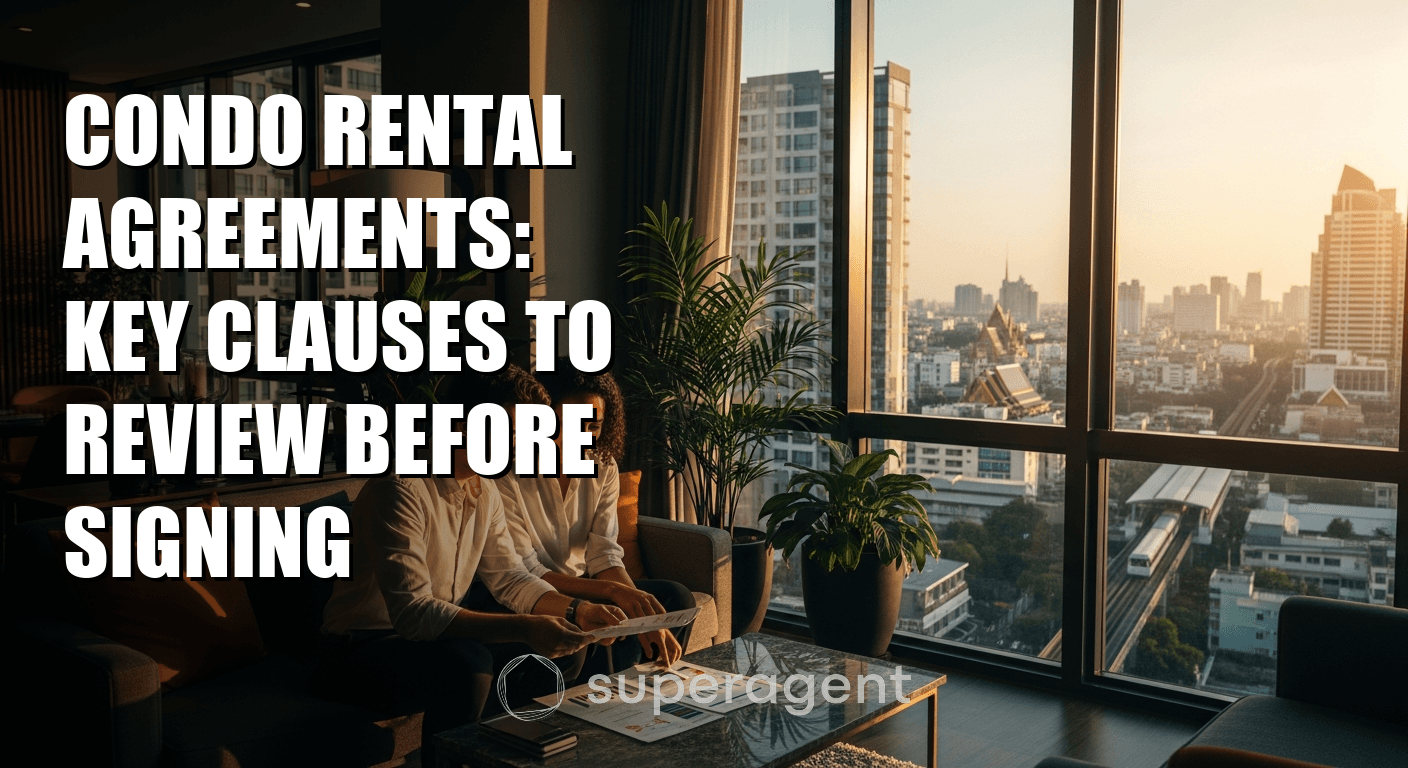
Condo Rental Agreements: Key Clauses to Review Before Signing
Guides
Condo Rental Agreements: Key Clauses to Review Before Signing
Master the essential terms in Thai condo leases to protect your rights
Summary
Learn critical clauses in สัญญาเช่าคอนโดภาษาไทย before signing. Our guide covers deposit terms, maintenance fees, termination rights and tenant obligations
You're about to sign a condo rental contract in Bangkok, and you've got that nagging feeling that you should probably read the whole thing instead of just flipping to where you sign. Good instinct. Most rental agreements in Thailand are filled with clauses that can genuinely surprise you later, and some of them might cost you money, your security deposit, or both. Whether you're moving to Sukhumvit, renting near the BTS at Phrom Phong, or grabbing a place in the quieter areas around Ekkamai, understanding what you're actually agreeing to is non-negotiable.
Why Your Rental Contract Actually Matters
A lot of renters in Bangkok treat the signing process like a formality. You walk in, the building staff hands you a stack of papers (often in Thai, sometimes in English, sometimes both), and you're expected to put your name on it in a few minutes. That's where things go wrong.
Thai rental contracts aren't standardized the way they are in some countries. Each building or landlord can add their own terms, restrictions, and financial conditions. What's totally reasonable for the condo towers around Thonglor might be completely different from the house rules at a smaller complex near Mo Chit or Ari. The contract is your only protection if something goes sideways later.
According to Thailand's Land Department, disputes over rental agreements are among the most common property-related complaints they handle. Many of these could've been avoided with five minutes of careful reading upfront.
Security Deposit and Payment Terms You Need to Understand
This is where your money actually goes. In Bangkok, security deposits typically range from one to three months of rent. For a 1-bedroom apartment averaging 25,000 to 35,000 THB per month in mid-range areas like Ratchathewi or Pratunam, you're looking at a deposit of 25,000 to 105,000 THB depending on the landlord's comfort level.
Here's what you absolutely must clarify in writing: under what exact conditions does the landlord keep your deposit? The contract should list specific damage scenarios or unpaid rent situations. If it just says something vague like "damages or issues," that's a red flag. You want detailed itemization. Some buildings in Rama 9 or Ladprao have been known to claim deposit forfeiture for minor scuffs that normal wear and tear would cover.
Also nail down the payment method. Is it bank transfer? Check? Cash? And what day of the month is it due? Contracts that don't specify exact dates have caused confusion for thousands of expats here. Get it in writing, get a receipt every single month, and consider asking for a written acknowledgment from the landlord or building that you've paid on time.
One more thing: if the contract mentions that you'll pay a "key money" or upfront fee (common in some older buildings), that's different from the deposit and should be clearly separated and explained. This isn't refundable, and you need to know why it exists.
Maintenance Fees, Common Area Costs, and Hidden Charges
The rent you agree to is just the starting point. Almost every condo in Bangkok charges a separate maintenance fee, often called "common fee" or "sinking fund." This covers hallways, lobbies, elevators, and security. At a typical mid-range condo near BTS Asoke or Nana, that's another 2,000 to 5,000 THB monthly on top of your rent.
Read carefully to see if this is capped or if it can increase. Some contracts allow the building to raise common fees with just 30 days notice, others require owner approval. If you're in a newer building, the fee might be lower now but scheduled to increase after three years. This matters when you're budgeting.
Also check what's actually included. Does common fee cover WiFi? Water? Electricity is almost never included, but you should confirm. Some buildings bundle water into the common fee, others charge separately. Near the quieter areas like Huay Kwang or Rama 9, older condos sometimes try to pass unexpected maintenance costs directly to tenants. Don't let that happen without it being explicitly defined in the contract.
Ask about other potential charges too: parking fees if you have a car, pet fees if you have a dog or cat, and surcharges for late utility payments. Write these down and get them added to the contract.
Restrictions and Rules You Can't Break
Thai landlords and building management are surprisingly strict about what you can and cannot do in your unit. The contract will list rules, and breaking them can cost you your deposit or get you evicted. This matters, so read these sections closely.
Common restrictions include: no loud music after certain hours (usually 10 PM), no guests staying longer than a certain number of consecutive days without landlord approval, no subletting, no running a business from the unit, and sometimes even restrictions on what color you can paint walls (yes, really). In larger buildings around Sukhumvit or Wireless, these rules are usually more relaxed. In residential complexes near Ladprao or Rama 6, they're often stricter.
Pets are another major one. Many Bangkok condos allow cats but not dogs, or dogs under a certain weight only. Some require an additional pet deposit. This should be crystal clear in your contract. If you're planning to get a cat in six months, clarify now that it's allowed.
One thing that catches a lot of renters: rules about using the unit as a short-term Airbnb rental. Some buildings explicitly prohibit this, and violating it can result in immediate eviction. If you're thinking of renting out rooms or short-term stays, confirm this is allowed before signing.
Lease Duration, Renewal, and Exit Terms
Thai rental contracts typically run for one year, though shorter and longer terms exist. The contract should state the exact start and end dates, not just "one year from signing." This matters for visa purposes and for knowing exactly when you need to decide if you're staying.
What happens at the end of the lease? Does it automatically renew? Can the landlord raise the rent? By how much? These questions should be addressed in writing. If the contract is silent on this, you're vulnerable. Some landlords in popular areas like Thonglor or Asoke have jacked up rent 10-15% on renewal, and if your contract doesn't specify renewal terms, you basically have to accept it or move.
Also understand early termination clauses. If you need to leave before the lease ends, what's the penalty? Some contracts charge two months' rent, others charge one, some are negotiable. If you're an expat who might need to relocate for work, this is crucial information. Get it in writing so you're not surprised.
And if the landlord wants to terminate early (rare but it happens), what notice period do they have to give? This protects you too.
Damage, Deductions, and the Condition Inspection
This is where deposit disputes happen. Before you move in, the contract should include an inspection checklist showing the current condition of the unit. Every scratch, stain, and broken fixture should be documented. Take photos yourself and get the landlord to sign off on the checklist before handing over your deposit.
Without this, you have almost no defense against damage claims when you leave. A landlord in Petchburi or near Rama 9 can claim you broke something and it becomes your word against theirs. With a signed checklist and photos dated on your phone, you're protected.
The contract should also define what counts as normal wear and tear versus damage you have to pay for. Thai law does protect tenants from unreasonable deductions, but you need evidence. When you move out, repeat the inspection process, take new photos, and get a signed confirmation that the unit is in acceptable condition.
- Monthly Rent: Exact amount in THB, payment date, payment method vs Vague phrasing, no specific due date, requirement to pay in cash only
- Security Deposit: Amount, conditions for deduction, refund timeline vs No itemization of damage conditions, overly broad language, no return date specified
- Common Fee: Monthly amount, what's included, if it can increase vs Vague inclusion list, no cap on increases, undefined services
- Restrictions: Quiet hours, guest policies, pet rules, subletting vs Extremely restrictive terms, ambiguous enforcement, no flexibility clause
- Lease Duration: Start and end dates, renewal terms, early termination clause vs No renewal terms specified, harsh penalties for early exit, automatic increases
- Unit Condition: Signed checklist with photos, damage definitions vs No documentation, no wear-and-tear definition, photo evidence not required
Practical Steps Before You Sign
Take a photo of every page of the contract with your phone. Email it to yourself and to a trusted friend or family member, preferably someone outside Thailand. This gives you a backup copy if there's ever a dispute about what was agreed.
If the contract is only in Thai and you don't read Thai fluently, get a translation before signing. Many expats have signed agreements they didn't fully understand, and that's regrettable. A Thai friend or a lawyer can help, and it's worth the small cost.
If something in the contract seems unfair or unclear, ask the landlord or building manager to clarify it in writing. Get their response in writing too. Building staff in most Bangkok condos are used to this and won't be offended. If they refuse to clarify, that's actually a warning sign.
Keep that signed contract somewhere safe, preferably digital backup plus a printed copy. You'll need it if a dispute ever happens, for tax purposes, or for visa or immigration matters.
Renting a condo in Bangkok is usually straightforward, but the contract is where your protection lives. Whether you're in a luxury high-rise near BTS Phrom Phong, a mid-range complex near Mo Chit, or a residential building in quieter Ekkamai, spending 20 minutes to thoroughly read and understand what you're signing is the best investment you can make in your rental experience. When you're ready to search for your next place and want clarity throughout the entire rental process, Superagent.co makes finding verified listings and understanding the details straightforward and stress-free.
You're about to sign a condo rental contract in Bangkok, and you've got that nagging feeling that you should probably read the whole thing instead of just flipping to where you sign. Good instinct. Most rental agreements in Thailand are filled with clauses that can genuinely surprise you later, and some of them might cost you money, your security deposit, or both. Whether you're moving to Sukhumvit, renting near the BTS at Phrom Phong, or grabbing a place in the quieter areas around Ekkamai, understanding what you're actually agreeing to is non-negotiable.
Why Your Rental Contract Actually Matters
A lot of renters in Bangkok treat the signing process like a formality. You walk in, the building staff hands you a stack of papers (often in Thai, sometimes in English, sometimes both), and you're expected to put your name on it in a few minutes. That's where things go wrong.
Thai rental contracts aren't standardized the way they are in some countries. Each building or landlord can add their own terms, restrictions, and financial conditions. What's totally reasonable for the condo towers around Thonglor might be completely different from the house rules at a smaller complex near Mo Chit or Ari. The contract is your only protection if something goes sideways later.
According to Thailand's Land Department, disputes over rental agreements are among the most common property-related complaints they handle. Many of these could've been avoided with five minutes of careful reading upfront.
Security Deposit and Payment Terms You Need to Understand
This is where your money actually goes. In Bangkok, security deposits typically range from one to three months of rent. For a 1-bedroom apartment averaging 25,000 to 35,000 THB per month in mid-range areas like Ratchathewi or Pratunam, you're looking at a deposit of 25,000 to 105,000 THB depending on the landlord's comfort level.
Here's what you absolutely must clarify in writing: under what exact conditions does the landlord keep your deposit? The contract should list specific damage scenarios or unpaid rent situations. If it just says something vague like "damages or issues," that's a red flag. You want detailed itemization. Some buildings in Rama 9 or Ladprao have been known to claim deposit forfeiture for minor scuffs that normal wear and tear would cover.
Continue reading after that.
Looking for a condo
to rent?
Leave your name and phone. We'll follow up while you keep reading.
100% Secure
Fast Response
Free Consultation
Also nail down the payment method. Is it bank transfer? Check? Cash? And what day of the month is it due? Contracts that don't specify exact dates have caused confusion for thousands of expats here. Get it in writing, get a receipt every single month, and consider asking for a written acknowledgment from the landlord or building that you've paid on time.
One more thing: if the contract mentions that you'll pay a "key money" or upfront fee (common in some older buildings), that's different from the deposit and should be clearly separated and explained. This isn't refundable, and you need to know why it exists.
Maintenance Fees, Common Area Costs, and Hidden Charges
The rent you agree to is just the starting point. Almost every condo in Bangkok charges a separate maintenance fee, often called "common fee" or "sinking fund." This covers hallways, lobbies, elevators, and security. At a typical mid-range condo near BTS Asoke or Nana, that's another 2,000 to 5,000 THB monthly on top of your rent.
Read carefully to see if this is capped or if it can increase. Some contracts allow the building to raise common fees with just 30 days notice, others require owner approval. If you're in a newer building, the fee might be lower now but scheduled to increase after three years. This matters when you're budgeting.
Also check what's actually included. Does common fee cover WiFi? Water? Electricity is almost never included, but you should confirm. Some buildings bundle water into the common fee, others charge separately. Near the quieter areas like Huay Kwang or Rama 9, older condos sometimes try to pass unexpected maintenance costs directly to tenants. Don't let that happen without it being explicitly defined in the contract.
Ask about other potential charges too: parking fees if you have a car, pet fees if you have a dog or cat, and surcharges for late utility payments. Write these down and get them added to the contract.
Restrictions and Rules You Can't Break
Thai landlords and building management are surprisingly strict about what you can and cannot do in your unit. The contract will list rules, and breaking them can cost you your deposit or get you evicted. This matters, so read these sections closely.
Common restrictions include: no loud music after certain hours (usually 10 PM), no guests staying longer than a certain number of consecutive days without landlord approval, no subletting, no running a business from the unit, and sometimes even restrictions on what color you can paint walls (yes, really). In larger buildings around Sukhumvit or Wireless, these rules are usually more relaxed. In residential complexes near Ladprao or Rama 6, they're often stricter.
Pets are another major one. Many Bangkok condos allow cats but not dogs, or dogs under a certain weight only. Some require an additional pet deposit. This should be crystal clear in your contract. If you're planning to get a cat in six months, clarify now that it's allowed.
One thing that catches a lot of renters: rules about using the unit as a short-term Airbnb rental. Some buildings explicitly prohibit this, and violating it can result in immediate eviction. If you're thinking of renting out rooms or short-term stays, confirm this is allowed before signing.
Lease Duration, Renewal, and Exit Terms
Thai rental contracts typically run for one year, though shorter and longer terms exist. The contract should state the exact start and end dates, not just "one year from signing." This matters for visa purposes and for knowing exactly when you need to decide if you're staying.
What happens at the end of the lease? Does it automatically renew? Can the landlord raise the rent? By how much? These questions should be addressed in writing. If the contract is silent on this, you're vulnerable. Some landlords in popular areas like Thonglor or Asoke have jacked up rent 10-15% on renewal, and if your contract doesn't specify renewal terms, you basically have to accept it or move.
Also understand early termination clauses. If you need to leave before the lease ends, what's the penalty? Some contracts charge two months' rent, others charge one, some are negotiable. If you're an expat who might need to relocate for work, this is crucial information. Get it in writing so you're not surprised.
And if the landlord wants to terminate early (rare but it happens), what notice period do they have to give? This protects you too.
Damage, Deductions, and the Condition Inspection
This is where deposit disputes happen. Before you move in, the contract should include an inspection checklist showing the current condition of the unit. Every scratch, stain, and broken fixture should be documented. Take photos yourself and get the landlord to sign off on the checklist before handing over your deposit.
Continue reading after that.
Looking for a condo
to rent?
Leave your name and phone. We'll follow up while you keep reading.
100% Secure
Fast Response
Free Consultation
Without this, you have almost no defense against damage claims when you leave. A landlord in Petchburi or near Rama 9 can claim you broke something and it becomes your word against theirs. With a signed checklist and photos dated on your phone, you're protected.
The contract should also define what counts as normal wear and tear versus damage you have to pay for. Thai law does protect tenants from unreasonable deductions, but you need evidence. When you move out, repeat the inspection process, take new photos, and get a signed confirmation that the unit is in acceptable condition.
- Monthly Rent: Exact amount in THB, payment date, payment method vs Vague phrasing, no specific due date, requirement to pay in cash only
- Security Deposit: Amount, conditions for deduction, refund timeline vs No itemization of damage conditions, overly broad language, no return date specified
- Common Fee: Monthly amount, what's included, if it can increase vs Vague inclusion list, no cap on increases, undefined services
- Restrictions: Quiet hours, guest policies, pet rules, subletting vs Extremely restrictive terms, ambiguous enforcement, no flexibility clause
- Lease Duration: Start and end dates, renewal terms, early termination clause vs No renewal terms specified, harsh penalties for early exit, automatic increases
- Unit Condition: Signed checklist with photos, damage definitions vs No documentation, no wear-and-tear definition, photo evidence not required
Practical Steps Before You Sign
Take a photo of every page of the contract with your phone. Email it to yourself and to a trusted friend or family member, preferably someone outside Thailand. This gives you a backup copy if there's ever a dispute about what was agreed.
If the contract is only in Thai and you don't read Thai fluently, get a translation before signing. Many expats have signed agreements they didn't fully understand, and that's regrettable. A Thai friend or a lawyer can help, and it's worth the small cost.
If something in the contract seems unfair or unclear, ask the landlord or building manager to clarify it in writing. Get their response in writing too. Building staff in most Bangkok condos are used to this and won't be offended. If they refuse to clarify, that's actually a warning sign.
Keep that signed contract somewhere safe, preferably digital backup plus a printed copy. You'll need it if a dispute ever happens, for tax purposes, or for visa or immigration matters.
Renting a condo in Bangkok is usually straightforward, but the contract is where your protection lives. Whether you're in a luxury high-rise near BTS Phrom Phong, a mid-range complex near Mo Chit, or a residential building in quieter Ekkamai, spending 20 minutes to thoroughly read and understand what you're signing is the best investment you can make in your rental experience. When you're ready to search for your next place and want clarity throughout the entire rental process, Superagent.co makes finding verified listings and understanding the details straightforward and stress-free.
Share this article
Properties you may like
![[For Rent] CONDO I Las Colinas Condominium I 2 Beds I 3 Baths I 85,000THB/mo](/_next/image?url=https%3A%2F%2Fstorage.googleapis.com%2Fsuperagent-web%2Fattachments%2Flistings%2F6828%2F80f345c4-488e-43b2-b017-c9fbb17b520d-99486dd8-4237-4ba2-9207-01ce4f66b21f-media.jpg&w=3840&q=75)
฿85,000
2 Bed3170 sqm
[For Rent] CONDO I Las Colinas Condominium I 2 Beds I 3 Baths I 85,000THB/mo
Asoke
Condo![[For Rent] CONDO I Ashton Asoke I 1 Bed I 1 Bath I 30,000THB/mo](/_next/image?url=https%3A%2F%2Fstorage.googleapis.com%2Fsuperagent-web%2Fattachments%2Flistings%2F6876%2Fb7ce9bbe-f877-4ff5-bb54-8ad0026db940-1272-4.jpg&w=3840&q=75)
฿30,000
1 Bed135 sqm
[For Rent] CONDO I Ashton Asoke I 1 Bed I 1 Bath I 30,000THB/mo
Asoke
Condo![[For Rent] CONDO I Skyrise Avenue Sukhumvit 64 I 2 Beds I 2 Baths I 27,000THB/mo](/_next/image?url=https%3A%2F%2Fstorage.googleapis.com%2Fsuperagent-web%2Fattachments%2Flistings%2F2001%2F670f91de-c251-4e81-971c-8e30ed2158cd-screenshot-2026-07-05-at-11.38.53-pm.png&w=3840&q=75)
฿27,000
2 Bed252 sqm
[For Rent] CONDO I Skyrise Avenue Sukhumvit 64 I 2 Beds I 2 Baths I 27,000THB/mo
Punnawithi
Condo![[For Rent] CONDO I Park Origin Ratchathewi I Duplex I 2 Beds I 1 Bath I 32,000THB/mo](/_next/image?url=https%3A%2F%2Fstorage.googleapis.com%2Fsuperagent-web%2Fattachments%2Flistings%2F6896%2Fb79a7d21-7533-4b0d-bb19-762ebfafab62-1318-6.jpg&w=3840&q=75)
฿32,000
2 Bed135.9 sqm
[For Rent] CONDO I Park Origin Ratchathewi I Duplex I 2 Beds I 1 Bath I 32,000THB/mo
Ratchathewi
Condo![[For Rent] CONDO I Park Origin Phayathai I Studio I 1 Bath I 28,000THB/mo](/_next/image?url=https%3A%2F%2Fstorage.googleapis.com%2Fsuperagent-web%2Fattachments%2Flistings%2F6757%2Fb226df93-94c6-46fa-aeba-ebfadc7f81b8-1000006042.jpg&w=3840&q=75)
฿28,000
Studio129 sqm
[For Rent] CONDO I Park Origin Phayathai I Studio I 1 Bath I 28,000THB/mo
Phaya Thai
Condo![[For Rent] CONDO I Ideo Mobi Sukhumvit 81 I Duplex I 1 Bed I 1 Bath I 28,000THB/mo](/_next/image?url=https%3A%2F%2Fstorage.googleapis.com%2Fsuperagent-web%2Fattachments%2Flistings%2F1849%2Fc8b2c033-3b5f-4615-b2b0-4972f40141f0-705-13.jpg&w=3840&q=75)
฿28,000
1 Bed143 sqm
[For Rent] CONDO I Ideo Mobi Sukhumvit 81 I Duplex I 1 Bed I 1 Bath I 28,000THB/mo
On Nut
Condo![[For Rent] CONDO I Siamese Sukhumvit 48 I 1 Bed I 1 Bath I 28,000THB/mo](/_next/image?url=https%3A%2F%2Fstorage.googleapis.com%2Fsuperagent-web%2Fattachments%2Flistings%2F6841%2Febc2dce2-2e9b-4e6d-a01c-0cfa619dfa13-1231-6.jpg&w=3840&q=75)
฿28,000
1 Bed144 sqm
[For Rent] CONDO I Siamese Sukhumvit 48 I 1 Bed I 1 Bath I 28,000THB/mo
Condo![[For Rent] CONDO I Ashton Asoke I 1 Bed I 1 Bath I 22,000THB/mo](/_next/image?url=https%3A%2F%2Fstorage.googleapis.com%2Fsuperagent-web%2Fattachments%2Flistings%2F6802%2Fe06b9b73-1207-414a-ab04-1685de0c7eaa-20220808_153124_0.jpg&w=3840&q=75)
฿22,000
1 Bed134 sqm
[For Rent] CONDO I Ashton Asoke I 1 Bed I 1 Bath I 22,000THB/mo
Asoke
Condo![[For Rent] CONDO I HQ Thonglor Soi 4 I 1 Bed I 1 Bath I 35,000 THB/mo](/_next/image?url=https%3A%2F%2Fstorage.googleapis.com%2Fsuperagent-web%2Fattachments%2Flistings%2F1445%2F72352585-1bc2-41a8-bd62-ddcbf8189fe9-376-5.jpg&w=3840&q=75)
฿35,000
1 Bed143.6 sqm
[For Rent] CONDO I HQ Thonglor Soi 4 I 1 Bed I 1 Bath I 35,000 THB/mo
Thonglor
Condo![[For Rent] CONDO I The Master Centrium Asoke - Sukhumvit I Duplex I 2 Beds I 3 Baths I 75,000 THB/mo](/_next/image?url=https%3A%2F%2Fstorage.googleapis.com%2Fsuperagent-web%2Fattachments%2Flistings%2F1545%2F97932b6a-c358-45e4-b5f9-995dbf5a3cf0-441-2.jpg&w=3840&q=75)
฿75,000
2 Bed3150 sqm
[For Rent] CONDO I The Master Centrium Asoke - Sukhumvit I Duplex I 2 Beds I 3 Baths I 75,000 THB/mo
Asoke
CondoMore like this
 In Guides · Superagent EditorialHidden Costs of Renting a Condo in Bangkok Nobody Warns You AboutBangkok condo rent looks affordable until month one hits. Here are the real costs beyond the headline figure that catch most renters off guard.25 May 20261 min read
 In Guides · Superagent EditorialWhat a Long-Vacant Bangkok Condo Unit Is Actually Telling YouA Bangkok condo vacant for months signals overpricing, landlord issues, or real problems. Here is how to read the signs.25 May 20261 min read
 In Guides · Superagent EditorialRed Flags in a Bangkok Rental Contract to Watch Out ForBangkok rental contracts often hide risky clauses. Here are the red flags every tenant must catch before signing any lease.25 May 20261 min read
 In Guides · Superagent EditorialWorking Online from a Condo: How to Choose the Perfect Room for ProductivityLearn how to choose the best condo room for working online with tips on lighting, noise, and furniture setup to maximize productivity.9 May 20261 min read