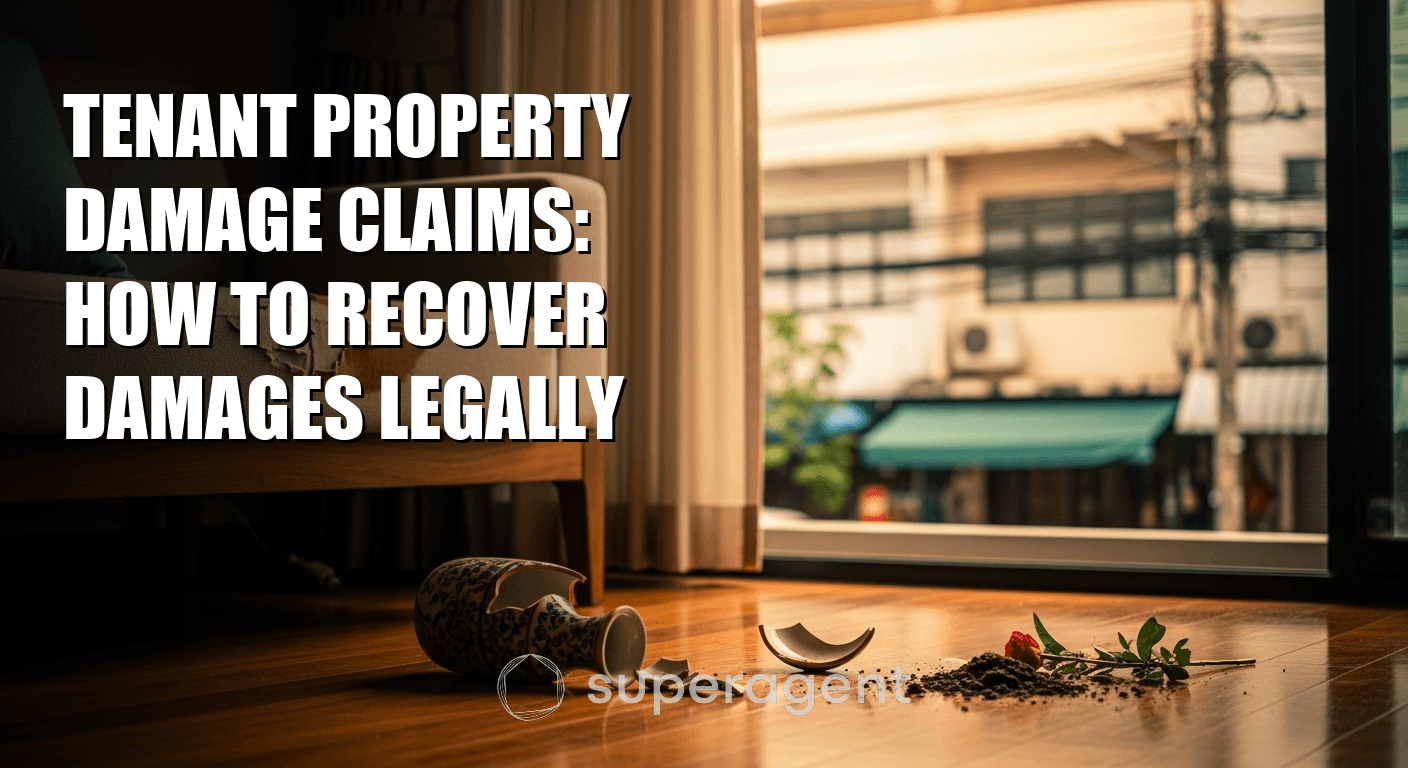
Tenant Property Damage Claims: How to Recover Damages Legally
Guides
Tenant Property Damage Claims: How to Recover Damages Legally
Protect your rights when renters damage your Bangkok property with proper legal procedures.
Summary
Learn how to handle tenant property damage claims legally in Bangkok. Understand compensation procedures and protect your rental investment from ผู้เช่าเสี
You just moved into your condo in Thonglor. Three weeks in, water damage from the upstairs unit seeps through your ceiling, ruining your laptop, two suitcases, and a decent chunk of your rental deposit peace of mind. Your landlord says it's "not his problem." Your stomach drops. You're spending 28,000 THB a month on this place, and now you're out hundreds of dollars with no clear path forward.
If you've been renting in Bangkok long enough, you've either lived through this scenario or know someone who has. Tenant property damage claims are messy, legally complicated, and often leave renters confused about their rights. The question everyone asks: can I actually recover money for damaged personal belongings, and how do I do it without hiring a lawyer who costs more than my monthly rent?
The answer is yes, you can claim damages. But you need to know the right steps, the right people to contact, and what the law actually says versus what landlords will try to tell you.
Understanding Your Legal Rights as a Tenant in Bangkok
Thailand's Civil and Commercial Code gives tenants specific protections when property damage occurs due to the landlord's negligence or failure to maintain the property. The key word here is negligence. If your condo leaks because the roof isn't maintained, that's negligence. If it leaks because a rare freak storm hits that no one could predict, that's different.
Most Bangkok rental agreements don't spell out these protections clearly, which is why misunderstandings happen. Your landlord isn't breaking the law by being unclear about it, but you're not helpless either. Under Thai law, the landlord is responsible for keeping the rental property in a habitable condition. That includes protecting your belongings from foreseeable damage.
Real scenario: A tenant in a Phrom Phong condo near BTS Phrom Phong station experienced mold damage across her furniture after the building failed to fix a broken air conditioning duct for two months. She documented everything, sent a formal written complaint to her landlord, and after the landlord ignored it, she filed a claim with a local mediation center. She recovered 35,000 THB for damaged items. This works because she had proof the landlord knew about the problem and didn't act.
Document Everything Before You Make Any Claim
This is the most critical step. Before you contact your landlord, the building management, or anyone else, you need evidence. Take photos of the damage. Take videos. Write down dates, times, what happened, who you told, and when. If your laptop stopped working because of water damage, keep that laptop. Don't repair it yet.
Get a list of what's damaged. Write down the original cost of each item. If you have receipts, even better. If you don't have receipts, you'll need to estimate based on current replacement cost. A three year old MacBook isn't worth what a new one costs, so be realistic about depreciation.
Send a written notice to your landlord as soon as possible. Not a text message or a WeChat message. A formal email or, ideally, a letter you deliver in person and get a receipt for. In that message, describe the damage, when it occurred, and what you believe caused it. Keep the tone professional and fact based, not angry. Say something like: "On October 15th, water entered my unit from the ceiling, damaging my laptop and personal items. I am requesting compensation for these damages in the amount of 45,000 THB, with supporting documentation enclosed."
Know the Difference Between Building Negligence and Your Responsibility
Here's where things get complicated. If your condo flooded because you left a tap running, that's on you. If it flooded because the building's drainage system failed and the landlord ignored maintenance complaints for months, that's on the landlord. The distinction matters legally.
Consider a tenant on Sukhumvit Soi 49 whose air conditioning unit leaked water onto her floor and damaged her belongings. She had reported the broken unit to building maintenance twice before it failed. The building had a maintenance schedule but skipped it. In this case, the landlord is liable because the negligence is clear and documented.
If the damage resulted from something completely outside anyone's control, like a major flood that affected the whole neighborhood, your claim becomes much weaker. Insurance usually covers these events, and the landlord's insurance might be your actual recovery route, not the landlord's personal liability.
- Burst pipe from poor maintenance: Yes | Direct claim to landlord | 20,000-60,000
- Electrical fault in unit wiring: Yes | Landlord or building insurance | 15,000-50,000
- Roof leak, ignored for months: Yes | Direct claim plus mediation | 30,000-80,000
- Water damage from neighbor's negligence: No, neighbor is | Claim against neighbor or their insurance | 25,000-100,000
- Flood from natural disaster: Usually not | Tenant's insurance, government relief | Varies widely
- Building maintenance failure (documented): Yes | Direct claim, escalate if denied | 20,000-75,000
The Formal Claims Process in Bangkok
If your landlord refuses to acknowledge liability or won't negotiate, you have several formal options. The first stop is usually the local Sub District Office, or Tambon. They have a mediation service that's free and surprisingly effective. For a tenant near BTS Nana, the relevant office would be the Watthana Sub District Office. You'll need your rental agreement, photos of damage, the list of damaged items with costs, and your written communication with the landlord.
The mediation process takes 30 to 60 days usually. A mediator will hear both sides and try to reach a settlement. Many landlords will negotiate once they realize this is serious. Average successful claims in Bangkok range from 20,000 to 75,000 THB, depending on what was damaged. According to DDproperty's tenant guides, the success rate for mediated claims in Bangkok is around 65 to 70 percent when documentation is solid.
If mediation fails, you can file a lawsuit in Small Claims Court. This requires a lawyer, costs money, and takes longer. Most tenants don't reach this stage if they've documented everything properly because landlords usually settle before it gets there.
Insurance and Prevention for Your Next Rental
Going forward, know that many renters in Bangkok don't realize they can get renter's insurance. It's cheap, sometimes as low as 500 to 1,500 THB per year, and it covers your personal belongings. When you're signing a new lease, ask your landlord or the building management if they have property damage insurance, and what it covers. Some buildings do, some don't.
When you view a new condo in areas like Ari near BTS Ari station or Silom near BTS Chong Nonsi, always inspect for water stains on ceilings, signs of mold, and evidence of previous flooding. Ask the landlord or agent directly: "Has this unit had water damage before?" Get their answer in writing.
Keep receipts for valuable items you bring into the unit. If you buy furniture or electronics, save those receipts. They become evidence if you need to file a claim later. This is especially important if you're renting a furnished unit and want to bring your own high-value items.
When to Hire Legal Help and How to Keep Costs Down
Most property damage claims under 100,000 THB don't justify hiring a lawyer. The legal fees would eat most of your recovery. However, if you're claiming more than 100,000 THB or the landlord is being openly hostile, a lawyer becomes worth it. Many attorneys in Bangkok offer free initial consultations.
If you're renting through a platform or company that manages your rental agreement, contact them first. Some of these platforms have dispute resolution teams built in. They'll often step in and push the landlord toward settlement faster than you can alone because they want to protect their reputation.
The key to keeping this process cheap and fast is documentation and a formal written claim from the start. Landlords take written claims seriously. They take angry text messages and casual conversations not seriously.
Dealing with property damage as a tenant in Bangkok is frustrating, but you're not powerless. You have legal rights, access to free mediation services, and a clear path to recovery if you document everything and follow the proper steps. The difference between renters who recover their losses and those who don't usually comes down to one thing: whether they took the time to write it down, take pictures, and file a formal complaint instead of just complaining to friends.
If you're looking for a condo rental in Bangkok and want to avoid these situations from the start, Superagent can help you find verified listings with transparent landlord information and rental agreements you can actually understand. A good rental relationship starts with finding the right place from the beginning.
You just moved into your condo in Thonglor. Three weeks in, water damage from the upstairs unit seeps through your ceiling, ruining your laptop, two suitcases, and a decent chunk of your rental deposit peace of mind. Your landlord says it's "not his problem." Your stomach drops. You're spending 28,000 THB a month on this place, and now you're out hundreds of dollars with no clear path forward.
If you've been renting in Bangkok long enough, you've either lived through this scenario or know someone who has. Tenant property damage claims are messy, legally complicated, and often leave renters confused about their rights. The question everyone asks: can I actually recover money for damaged personal belongings, and how do I do it without hiring a lawyer who costs more than my monthly rent?
The answer is yes, you can claim damages. But you need to know the right steps, the right people to contact, and what the law actually says versus what landlords will try to tell you.
Understanding Your Legal Rights as a Tenant in Bangkok
Thailand's Civil and Commercial Code gives tenants specific protections when property damage occurs due to the landlord's negligence or failure to maintain the property. The key word here is negligence. If your condo leaks because the roof isn't maintained, that's negligence. If it leaks because a rare freak storm hits that no one could predict, that's different.
Most Bangkok rental agreements don't spell out these protections clearly, which is why misunderstandings happen. Your landlord isn't breaking the law by being unclear about it, but you're not helpless either. Under Thai law, the landlord is responsible for keeping the rental property in a habitable condition. That includes protecting your belongings from foreseeable damage.
Real scenario: A tenant in a Phrom Phong condo near BTS Phrom Phong station experienced mold damage across her furniture after the building failed to fix a broken air conditioning duct for two months. She documented everything, sent a formal written complaint to her landlord, and after the landlord ignored it, she filed a claim with a local mediation center. She recovered 35,000 THB for damaged items. This works because she had proof the landlord knew about the problem and didn't act.
Continue reading after that.
Looking for a condo
to rent?
Leave your name and phone. We'll follow up while you keep reading.
100% Secure
Fast Response
Free Consultation
Document Everything Before You Make Any Claim
This is the most critical step. Before you contact your landlord, the building management, or anyone else, you need evidence. Take photos of the damage. Take videos. Write down dates, times, what happened, who you told, and when. If your laptop stopped working because of water damage, keep that laptop. Don't repair it yet.
Get a list of what's damaged. Write down the original cost of each item. If you have receipts, even better. If you don't have receipts, you'll need to estimate based on current replacement cost. A three year old MacBook isn't worth what a new one costs, so be realistic about depreciation.
Send a written notice to your landlord as soon as possible. Not a text message or a WeChat message. A formal email or, ideally, a letter you deliver in person and get a receipt for. In that message, describe the damage, when it occurred, and what you believe caused it. Keep the tone professional and fact based, not angry. Say something like: "On October 15th, water entered my unit from the ceiling, damaging my laptop and personal items. I am requesting compensation for these damages in the amount of 45,000 THB, with supporting documentation enclosed."
Know the Difference Between Building Negligence and Your Responsibility
Here's where things get complicated. If your condo flooded because you left a tap running, that's on you. If it flooded because the building's drainage system failed and the landlord ignored maintenance complaints for months, that's on the landlord. The distinction matters legally.
Consider a tenant on Sukhumvit Soi 49 whose air conditioning unit leaked water onto her floor and damaged her belongings. She had reported the broken unit to building maintenance twice before it failed. The building had a maintenance schedule but skipped it. In this case, the landlord is liable because the negligence is clear and documented.
If the damage resulted from something completely outside anyone's control, like a major flood that affected the whole neighborhood, your claim becomes much weaker. Insurance usually covers these events, and the landlord's insurance might be your actual recovery route, not the landlord's personal liability.
- Burst pipe from poor maintenance: Yes | Direct claim to landlord | 20,000-60,000
- Electrical fault in unit wiring: Yes | Landlord or building insurance | 15,000-50,000
- Roof leak, ignored for months: Yes | Direct claim plus mediation | 30,000-80,000
- Water damage from neighbor's negligence: No, neighbor is | Claim against neighbor or their insurance | 25,000-100,000
- Flood from natural disaster: Usually not | Tenant's insurance, government relief | Varies widely
- Building maintenance failure (documented): Yes | Direct claim, escalate if denied | 20,000-75,000
The Formal Claims Process in Bangkok
If your landlord refuses to acknowledge liability or won't negotiate, you have several formal options. The first stop is usually the local Sub District Office, or Tambon. They have a mediation service that's free and surprisingly effective. For a tenant near BTS Nana, the relevant office would be the Watthana Sub District Office. You'll need your rental agreement, photos of damage, the list of damaged items with costs, and your written communication with the landlord.
The mediation process takes 30 to 60 days usually. A mediator will hear both sides and try to reach a settlement. Many landlords will negotiate once they realize this is serious. Average successful claims in Bangkok range from 20,000 to 75,000 THB, depending on what was damaged. According to DDproperty's tenant guides, the success rate for mediated claims in Bangkok is around 65 to 70 percent when documentation is solid.
If mediation fails, you can file a lawsuit in Small Claims Court. This requires a lawyer, costs money, and takes longer. Most tenants don't reach this stage if they've documented everything properly because landlords usually settle before it gets there.
Continue reading after that.
Looking for a condo
to rent?
Leave your name and phone. We'll follow up while you keep reading.
100% Secure
Fast Response
Free Consultation
Insurance and Prevention for Your Next Rental
Going forward, know that many renters in Bangkok don't realize they can get renter's insurance. It's cheap, sometimes as low as 500 to 1,500 THB per year, and it covers your personal belongings. When you're signing a new lease, ask your landlord or the building management if they have property damage insurance, and what it covers. Some buildings do, some don't.
When you view a new condo in areas like Ari near BTS Ari station or Silom near BTS Chong Nonsi, always inspect for water stains on ceilings, signs of mold, and evidence of previous flooding. Ask the landlord or agent directly: "Has this unit had water damage before?" Get their answer in writing.
Keep receipts for valuable items you bring into the unit. If you buy furniture or electronics, save those receipts. They become evidence if you need to file a claim later. This is especially important if you're renting a furnished unit and want to bring your own high-value items.
When to Hire Legal Help and How to Keep Costs Down
Most property damage claims under 100,000 THB don't justify hiring a lawyer. The legal fees would eat most of your recovery. However, if you're claiming more than 100,000 THB or the landlord is being openly hostile, a lawyer becomes worth it. Many attorneys in Bangkok offer free initial consultations.
If you're renting through a platform or company that manages your rental agreement, contact them first. Some of these platforms have dispute resolution teams built in. They'll often step in and push the landlord toward settlement faster than you can alone because they want to protect their reputation.
The key to keeping this process cheap and fast is documentation and a formal written claim from the start. Landlords take written claims seriously. They take angry text messages and casual conversations not seriously.
Dealing with property damage as a tenant in Bangkok is frustrating, but you're not powerless. You have legal rights, access to free mediation services, and a clear path to recovery if you document everything and follow the proper steps. The difference between renters who recover their losses and those who don't usually comes down to one thing: whether they took the time to write it down, take pictures, and file a formal complaint instead of just complaining to friends.
If you're looking for a condo rental in Bangkok and want to avoid these situations from the start, Superagent can help you find verified listings with transparent landlord information and rental agreements you can actually understand. A good rental relationship starts with finding the right place from the beginning.
Share this article
Properties you may like
![[For Rent] CONDO I Las Colinas Condominium I 2 Beds I 3 Baths I 85,000THB/mo](/_next/image?url=https%3A%2F%2Fstorage.googleapis.com%2Fsuperagent-web%2Fattachments%2Flistings%2F6828%2F80f345c4-488e-43b2-b017-c9fbb17b520d-99486dd8-4237-4ba2-9207-01ce4f66b21f-media.jpg&w=3840&q=75)
฿85,000
2 Bed3170 sqm
[For Rent] CONDO I Las Colinas Condominium I 2 Beds I 3 Baths I 85,000THB/mo
Asoke
Condo![[For Rent] CONDO I Ashton Asoke I 1 Bed I 1 Bath I 30,000THB/mo](/_next/image?url=https%3A%2F%2Fstorage.googleapis.com%2Fsuperagent-web%2Fattachments%2Flistings%2F6876%2Fb7ce9bbe-f877-4ff5-bb54-8ad0026db940-1272-4.jpg&w=3840&q=75)
฿30,000
1 Bed135 sqm
[For Rent] CONDO I Ashton Asoke I 1 Bed I 1 Bath I 30,000THB/mo
Asoke
Condo![[For Rent] CONDO I Skyrise Avenue Sukhumvit 64 I 2 Beds I 2 Baths I 27,000THB/mo](/_next/image?url=https%3A%2F%2Fstorage.googleapis.com%2Fsuperagent-web%2Fattachments%2Flistings%2F2001%2F670f91de-c251-4e81-971c-8e30ed2158cd-screenshot-2026-07-05-at-11.38.53-pm.png&w=3840&q=75)
฿27,000
2 Bed252 sqm
[For Rent] CONDO I Skyrise Avenue Sukhumvit 64 I 2 Beds I 2 Baths I 27,000THB/mo
Punnawithi
Condo![[For Rent] CONDO I Park Origin Ratchathewi I Duplex I 2 Beds I 1 Bath I 32,000THB/mo](/_next/image?url=https%3A%2F%2Fstorage.googleapis.com%2Fsuperagent-web%2Fattachments%2Flistings%2F6896%2Fb79a7d21-7533-4b0d-bb19-762ebfafab62-1318-6.jpg&w=3840&q=75)
฿32,000
2 Bed135.9 sqm
[For Rent] CONDO I Park Origin Ratchathewi I Duplex I 2 Beds I 1 Bath I 32,000THB/mo
Ratchathewi
Condo![[For Rent] CONDO I Park Origin Phayathai I Studio I 1 Bath I 28,000THB/mo](/_next/image?url=https%3A%2F%2Fstorage.googleapis.com%2Fsuperagent-web%2Fattachments%2Flistings%2F6757%2Fb226df93-94c6-46fa-aeba-ebfadc7f81b8-1000006042.jpg&w=3840&q=75)
฿28,000
Studio129 sqm
[For Rent] CONDO I Park Origin Phayathai I Studio I 1 Bath I 28,000THB/mo
Phaya Thai
Condo![[For Rent] CONDO I Ideo Mobi Sukhumvit 81 I Duplex I 1 Bed I 1 Bath I 28,000THB/mo](/_next/image?url=https%3A%2F%2Fstorage.googleapis.com%2Fsuperagent-web%2Fattachments%2Flistings%2F1849%2Fc8b2c033-3b5f-4615-b2b0-4972f40141f0-705-13.jpg&w=3840&q=75)
฿28,000
1 Bed143 sqm
[For Rent] CONDO I Ideo Mobi Sukhumvit 81 I Duplex I 1 Bed I 1 Bath I 28,000THB/mo
On Nut
Condo![[For Rent] CONDO I Siamese Sukhumvit 48 I 1 Bed I 1 Bath I 28,000THB/mo](/_next/image?url=https%3A%2F%2Fstorage.googleapis.com%2Fsuperagent-web%2Fattachments%2Flistings%2F6841%2Febc2dce2-2e9b-4e6d-a01c-0cfa619dfa13-1231-6.jpg&w=3840&q=75)
฿28,000
1 Bed144 sqm
[For Rent] CONDO I Siamese Sukhumvit 48 I 1 Bed I 1 Bath I 28,000THB/mo
Condo![[For Rent] CONDO I Ashton Asoke I 1 Bed I 1 Bath I 22,000THB/mo](/_next/image?url=https%3A%2F%2Fstorage.googleapis.com%2Fsuperagent-web%2Fattachments%2Flistings%2F6802%2Fe06b9b73-1207-414a-ab04-1685de0c7eaa-20220808_153124_0.jpg&w=3840&q=75)
฿22,000
1 Bed134 sqm
[For Rent] CONDO I Ashton Asoke I 1 Bed I 1 Bath I 22,000THB/mo
Asoke
Condo![[For Rent] CONDO I HQ Thonglor Soi 4 I 1 Bed I 1 Bath I 35,000 THB/mo](/_next/image?url=https%3A%2F%2Fstorage.googleapis.com%2Fsuperagent-web%2Fattachments%2Flistings%2F1445%2F72352585-1bc2-41a8-bd62-ddcbf8189fe9-376-5.jpg&w=3840&q=75)
฿35,000
1 Bed143.6 sqm
[For Rent] CONDO I HQ Thonglor Soi 4 I 1 Bed I 1 Bath I 35,000 THB/mo
Thonglor
Condo![[For Rent] CONDO I The Master Centrium Asoke - Sukhumvit I Duplex I 2 Beds I 3 Baths I 75,000 THB/mo](/_next/image?url=https%3A%2F%2Fstorage.googleapis.com%2Fsuperagent-web%2Fattachments%2Flistings%2F1545%2F97932b6a-c358-45e4-b5f9-995dbf5a3cf0-441-2.jpg&w=3840&q=75)
฿75,000
2 Bed3150 sqm
[For Rent] CONDO I The Master Centrium Asoke - Sukhumvit I Duplex I 2 Beds I 3 Baths I 75,000 THB/mo
Asoke
CondoMore like this
 In Guides · Superagent EditorialHidden Costs of Renting a Condo in Bangkok Nobody Warns You AboutBangkok condo rent looks affordable until month one hits. Here are the real costs beyond the headline figure that catch most renters off guard.25 May 20261 min read
 In Guides · Superagent EditorialWhat a Long-Vacant Bangkok Condo Unit Is Actually Telling YouA Bangkok condo vacant for months signals overpricing, landlord issues, or real problems. Here is how to read the signs.25 May 20261 min read
 In Guides · Superagent EditorialRed Flags in a Bangkok Rental Contract to Watch Out ForBangkok rental contracts often hide risky clauses. Here are the red flags every tenant must catch before signing any lease.25 May 20261 min read
 In Guides · Superagent EditorialWorking Online from a Condo: How to Choose the Perfect Room for ProductivityLearn how to choose the best condo room for working online with tips on lighting, noise, and furniture setup to maximize productivity.9 May 20261 min read