Missing Items in Condos: What to Do, Who's Responsible, and How to Prevent Theft
Guides
Missing Items in Condos: What to Do, Who's Responsible, and How to Prevent Theft
Learn your rights when items go missing from your condo and how to protect your belongings.
Summary
Discover what to do when experiencing missing items in condos, understand liability, and learn practical prevention strategies to keep your belongings safe
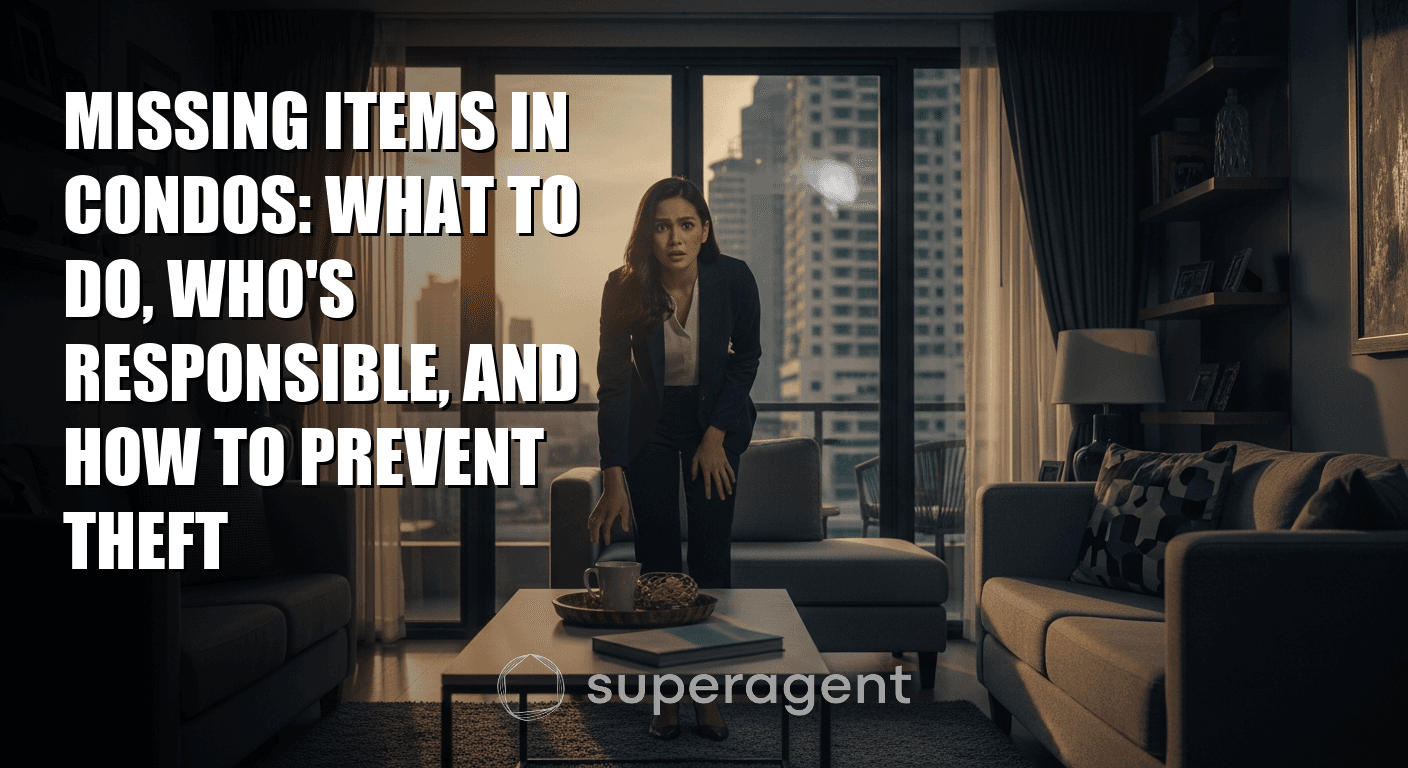
You're settling into your new condo in Thonglor, unpacking boxes after a long day, and you notice something's off. That expensive watch you left on the bedside table is gone. Your laptop, which you'd placed on the living room desk for just a moment, has vanished. Your heart sinks. You're not alone in this experience. Missing items from condos happen more often than most people realize, and knowing exactly what to do, who's responsible, and how to prevent it can save you thousands of baht and months of frustration.
When you rent a condo in Bangkok, whether it's a cozy 25 square meter studio near BTS Nana or a sprawling two-bedroom in Ekkamai, you're entering into a specific legal and practical relationship with your landlord and the building management. That relationship comes with rights and responsibilities that most renters never read the fine print on. Understanding them could mean the difference between recovering your belongings and writing off the loss entirely.
What Actually Happens When Something Goes Missing From Your Condo
Missing items from a condo typically fall into one of three categories: theft by outsiders, theft by people with building access like maintenance staff, or loss due to the building's security failures. Each scenario carries different legal implications and recovery chances.
Let's say you're renting a one-bedroom in Phloen Chit, paying around 28,000 to 32,000 THB per month. You go to work in the morning, lock your door behind you, and return in the evening to find your iPad missing. No signs of forced entry. This is the most common scenario renters face, and it's also the one where responsibility becomes murky.
The building management will likely claim they cannot be held responsible for thefts unless there's evidence of a security breach on their part, like a broken door lock or a malfunctioning CCTV system. Conversely, if someone broke into your unit through a window that the building failed to secure, or if a staff member stole your items, the liability shifts toward them.
Who's Actually Legally Responsible
In Thailand, the responsibility for missing items from your rented condo depends entirely on the cause and the terms of your lease agreement. Most standard condo rental contracts in Bangkok include a clause stating that the landlord or building management is not responsible for theft, loss, or damage to your personal belongings. This is your starting point, and it's frustrating but legal.
However, that blanket statement doesn't cover everything. If building security was demonstrably inadequate, or if the theft occurred because the landlord failed to maintain locks, doors, or windows, you may have grounds to claim liability. The key word here is "demonstrable." You'll need evidence, documentation, and probably a lawyer.
Consider this real scenario: A renter in a Sukhumvit-area condo near BTS Phrom Phong left valuable jewelry in their unit. A contract worker hired by the building's maintenance team was spotted on CCTV footage entering the unit without authorization and leaving with items. In this case, the building's failure to properly vet contractors and control access makes them partially liable. The renter recovered about 70 percent of the declared value through the building's insurance.
The Thai legal system, governed by the Civil and Commercial Code, places the burden of proof firmly on the victim. You must prove negligence, breach of duty, or inadequate security measures. This is a high bar, especially when building management has already included a liability waiver in your contract.
What Your Lease Contract Actually Says (And What It Means)
Before you signed your lease for that 35,000 THB two-bedroom near Ari, did you actually read the Thai and English versions side by side? Most renters didn't, which means they missed the clause buried on page three that absolves the landlord of responsibility for theft.
These clauses are standard across Bangkok's condo market, from Budget-friendly units in Huai Khwang to luxury properties along Sukhumvit. The logic behind them is straightforward: the landlord provides a physical space and basic security infrastructure. What happens inside that space, and what security measures you personally take, fall to you.
However, some lease agreements go further and specify what the building will provide, such as 24-hour security, CCTV coverage in common areas, and controlled access. These specific promises can actually strengthen your case if they're violated. If your lease promises that maintenance staff are vetted and background-checked, and it turns out they weren't, you have a contractual breach to point to.
The most important line to find in your lease is whether it includes a clause allowing you to claim damages through the building's liability insurance. Some high-end buildings in Sathorn and Silom offer limited coverage, typically up to 50,000 to 100,000 THB per incident. Budget to mid-range buildings usually offer nothing.
Steps to Take Immediately When You Discover Something's Missing
The moment you realize an item is missing, your actions matter. Don't panic and don't immediately assume it's gone forever. Take these steps in order.
First, search your entire unit thoroughly. Check unusual places, other rooms, storage areas. You'd be surprised how many "missing" items are simply misplaced. Give yourself 30 minutes of careful searching.
Second, contact your landlord or building management in writing, preferably via email or Line with a timestamp. Document the missing item's description, value, the date you last saw it, and when you discovered it missing. This creates an official record. Include photos of your unit and any signs of forced entry or unusual activity.
Third, request that building management review CCTV footage from common areas and your unit's entrance. Most Bangkok condos maintain security footage for 7 to 30 days. Ask them to preserve any footage that might show who entered or exited your unit during the relevant timeframe.
Fourth, file a report at your local police station. In Bangkok, you'll contact the station in your district, whether that's Nana, Silom, Watthana, or another area. Bring a copy of your lease, photos, and a clear description of what's missing. The police report creates an official record, which you'll need if you pursue an insurance claim.
Do all of this within 48 hours. After that window, evidence deteriorates, memories fade, and security footage gets overwritten.
How to Protect Yourself Before Theft Happens
Prevention is infinitely easier than recovery. Most successful renters in Bangkok follow a straightforward checklist to minimize their risk.
Start with basic physical security. Invest in a quality door lock and a door bar or wedge. A 300 to 500 THB door bar from Lazada or a local hardware store takes 10 seconds to install and makes forced entry far more difficult. Replace the default lock on your unit if your lease allows it.
Second, don't leave valuables visible. Close your curtains or install blackout blinds. A laptop sitting on your desk visible from the hallway is an invitation. A watch on your nightstand catches light and attention. Keep valuables in your bedroom, with the door locked, or in a small safe bolted to the floor or wall.
Third, use building safes if available. Some condos in Phetchburi and Sukhumvit offer small safe deposit boxes in the lobby or security office. A few thousand baht of valuables in a box in a secured area beats them being in your unit any day.
Fourth, document and photograph everything of value. Create a detailed inventory with photos, serial numbers, purchase receipts, and estimated values. Store copies digitally in the cloud and as physical backups. If theft happens, this documentation is worth its weight in gold for insurance claims.
Fifth, secure your unit's windows, especially on lower floors. Window bars or locks cost 1,500 to 3,000 THB installed. On Sukhumvit's quieter sois or in sprawling complexes like Lumpini Park Towers, ground-floor windows are genuine security risks.
Finally, get renters insurance, also called personal property insurance. Thai insurance companies like AIS Insurance and Allianz Thailand offer plans covering theft, loss, and damage. A 50,000 THB annual premium might cover 500,000 to 1,000,000 THB worth of belongings. This is your real safety net.
Comparing Security Measures Across Bangkok Neighborhoods and Condo Types
- Thonglor / Ekkamai (Mid to High Range): 32,000 to 50,000 THB | 24-hour security, CCTV, controlled access, vetting of staff | Low | Yes, through building or private policy
- Sukhumvit (Budget to Mid Range): 20,000 to 35,000 THB | Security desk, basic CCTV, standard locks | Medium | Limited through building, private insurance recommended
- Huai Khwang / Latphrao (Budget Range): 15,000 to 25,000 THB | Security desk during business hours, basic locks | Medium to High | Rare, private insurance essential
- Silom / Sathon (High Range Luxury): 40,000 to 80,000 THB | 24-hour concierge, advanced CCTV, biometric access, vetting | Low | Yes, often included in lease
This table reveals a hard truth: you get what you pay for. Budget condos near MRT stations in Huai Khwang offer convenience but less security oversight. Mid-range buildings near BTS stations in Thonglor and Ekkamai balance cost and security reasonably well. Luxury properties in Silom invest heavily in access control and staff vetting, making theft comparatively rare.
Recovery Options If Your Items Are Already Gone
If you've already lost something and no recovery seems possible, your options narrow but don't disappear entirely.
Pursue an insurance claim if you have personal property insurance. Submit your claim within 30 days of the incident. Include the police report, photos of your unit, documentation of value, and your detailed inventory. Thai insurers typically respond within two to three weeks.
Pursue a civil suit against your landlord if you have strong evidence of negligence. Hire a lawyer who specializes in tenant law and property disputes. This is expensive, time-consuming, and uncertain. Expect legal fees of 15,000 to 40,000 THB, and realize that the burden of proof remains on you. Most renters settle or drop the case.
Report the theft through official channels. The police report stays on file. If the same thief strikes multiple units in the same building, patterns emerge, and police take notice. Your report contributes to that pattern.
Request mediation through your condo's management office or an official arbitration service. Some buildings have internal dispute resolution processes that can be faster and cheaper than court.
Practical Prevention Habits That Stick
Theory is one thing. Living daily life in your Bangkok condo is another. Build these habits now and thank yourself later.
Always lock your door when you leave, even for five minutes. A friend of yours was robbed at a condo near BTS Chit Lom while they ran downstairs to meet a delivery person. The whole incident took three minutes. Your door being locked is non-negotiable.
Ask your landlord or building about security protocols for contractors and maintenance staff. Who vets them? Do they wear ID? Are their visits logged? The answers tell you something important about building standards.
Use your building's package storage system for deliveries. Many Bangkok condos have dedicated areas for packages precisely to prevent theft. Use them instead of leaving boxes outside your door.
Get to know your building's security staff. A friendly relationship means they're more likely to notice suspicious activity and less likely to help someone they don't know access areas they shouldn't. This sounds informal, but it works.
Most importantly, insure your belongings. Renters insurance in Thailand costs roughly 400 to 800 THB per month for standard coverage. That's cheaper than replacing a stolen laptop or watch. It's your real protection layer when everything else fails.
Missing items from your Bangkok condo don't have to mean a complete loss. Legal responsibility is murky, prevention is effective, and insurance exists for exactly this reason. Read your lease, secure your unit, document your belongings, get covered, and sleep better at night. When you're hunting for your next condo, look for buildings with clear security commitments, and don't hesitate to ask about their theft and loss policies upfront. Browse available units on Superagent.co to find properties in buildings with strong security reputations, and use our listings to connect directly with landlords who take tenant safety seriously.
You're settling into your new condo in Thonglor, unpacking boxes after a long day, and you notice something's off. That expensive watch you left on the bedside table is gone. Your laptop, which you'd placed on the living room desk for just a moment, has vanished. Your heart sinks. You're not alone in this experience. Missing items from condos happen more often than most people realize, and knowing exactly what to do, who's responsible, and how to prevent it can save you thousands of baht and months of frustration.
When you rent a condo in Bangkok, whether it's a cozy 25 square meter studio near BTS Nana or a sprawling two-bedroom in Ekkamai, you're entering into a specific legal and practical relationship with your landlord and the building management. That relationship comes with rights and responsibilities that most renters never read the fine print on. Understanding them could mean the difference between recovering your belongings and writing off the loss entirely.
What Actually Happens When Something Goes Missing From Your Condo
Missing items from a condo typically fall into one of three categories: theft by outsiders, theft by people with building access like maintenance staff, or loss due to the building's security failures. Each scenario carries different legal implications and recovery chances.
Let's say you're renting a one-bedroom in Phloen Chit, paying around 28,000 to 32,000 THB per month. You go to work in the morning, lock your door behind you, and return in the evening to find your iPad missing. No signs of forced entry. This is the most common scenario renters face, and it's also the one where responsibility becomes murky.
The building management will likely claim they cannot be held responsible for thefts unless there's evidence of a security breach on their part, like a broken door lock or a malfunctioning CCTV system. Conversely, if someone broke into your unit through a window that the building failed to secure, or if a staff member stole your items, the liability shifts toward them.
Who's Actually Legally Responsible
In Thailand, the responsibility for missing items from your rented condo depends entirely on the cause and the terms of your lease agreement. Most standard condo rental contracts in Bangkok include a clause stating that the landlord or building management is not responsible for theft, loss, or damage to your personal belongings. This is your starting point, and it's frustrating but legal.
However, that blanket statement doesn't cover everything. If building security was demonstrably inadequate, or if the theft occurred because the landlord failed to maintain locks, doors, or windows, you may have grounds to claim liability. The key word here is "demonstrable." You'll need evidence, documentation, and probably a lawyer.
Consider this real scenario: A renter in a Sukhumvit-area condo near BTS Phrom Phong left valuable jewelry in their unit. A contract worker hired by the building's maintenance team was spotted on CCTV footage entering the unit without authorization and leaving with items. In this case, the building's failure to properly vet contractors and control access makes them partially liable. The renter recovered about 70 percent of the declared value through the building's insurance.
The Thai legal system, governed by the Civil and Commercial Code, places the burden of proof firmly on the victim. You must prove negligence, breach of duty, or inadequate security measures. This is a high bar, especially when building management has already included a liability waiver in your contract.
What Your Lease Contract Actually Says (And What It Means)
Before you signed your lease for that 35,000 THB two-bedroom near Ari, did you actually read the Thai and English versions side by side? Most renters didn't, which means they missed the clause buried on page three that absolves the landlord of responsibility for theft.
These clauses are standard across Bangkok's condo market, from Budget-friendly units in Huai Khwang to luxury properties along Sukhumvit. The logic behind them is straightforward: the landlord provides a physical space and basic security infrastructure. What happens inside that space, and what security measures you personally take, fall to you.
However, some lease agreements go further and specify what the building will provide, such as 24-hour security, CCTV coverage in common areas, and controlled access. These specific promises can actually strengthen your case if they're violated. If your lease promises that maintenance staff are vetted and background-checked, and it turns out they weren't, you have a contractual breach to point to.
The most important line to find in your lease is whether it includes a clause allowing you to claim damages through the building's liability insurance. Some high-end buildings in Sathorn and Silom offer limited coverage, typically up to 50,000 to 100,000 THB per incident. Budget to mid-range buildings usually offer nothing.
Steps to Take Immediately When You Discover Something's Missing
The moment you realize an item is missing, your actions matter. Don't panic and don't immediately assume it's gone forever. Take these steps in order.
First, search your entire unit thoroughly. Check unusual places, other rooms, storage areas. You'd be surprised how many "missing" items are simply misplaced. Give yourself 30 minutes of careful searching.
Second, contact your landlord or building management in writing, preferably via email or Line with a timestamp. Document the missing item's description, value, the date you last saw it, and when you discovered it missing. This creates an official record. Include photos of your unit and any signs of forced entry or unusual activity.
Third, request that building management review CCTV footage from common areas and your unit's entrance. Most Bangkok condos maintain security footage for 7 to 30 days. Ask them to preserve any footage that might show who entered or exited your unit during the relevant timeframe.
Fourth, file a report at your local police station. In Bangkok, you'll contact the station in your district, whether that's Nana, Silom, Watthana, or another area. Bring a copy of your lease, photos, and a clear description of what's missing. The police report creates an official record, which you'll need if you pursue an insurance claim.
Do all of this within 48 hours. After that window, evidence deteriorates, memories fade, and security footage gets overwritten.
How to Protect Yourself Before Theft Happens
Prevention is infinitely easier than recovery. Most successful renters in Bangkok follow a straightforward checklist to minimize their risk.
Start with basic physical security. Invest in a quality door lock and a door bar or wedge. A 300 to 500 THB door bar from Lazada or a local hardware store takes 10 seconds to install and makes forced entry far more difficult. Replace the default lock on your unit if your lease allows it.
Second, don't leave valuables visible. Close your curtains or install blackout blinds. A laptop sitting on your desk visible from the hallway is an invitation. A watch on your nightstand catches light and attention. Keep valuables in your bedroom, with the door locked, or in a small safe bolted to the floor or wall.
Third, use building safes if available. Some condos in Phetchburi and Sukhumvit offer small safe deposit boxes in the lobby or security office. A few thousand baht of valuables in a box in a secured area beats them being in your unit any day.
Fourth, document and photograph everything of value. Create a detailed inventory with photos, serial numbers, purchase receipts, and estimated values. Store copies digitally in the cloud and as physical backups. If theft happens, this documentation is worth its weight in gold for insurance claims.
Talk to us about renting
Share your details and keep reading — we’ll get back to you.
Fifth, secure your unit's windows, especially on lower floors. Window bars or locks cost 1,500 to 3,000 THB installed. On Sukhumvit's quieter sois or in sprawling complexes like Lumpini Park Towers, ground-floor windows are genuine security risks.
Finally, get renters insurance, also called personal property insurance. Thai insurance companies like AIS Insurance and Allianz Thailand offer plans covering theft, loss, and damage. A 50,000 THB annual premium might cover 500,000 to 1,000,000 THB worth of belongings. This is your real safety net.
Comparing Security Measures Across Bangkok Neighborhoods and Condo Types
- Thonglor / Ekkamai (Mid to High Range): 32,000 to 50,000 THB | 24-hour security, CCTV, controlled access, vetting of staff | Low | Yes, through building or private policy
- Sukhumvit (Budget to Mid Range): 20,000 to 35,000 THB | Security desk, basic CCTV, standard locks | Medium | Limited through building, private insurance recommended
- Huai Khwang / Latphrao (Budget Range): 15,000 to 25,000 THB | Security desk during business hours, basic locks | Medium to High | Rare, private insurance essential
- Silom / Sathon (High Range Luxury): 40,000 to 80,000 THB | 24-hour concierge, advanced CCTV, biometric access, vetting | Low | Yes, often included in lease
This table reveals a hard truth: you get what you pay for. Budget condos near MRT stations in Huai Khwang offer convenience but less security oversight. Mid-range buildings near BTS stations in Thonglor and Ekkamai balance cost and security reasonably well. Luxury properties in Silom invest heavily in access control and staff vetting, making theft comparatively rare.
Recovery Options If Your Items Are Already Gone
If you've already lost something and no recovery seems possible, your options narrow but don't disappear entirely.
Pursue an insurance claim if you have personal property insurance. Submit your claim within 30 days of the incident. Include the police report, photos of your unit, documentation of value, and your detailed inventory. Thai insurers typically respond within two to three weeks.
Pursue a civil suit against your landlord if you have strong evidence of negligence. Hire a lawyer who specializes in tenant law and property disputes. This is expensive, time-consuming, and uncertain. Expect legal fees of 15,000 to 40,000 THB, and realize that the burden of proof remains on you. Most renters settle or drop the case.
Report the theft through official channels. The police report stays on file. If the same thief strikes multiple units in the same building, patterns emerge, and police take notice. Your report contributes to that pattern.
Request mediation through your condo's management office or an official arbitration service. Some buildings have internal dispute resolution processes that can be faster and cheaper than court.
Practical Prevention Habits That Stick
Theory is one thing. Living daily life in your Bangkok condo is another. Build these habits now and thank yourself later.
Always lock your door when you leave, even for five minutes. A friend of yours was robbed at a condo near BTS Chit Lom while they ran downstairs to meet a delivery person. The whole incident took three minutes. Your door being locked is non-negotiable.
Ask your landlord or building about security protocols for contractors and maintenance staff. Who vets them? Do they wear ID? Are their visits logged? The answers tell you something important about building standards.
Use your building's package storage system for deliveries. Many Bangkok condos have dedicated areas for packages precisely to prevent theft. Use them instead of leaving boxes outside your door.
Get to know your building's security staff. A friendly relationship means they're more likely to notice suspicious activity and less likely to help someone they don't know access areas they shouldn't. This sounds informal, but it works.
Most importantly, insure your belongings. Renters insurance in Thailand costs roughly 400 to 800 THB per month for standard coverage. That's cheaper than replacing a stolen laptop or watch. It's your real protection layer when everything else fails.
Missing items from your Bangkok condo don't have to mean a complete loss. Legal responsibility is murky, prevention is effective, and insurance exists for exactly this reason. Read your lease, secure your unit, document your belongings, get covered, and sleep better at night. When you're hunting for your next condo, look for buildings with clear security commitments, and don't hesitate to ask about their theft and loss policies upfront. Browse available units on Superagent.co to find properties in buildings with strong security reputations, and use our listings to connect directly with landlords who take tenant safety seriously.
Share this article
Properties you may like
![[For Rent] CONDO I Aguston Sukhumvit 22 I Pet Friendly I 2 Beds I 2 Baths I Rent 55,000THB/mo](/_next/image?url=https%3A%2F%2Fstorage.googleapis.com%2Fsuperagent-web%2Fattachments%2Flistings%2F2266%2Fd3afcd25-6b79-46cb-9f1f-396acdc3dd10-955-3.jpg&w=3840&q=75)
฿55,000
2 Bed295 sqm
[For Rent] CONDO I Aguston Sukhumvit 22 I Pet Friendly I 2 Beds I 2 Baths I Rent 55,000THB/mo
Phrom Phong
Condo![[For Rent] CONDO I SUPALAI PLACE Sukhumvit 39 I 2 Beds I 2 Baths (1 Jacuzzi) I 55,555THB/mo](/_next/image?url=https%3A%2F%2Fstorage.googleapis.com%2Fsuperagent-web%2Fattachments%2Flistings%2F6743%2Fba530743-48b9-4ac6-92d3-c2247e743cf6-01-supalai-place-skv39-2b-link-heaven.jpg&w=3840&q=75)
฿55,555
2 Bed2142 sqm
[For Rent] CONDO I SUPALAI PLACE Sukhumvit 39 I 2 Beds I 2 Baths (1 Jacuzzi) I 55,555THB/mo
Phrom Phong
Condo![[For Rent] CONDO I Maru Ekkamai 2 I Pet friendly I 2 Beds I 2 Baths I 68,000 THB/mo](/_next/image?url=https%3A%2F%2Fstorage.googleapis.com%2Fsuperagent-web%2Fattachments%2Flistings%2F6602%2F9f1d8f71-ee43-435f-9a44-da16c4092c92-968-1.jpg&w=3840&q=75)
฿68,000
2 Bed360 sqm
[For Rent] CONDO I Maru Ekkamai 2 I Pet friendly I 2 Beds I 2 Baths I 68,000 THB/mo
Ekkamai
Condo![[For Rent] CONDO I Noble State 39 I 2 Beds I 2 Baths I 63,000THB/mo](/_next/image?url=https%3A%2F%2Fstorage.googleapis.com%2Fsuperagent-web%2Fattachments%2Flistings%2F2237%2F60eb58f3-eae5-41ed-a80b-406e004f05d8-940-1.jpg&w=3840&q=75)
฿63,000
2 Bed260 sqm
[For Rent] CONDO I Noble State 39 I 2 Beds I 2 Baths I 63,000THB/mo
Phrom Phong
Condo![[For Rent] CONDO I Rhythm Sukhumvit 36-38 I 2 Beds I 2 Baths I 38,999THB/mo](/_next/image?url=https%3A%2F%2Fstorage.googleapis.com%2Fsuperagent-web%2Fattachments%2Flistings%2F1788%2F942a0215-4128-4c2c-a064-f607e84e7aa4-656-2.jpg&w=3840&q=75)
฿38,999
2 Bed256 sqm
[For Rent] CONDO I Rhythm Sukhumvit 36-38 I 2 Beds I 2 Baths I 38,999THB/mo
Thonglor
Condo![[For Rent] CONDO I CLOUD Thonglor-Phetchaburi I 1 Bed I 1 Bath I 22,500THB/mo](/_next/image?url=https%3A%2F%2Fstorage.googleapis.com%2Fsuperagent-web%2Fattachments%2Flistings%2F6742%2F6cef5361-0dac-4dba-98f1-b0d187559c84-1118-1.jpg&w=3840&q=75)
฿22,500
1 Bed132 sqm
[For Rent] CONDO I CLOUD Thonglor-Phetchaburi I 1 Bed I 1 Bath I 22,500THB/mo
Thonglor
Condo![[For Rent] CONDO I City Smart Sukhumvit 18 I 3 Beds I 3 Baths I 65,000mo/THB](/_next/image?url=https%3A%2F%2Fstorage.googleapis.com%2Fsuperagent-web%2Fattachments%2Flistings%2F6741%2Fd371c89d-a913-42c4-a673-e540afae4f46-1116-1.jpg&w=3840&q=75)
฿65,000
3 Bed3125 sqm
[For Rent] CONDO I City Smart Sukhumvit 18 I 3 Beds I 3 Baths I 65,000mo/THB
Condo![[For Rent] CONDO I The Coast Bangkok I 1 Bed I 1 Bath I 20,000mo/THB](/_next/image?url=https%3A%2F%2Fstorage.googleapis.com%2Fsuperagent-web%2Fattachments%2Flistings%2F6740%2F498477ce-4ffa-4e4c-ab08-0e565d9c4bbe-1115-3.jpg&w=3840&q=75)
฿20,000
1 Bed146 sqm
[For Rent] CONDO I The Coast Bangkok I 1 Bed I 1 Bath I 20,000mo/THB
Bang Na
Condo![[For Rent] CONDO I IDEO Sukhumvit-RAMA 4 I 2 Beds I 2 Baths I 55,000mo/THB](/_next/image?url=https%3A%2F%2Fstorage.googleapis.com%2Fsuperagent-web%2Fattachments%2Flistings%2F6739%2F15df221d-5b8e-497c-b7ce-a6b9b6412cab-1113-1.jpg&w=3840&q=75)
฿55,000
2 Bed265 sqm
[For Rent] CONDO I IDEO Sukhumvit-RAMA 4 I 2 Beds I 2 Baths I 55,000mo/THB
Phra Khanong
Condo![[For Rent] CONDO I Downtown 49 I Pet Friendly I 1 Bed I 1 Bath I 23,000mo/THB](/_next/image?url=https%3A%2F%2Fstorage.googleapis.com%2Fsuperagent-web%2Fattachments%2Flistings%2F6738%2F11cf2ffe-1f01-4ccc-991c-2ad608f1ba73-1112-1.jpg&w=3840&q=75)
฿23,000
1 Bed135 sqm
[For Rent] CONDO I Downtown 49 I Pet Friendly I 1 Bed I 1 Bath I 23,000mo/THB
Thonglor
CondoMore like this
 In Guides · Superagent EditorialHidden Costs of Renting a Condo in Bangkok Nobody Warns You AboutBangkok condo rent looks affordable until month one hits. Here are the real costs beyond the headline figure that catch most renters off guard.25 May 20261 min read
 In Guides · Superagent EditorialWhat a Long-Vacant Bangkok Condo Unit Is Actually Telling YouA Bangkok condo vacant for months signals overpricing, landlord issues, or real problems. Here is how to read the signs.25 May 20261 min read
 In Guides · Superagent EditorialRed Flags in a Bangkok Rental Contract to Watch Out ForBangkok rental contracts often hide risky clauses. Here are the red flags every tenant must catch before signing any lease.25 May 20261 min read
 In Guides · Superagent EditorialWorking Online from a Condo: How to Choose the Perfect Room for ProductivityLearn how to choose the best condo room for working online with tips on lighting, noise, and furniture setup to maximize productivity.9 May 20261 min read