Student Dormitories and Accommodation in Bangkok: Affordable Rates Near Universities
Guides
Student Dormitories and Accommodation in Bangkok: Affordable Rates Near Universities
Find affordable student housing in Bangkok close to major universities with flexible lease terms.
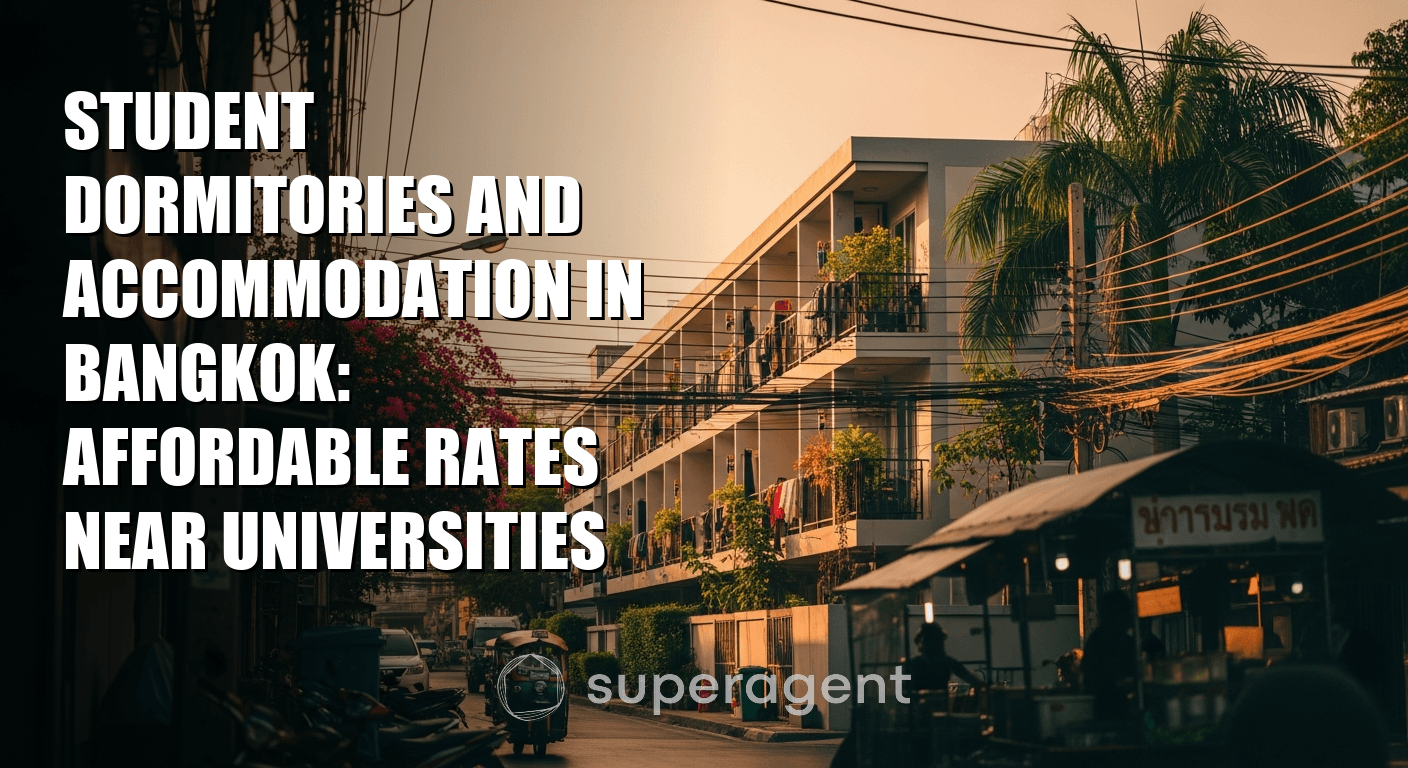
Summary
Discover หอพักนักศึกษากรุงเทพ options offering competitive prices and convenient locations near top universities and transit hubs.
Looking for student housing in Bangkok that doesn't require selling a kidney? You're in the right place. Finding a dorm or apartment near campus while keeping rent under control is actually possible if you know where to look and what to expect. Most students spend between 4,000 and 15,000 THB per month on accommodation, depending on location, amenities, and how close they want to be to their university. The difference between overpaying by thousands and landing a genuine bargain often comes down to timing, neighborhood choice, and knowing which areas have the best transport links to campus.
Understanding Bangkok Student Housing Market Basics
The Bangkok student housing market is split between official university dorms, private dormitories run by companies, and affordable condos managed by landlords who rent specifically to students. Each option has its own quirks and price range. University dorms are cheapest but competitive to secure. Private dorms offer flexibility and often better amenities. Student-friendly condos give you independence at a reasonable price if you negotiate well.
According to DDproperty's rental market data, average student accommodation in central Bangkok ranges from 6,000 to 12,000 THB monthly for shared rooms or small studios. The market is especially competitive around Chulalongkorn, Thammasat, and Kasetsart universities. If you're flexible about distance, you can find rooms for 4,000-6,000 THB by moving further out along BTS or MRT lines.
Best Neighborhoods by University and Budget
Where you live depends entirely on where you study. Living 10-15 minutes from campus can save you hours of commuting weekly and help you actually afford rent. Here's what you're realistically looking at by location.
For Chulalongkorn students, Siam, Phrom Phong, and Nana areas have the highest concentration of student housing. Expect 8,000-14,000 THB for a small room in a shared dorm setup. Many students find better deals by heading to Ekkamai or Thonglor, still within one BTS stop, paying 6,500-9,500 THB. Phetchaburi Road near the campus has cheaper options, around 5,500-7,500 THB, but you're looking at older buildings and longer walks to class.
Thammasat students at Rangsit have it easier. The campus is further out, so housing around Kasetsart or Senanikom is cheaper and more plentiful. Budget 4,000-7,000 THB for decent shared accommodation. Students at the Thammasat Tha Prachan campus near the river should look at Khao San, Banglamphu, or near Sanam Luang, where 5,500-9,000 THB gets you a small studio or shared room.
Kasetsart University students near the Bang Khen campus will find the lowest rents in Bangkok. Shared rooms run 3,500-5,500 THB, and private studios start at 5,000-7,000 THB. The trade off is location: you'll be far from central Bangkok's nightlife and job centers, but it's excellent value and the MRT connects you directly to the city center.
Dorm vs. Condo: What's Best For Your Situation
Official university dormitories are controlled by the universities themselves and cost between 3,000 and 6,000 THB per month for a bed in a shared room. The catch is they fill up fast, sometimes within days of applications opening. You'll meet other students easily and campus facilities are walkable, but privacy is minimal and rules can be strict.
Private dormitories like NIC (National Innovation Center) dorms, Unilodge, and various other providers typically charge 8,000-13,000 THB monthly. They offer single rooms or small shared units, communal kitchens, gyms, and study areas. They're more flexible about visitors and checkout times than university dorms. Many have furnished rooms and utilities included, which matters when you're calculating actual costs.
Student-friendly condos run by private landlords or management companies occupy the middle ground. You get more independence than dorms, potentially your own bathroom, and less bureaucracy. Monthly rent is usually 6,000-10,000 THB depending on size and condition. The downside is finding them requires more legwork. You'll often need to negotiate, understand tenancy law basics, and handle deposits properly.
BTS and MRT Lines That Make Student Life Easier
Transportation cost adds up faster than you'd think. Living just one or two stops closer to campus can save 20-30 hours of commute time monthly. That matters for both your sanity and your productivity.
The BTS Sukhumvit Line is the king of student-friendly housing. From Nana to Ekkamai, you'll find thousands of student rooms. Phrom Pong and Ekkamai have the best combination of affordable housing and direct campus access. From Ekkamai, you can reach Chulalongkorn in 15 minutes. The BTS website shows exactly which stations connect to which universities.
The BTS Mo Chit line is excellent for Kasetsart and Thammasat Rangsit students. Housing around Chatuchak or Sai Mai is significantly cheaper, and the MRT Green Line connects you across the city. The MRT Blue Line from Bang Khen directly serves Kasetsart students and has some of the most affordable student housing in Bangkok.
For Thammasat Tha Prachan students, the Chao Phraya Express Boat is a real option. Living in Banglamphu or around Khao San puts you five minutes from campus and costs 5,000-7,500 THB. You avoid the BTS/MRT markup entirely.
How to Negotiate Rent and Avoid Overpaying
Most landlords in Bangkok expect negotiation on student housing, especially for longer leases. Never accept the first price quoted. Here's what actually works.
Commit to a longer lease, usually one year, and ask for 5-15% off. Landlords love predictable, long-term tenants far more than month-to-month chaos. Pay three months upfront and request a discount. It happens more often than you'd think. If multiple units are available in the same building, ask if they'll give you a rate for bringing friends along. Building managers often throw in discounts for group bookings.
Visit in person rather than calling or messaging. Seeing the actual room, condition, and location lets you make a better offer. You look serious and committed. Ask what utilities cost and whether they're included or separate. A "6,000 THB" room becomes 7,500 THB when water and electricity are billed separately. Clarify this upfront.
Check the lease carefully. Many student housing agreements have hidden clauses about guests, noise hours, or damages. Student housing providers know students move frequently, so they sometimes overcharge damage fees. Take photos before moving in and document the room condition with the landlord present.
Location Comparison Table for Popular University Areas
- Chulalongkorn: Phetchaburi Road | Phetchaburi MRT | 5,500-7,500 THB | 10-15 minutes
- Chulalongkorn: Ekkamai | Ekkamai BTS | 6,500-9,500 THB | 12-18 minutes
- Thammasat Rangsit: Kasetsart Area | Kasetsart MRT | 4,000-7,000 THB | 20-25 minutes
- Thammasat Tha Prachan: Banglamphu | Chao Phraya Boat | 5,000-7,500 THB | 5-10 minutes
- Kasetsart: Bang Khen / Senanikom | Bang Khen MRT | 3,500-6,000 THB | 5-15 minutes
Real example: Pim, a second year Chulalongkorn engineering student, initially rented in Siam for 10,000 THB. After realizing the noise kept her up and the location didn't save time, she moved to Phetchaburi Road, found a quiet room for 6,500 THB, cut her commute by five minutes, and freed up 3,500 THB monthly for actual student expenses. The neighborhood was less trendy but infinitely more livable.
What Utilities and Hidden Costs Actually Look Like
Student housing often quotes a base rent then surprises you with add ons. Here's what's typically separate. Electricity in Thailand costs roughly 4-6 THB per unit, so a room using 50-100 units monthly runs 200-600 THB. Water is cheaper, usually 30-60 THB monthly. Internet varies wildly, from 300 to 800 THB depending on speed. Some buildings bundle these; others bill separately.
Many private dorms include utilities in their quoted rate, which means higher upfront cost but predictable monthly bills. Student condos usually exclude utilities entirely. Always ask if rent is "all in" or base only. That 6,000 THB room might really cost 7,200 THB once you add everything up.
Deposits are always required, typically one month's rent. Some landlords will return this within 30 days; others drag it out. Get everything in writing and agree on a damage inspection date before you move out. Registration fees and agency commissions exist, though they're negotiable or sometimes covered by the landlord.
Finding genuinely affordable student housing in Bangkok requires patience, knowing which neighborhoods offer real value, and understanding your actual costs. The best deals go to students who research neighborhoods by university, use BTS and MRT connections strategically, and aren't afraid to negotiate. Start your search at least two months before your semester, apply for university dorms immediately if available, but also explore private dormitories and student condos along your campus commute. The money you save on rent is money you can spend on actually enjoying Bangkok, which is kind of the point of being a student here.
Ready to find your place without the stress? Check out Superagent.co, Bangkok's AI powered rental platform. Search by university, budget, and transport access all in one place.
Looking for student housing in Bangkok that doesn't require selling a kidney? You're in the right place. Finding a dorm or apartment near campus while keeping rent under control is actually possible if you know where to look and what to expect. Most students spend between 4,000 and 15,000 THB per month on accommodation, depending on location, amenities, and how close they want to be to their university. The difference between overpaying by thousands and landing a genuine bargain often comes down to timing, neighborhood choice, and knowing which areas have the best transport links to campus.
Understanding Bangkok Student Housing Market Basics
The Bangkok student housing market is split between official university dorms, private dormitories run by companies, and affordable condos managed by landlords who rent specifically to students. Each option has its own quirks and price range. University dorms are cheapest but competitive to secure. Private dorms offer flexibility and often better amenities. Student-friendly condos give you independence at a reasonable price if you negotiate well.
According to DDproperty's rental market data, average student accommodation in central Bangkok ranges from 6,000 to 12,000 THB monthly for shared rooms or small studios. The market is especially competitive around Chulalongkorn, Thammasat, and Kasetsart universities. If you're flexible about distance, you can find rooms for 4,000-6,000 THB by moving further out along BTS or MRT lines.
Best Neighborhoods by University and Budget
Where you live depends entirely on where you study. Living 10-15 minutes from campus can save you hours of commuting weekly and help you actually afford rent. Here's what you're realistically looking at by location.
For Chulalongkorn students, Siam, Phrom Phong, and Nana areas have the highest concentration of student housing. Expect 8,000-14,000 THB for a small room in a shared dorm setup. Many students find better deals by heading to Ekkamai or Thonglor, still within one BTS stop, paying 6,500-9,500 THB. Phetchaburi Road near the campus has cheaper options, around 5,500-7,500 THB, but you're looking at older buildings and longer walks to class.
Thammasat students at Rangsit have it easier. The campus is further out, so housing around Kasetsart or Senanikom is cheaper and more plentiful. Budget 4,000-7,000 THB for decent shared accommodation. Students at the Thammasat Tha Prachan campus near the river should look at Khao San, Banglamphu, or near Sanam Luang, where 5,500-9,000 THB gets you a small studio or shared room.
Kasetsart University students near the Bang Khen campus will find the lowest rents in Bangkok. Shared rooms run 3,500-5,500 THB, and private studios start at 5,000-7,000 THB. The trade off is location: you'll be far from central Bangkok's nightlife and job centers, but it's excellent value and the MRT connects you directly to the city center.
Dorm vs. Condo: What's Best For Your Situation
Official university dormitories are controlled by the universities themselves and cost between 3,000 and 6,000 THB per month for a bed in a shared room. The catch is they fill up fast, sometimes within days of applications opening. You'll meet other students easily and campus facilities are walkable, but privacy is minimal and rules can be strict.
Private dormitories like NIC (National Innovation Center) dorms, Unilodge, and various other providers typically charge 8,000-13,000 THB monthly. They offer single rooms or small shared units, communal kitchens, gyms, and study areas. They're more flexible about visitors and checkout times than university dorms. Many have furnished rooms and utilities included, which matters when you're calculating actual costs.
Student-friendly condos run by private landlords or management companies occupy the middle ground. You get more independence than dorms, potentially your own bathroom, and less bureaucracy. Monthly rent is usually 6,000-10,000 THB depending on size and condition. The downside is finding them requires more legwork. You'll often need to negotiate, understand tenancy law basics, and handle deposits properly.
BTS and MRT Lines That Make Student Life Easier
Transportation cost adds up faster than you'd think. Living just one or two stops closer to campus can save 20-30 hours of commute time monthly. That matters for both your sanity and your productivity.
The BTS Sukhumvit Line is the king of student-friendly housing. From Nana to Ekkamai, you'll find thousands of student rooms. Phrom Pong and Ekkamai have the best combination of affordable housing and direct campus access. From Ekkamai, you can reach Chulalongkorn in 15 minutes. The BTS website shows exactly which stations connect to which universities.
The BTS Mo Chit line is excellent for Kasetsart and Thammasat Rangsit students. Housing around Chatuchak or Sai Mai is significantly cheaper, and the MRT Green Line connects you across the city. The MRT Blue Line from Bang Khen directly serves Kasetsart students and has some of the most affordable student housing in Bangkok.
For Thammasat Tha Prachan students, the Chao Phraya Express Boat is a real option. Living in Banglamphu or around Khao San puts you five minutes from campus and costs 5,000-7,500 THB. You avoid the BTS/MRT markup entirely.
How to Negotiate Rent and Avoid Overpaying
Most landlords in Bangkok expect negotiation on student housing, especially for longer leases. Never accept the first price quoted. Here's what actually works.
Commit to a longer lease, usually one year, and ask for 5-15% off. Landlords love predictable, long-term tenants far more than month-to-month chaos. Pay three months upfront and request a discount. It happens more often than you'd think. If multiple units are available in the same building, ask if they'll give you a rate for bringing friends along. Building managers often throw in discounts for group bookings.
Talk to us about renting
Share your details and keep reading — we’ll get back to you.
Visit in person rather than calling or messaging. Seeing the actual room, condition, and location lets you make a better offer. You look serious and committed. Ask what utilities cost and whether they're included or separate. A "6,000 THB" room becomes 7,500 THB when water and electricity are billed separately. Clarify this upfront.
Check the lease carefully. Many student housing agreements have hidden clauses about guests, noise hours, or damages. Student housing providers know students move frequently, so they sometimes overcharge damage fees. Take photos before moving in and document the room condition with the landlord present.
Location Comparison Table for Popular University Areas
- Chulalongkorn: Phetchaburi Road | Phetchaburi MRT | 5,500-7,500 THB | 10-15 minutes
- Chulalongkorn: Ekkamai | Ekkamai BTS | 6,500-9,500 THB | 12-18 minutes
- Thammasat Rangsit: Kasetsart Area | Kasetsart MRT | 4,000-7,000 THB | 20-25 minutes
- Thammasat Tha Prachan: Banglamphu | Chao Phraya Boat | 5,000-7,500 THB | 5-10 minutes
- Kasetsart: Bang Khen / Senanikom | Bang Khen MRT | 3,500-6,000 THB | 5-15 minutes
Real example: Pim, a second year Chulalongkorn engineering student, initially rented in Siam for 10,000 THB. After realizing the noise kept her up and the location didn't save time, she moved to Phetchaburi Road, found a quiet room for 6,500 THB, cut her commute by five minutes, and freed up 3,500 THB monthly for actual student expenses. The neighborhood was less trendy but infinitely more livable.
What Utilities and Hidden Costs Actually Look Like
Student housing often quotes a base rent then surprises you with add ons. Here's what's typically separate. Electricity in Thailand costs roughly 4-6 THB per unit, so a room using 50-100 units monthly runs 200-600 THB. Water is cheaper, usually 30-60 THB monthly. Internet varies wildly, from 300 to 800 THB depending on speed. Some buildings bundle these; others bill separately.
Many private dorms include utilities in their quoted rate, which means higher upfront cost but predictable monthly bills. Student condos usually exclude utilities entirely. Always ask if rent is "all in" or base only. That 6,000 THB room might really cost 7,200 THB once you add everything up.
Deposits are always required, typically one month's rent. Some landlords will return this within 30 days; others drag it out. Get everything in writing and agree on a damage inspection date before you move out. Registration fees and agency commissions exist, though they're negotiable or sometimes covered by the landlord.
Finding genuinely affordable student housing in Bangkok requires patience, knowing which neighborhoods offer real value, and understanding your actual costs. The best deals go to students who research neighborhoods by university, use BTS and MRT connections strategically, and aren't afraid to negotiate. Start your search at least two months before your semester, apply for university dorms immediately if available, but also explore private dormitories and student condos along your campus commute. The money you save on rent is money you can spend on actually enjoying Bangkok, which is kind of the point of being a student here.
Ready to find your place without the stress? Check out Superagent.co, Bangkok's AI powered rental platform. Search by university, budget, and transport access all in one place.
Share this article
Properties you may like
![[For Rent] CONDO I Aguston Sukhumvit 22 I Pet Friendly I 2 Beds I 2 Baths I Rent 55,000THB/mo](/_next/image?url=https%3A%2F%2Fstorage.googleapis.com%2Fsuperagent-web%2Fattachments%2Flistings%2F2266%2Fd3afcd25-6b79-46cb-9f1f-396acdc3dd10-955-3.jpg&w=3840&q=75)
฿55,000
2 Bed295 sqm
[For Rent] CONDO I Aguston Sukhumvit 22 I Pet Friendly I 2 Beds I 2 Baths I Rent 55,000THB/mo
Phrom Phong
Condo![[For Rent] CONDO I SUPALAI PLACE Sukhumvit 39 I 2 Beds I 2 Baths (1 Jacuzzi) I 55,555THB/mo](/_next/image?url=https%3A%2F%2Fstorage.googleapis.com%2Fsuperagent-web%2Fattachments%2Flistings%2F6743%2Fba530743-48b9-4ac6-92d3-c2247e743cf6-01-supalai-place-skv39-2b-link-heaven.jpg&w=3840&q=75)
฿55,555
2 Bed2142 sqm
[For Rent] CONDO I SUPALAI PLACE Sukhumvit 39 I 2 Beds I 2 Baths (1 Jacuzzi) I 55,555THB/mo
Phrom Phong
Condo![[For Rent] CONDO I Maru Ekkamai 2 I Pet friendly I 2 Beds I 2 Baths I 68,000 THB/mo](/_next/image?url=https%3A%2F%2Fstorage.googleapis.com%2Fsuperagent-web%2Fattachments%2Flistings%2F6602%2F9f1d8f71-ee43-435f-9a44-da16c4092c92-968-1.jpg&w=3840&q=75)
฿68,000
2 Bed360 sqm
[For Rent] CONDO I Maru Ekkamai 2 I Pet friendly I 2 Beds I 2 Baths I 68,000 THB/mo
Ekkamai
Condo![[For Rent] CONDO I Noble State 39 I 2 Beds I 2 Baths I 63,000THB/mo](/_next/image?url=https%3A%2F%2Fstorage.googleapis.com%2Fsuperagent-web%2Fattachments%2Flistings%2F2237%2F60eb58f3-eae5-41ed-a80b-406e004f05d8-940-1.jpg&w=3840&q=75)
฿63,000
2 Bed260 sqm
[For Rent] CONDO I Noble State 39 I 2 Beds I 2 Baths I 63,000THB/mo
Phrom Phong
Condo![[For Rent] CONDO I Rhythm Sukhumvit 36-38 I 2 Beds I 2 Baths I 38,999THB/mo](/_next/image?url=https%3A%2F%2Fstorage.googleapis.com%2Fsuperagent-web%2Fattachments%2Flistings%2F1788%2F942a0215-4128-4c2c-a064-f607e84e7aa4-656-2.jpg&w=3840&q=75)
฿38,999
2 Bed256 sqm
[For Rent] CONDO I Rhythm Sukhumvit 36-38 I 2 Beds I 2 Baths I 38,999THB/mo
Thonglor
Condo![[For Rent] CONDO I CLOUD Thonglor-Phetchaburi I 1 Bed I 1 Bath I 22,500THB/mo](/_next/image?url=https%3A%2F%2Fstorage.googleapis.com%2Fsuperagent-web%2Fattachments%2Flistings%2F6742%2F6cef5361-0dac-4dba-98f1-b0d187559c84-1118-1.jpg&w=3840&q=75)
฿22,500
1 Bed132 sqm
[For Rent] CONDO I CLOUD Thonglor-Phetchaburi I 1 Bed I 1 Bath I 22,500THB/mo
Thonglor
Condo![[For Rent] CONDO I City Smart Sukhumvit 18 I 3 Beds I 3 Baths I 65,000mo/THB](/_next/image?url=https%3A%2F%2Fstorage.googleapis.com%2Fsuperagent-web%2Fattachments%2Flistings%2F6741%2Fd371c89d-a913-42c4-a673-e540afae4f46-1116-1.jpg&w=3840&q=75)
฿65,000
3 Bed3125 sqm
[For Rent] CONDO I City Smart Sukhumvit 18 I 3 Beds I 3 Baths I 65,000mo/THB
Condo![[For Rent] CONDO I The Coast Bangkok I 1 Bed I 1 Bath I 20,000mo/THB](/_next/image?url=https%3A%2F%2Fstorage.googleapis.com%2Fsuperagent-web%2Fattachments%2Flistings%2F6740%2F498477ce-4ffa-4e4c-ab08-0e565d9c4bbe-1115-3.jpg&w=3840&q=75)
฿20,000
1 Bed146 sqm
[For Rent] CONDO I The Coast Bangkok I 1 Bed I 1 Bath I 20,000mo/THB
Bang Na
Condo![[For Rent] CONDO I IDEO Sukhumvit-RAMA 4 I 2 Beds I 2 Baths I 55,000mo/THB](/_next/image?url=https%3A%2F%2Fstorage.googleapis.com%2Fsuperagent-web%2Fattachments%2Flistings%2F6739%2F15df221d-5b8e-497c-b7ce-a6b9b6412cab-1113-1.jpg&w=3840&q=75)
฿55,000
2 Bed265 sqm
[For Rent] CONDO I IDEO Sukhumvit-RAMA 4 I 2 Beds I 2 Baths I 55,000mo/THB
Phra Khanong
Condo![[For Rent] CONDO I Downtown 49 I Pet Friendly I 1 Bed I 1 Bath I 23,000mo/THB](/_next/image?url=https%3A%2F%2Fstorage.googleapis.com%2Fsuperagent-web%2Fattachments%2Flistings%2F6738%2F11cf2ffe-1f01-4ccc-991c-2ad608f1ba73-1112-1.jpg&w=3840&q=75)
฿23,000
1 Bed135 sqm
[For Rent] CONDO I Downtown 49 I Pet Friendly I 1 Bed I 1 Bath I 23,000mo/THB
Thonglor
CondoMore like this
 In Guides · Superagent EditorialHidden Costs of Renting a Condo in Bangkok Nobody Warns You AboutBangkok condo rent looks affordable until month one hits. Here are the real costs beyond the headline figure that catch most renters off guard.25 May 20261 min read
 In Guides · Superagent EditorialWhat a Long-Vacant Bangkok Condo Unit Is Actually Telling YouA Bangkok condo vacant for months signals overpricing, landlord issues, or real problems. Here is how to read the signs.25 May 20261 min read
 In Guides · Superagent EditorialRed Flags in a Bangkok Rental Contract to Watch Out ForBangkok rental contracts often hide risky clauses. Here are the red flags every tenant must catch before signing any lease.25 May 20261 min read
 In Guides · Superagent EditorialWorking Online from a Condo: How to Choose the Perfect Room for ProductivityLearn how to choose the best condo room for working online with tips on lighting, noise, and furniture setup to maximize productivity.9 May 20261 min read