Tenant Rights for Condo Rentals in Thailand: Essential Laws Everyone Should Know
Guides
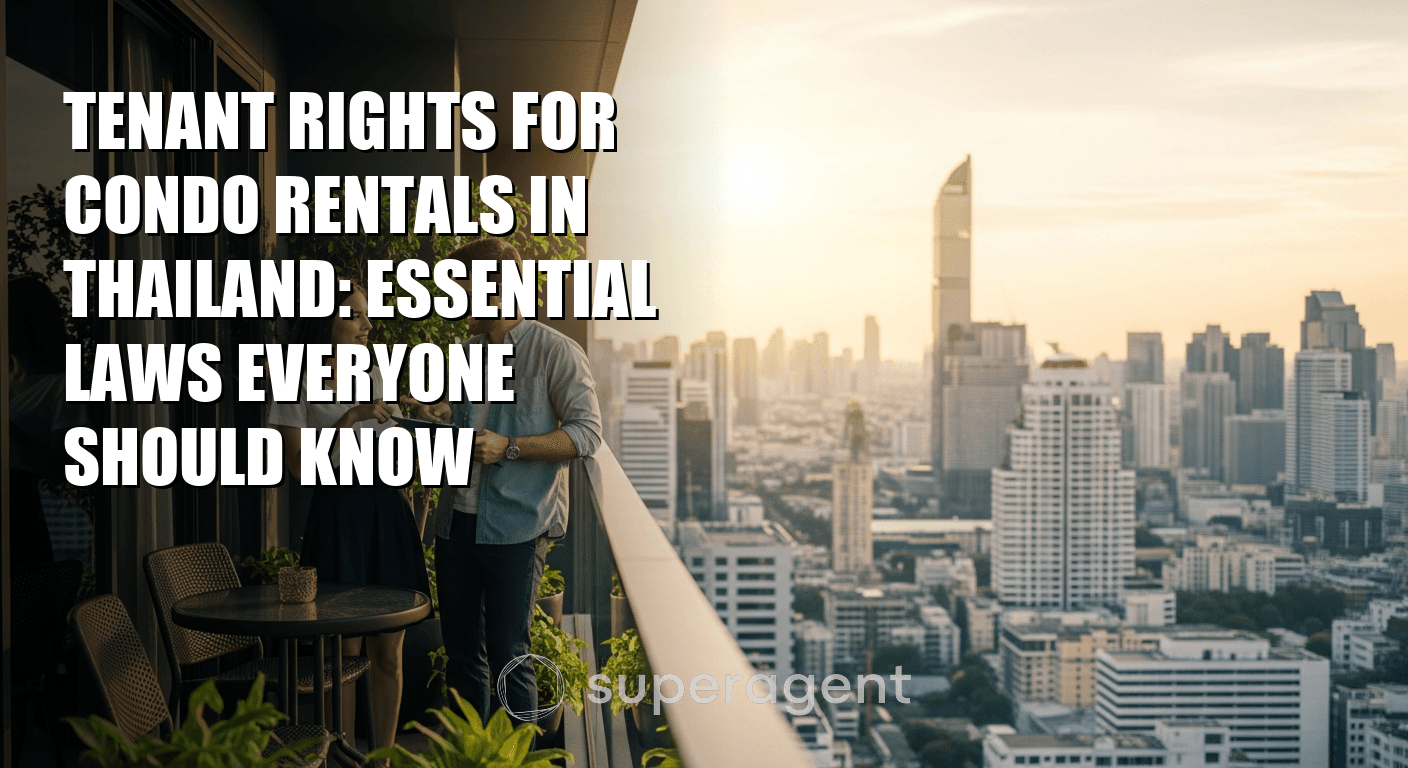
Tenant Rights for Condo Rentals in Thailand: Essential Laws Everyone Should Know
Understand your legal protections as a condo renter in Thailand.
Summary
Learn about สิทธิ์ผู้เช่าคอนโดไทย and protect yourself with Thailand's essential rental laws. Know your rights before signing any lease agreement.
You've just signed the lease on your first Bangkok condo. The building looks great, the BTS is two minutes away, and rent is locked in at 28,000 baht a month. Then something breaks. The air conditioning cuts out in August. The landlord takes weeks to respond. You're not sure what you're actually entitled to, what the law says they have to fix, or whether they can just raise your rent 30 percent next year without warning.
This is where tenant rights in Thailand matter. And honestly, most people renting in Bangkok, whether you're an expat in Thonglor, a young Thai professional in Rama 9, or a family near international schools, don't know their actual legal protections.
The good news: Thai law does protect you. You just need to know the rules.
What the Thai Rental Agreement Actually Says
Thai tenant law is primarily governed by the Civil and Commercial Code, Sections 540 to 541. What that means in practice is pretty straightforward: once you and your landlord sign a rental agreement, both of you have legal obligations.
Your landlord's main job is to hand over a place that's fit to live in and keep it in decent condition throughout your tenancy. You've probably got a copy of your rental contract somewhere. In Bangkok, most condo rentals use a standard template, usually printed in Thai with maybe an English translation attached.
Here's the thing though: a lot of foreign renters just sign without really reading the fine print. And some landlords (or their agents) slide in terms that actually contradict Thai law. For example, a clause saying the landlord has zero responsibility for repairs, or that they can enter your unit any time, any day. Those clauses don't hold up legally, even if you signed them.
According to Thai property market data from DDproperty, roughly 60 percent of Bangkok rental agreements contain at least one clause that conflicts with tenant protection law. That's why it matters to understand your actual rights.
Your Right to Habitable Conditions and Essential Repairs
Let's say you're renting a 1-bedroom in Chidlom, paying 32,000 baht monthly, and one morning you notice the whole bathroom wall is moldy. Or the plumbing is backed up. Or the landlord's painter never finished the kitchen renovation they promised before you moved in.
Thai law says your landlord must maintain the property in a condition suitable for living. That includes basic structural integrity, plumbing, electrical systems, air conditioning (if it was working when you moved in), and water supply. If something essential breaks and the landlord won't fix it within a reasonable time, you can legally reduce your rent payment, hire a contractor yourself and deduct the cost from next month's payment, or in extreme cases, break your lease without penalty.
The key word is "reasonable time." Thai courts have interpreted this as roughly 7 to 30 days depending on severity. A broken air conditioning unit in your bedroom is not an emergency. A complete loss of water supply is.
What doesn't count as the landlord's responsibility: wear and tear, damage you caused, or maintenance that was explicitly your job under the contract. If the lease says you're responsible for changing the water filter or maintaining the balcony, that's on you.
Entry Rights and Your Privacy as a Tenant
Your landlord cannot just walk into your unit whenever they feel like it. Thai law requires landlords to give advance notice, usually in writing, and the notice period is typically 24 to 48 hours. They need a valid reason too: inspections, needed repairs, showing the unit to prospective tenants (only near the end of your lease), or emergency situations like fires or burst pipes.
In practice, landlords in Bangkok condos near Ekkamai or on Sukhumvit often ignore this rule. An agent might show up with new prospective tenants and knock on your door unannounced. It happens. If it becomes a pattern, you're within your rights to refuse entry unless there's a genuine emergency or proper written notice was given.
Some older lease contracts also say the landlord can do inspections monthly or quarterly without notice. That's not legal under Thai law, even if you signed it. You can push back.
Rent Increases and Lease Renewal Terms
This one catches a lot of people off guard. Your landlord cannot raise the rent mid-lease without your consent. If your contract is for one year, the rent is locked in for that full year, period. They cannot demand an increase after month 6 or month 9. It's not allowed.
However, when your lease renews, they can propose a new rent amount. If you don't agree, they can choose not to renew. But during the active lease term, the rent is fixed.
A typical Bangkok scenario: you've been renting a 2-bedroom in Phrom Phong for 45,000 baht a month since 2022. Your one-year lease is up. The landlord now wants 52,000. That's their prerogative, but you don't have to accept. You can negotiate, walk away, or look for a new place. Many tenants in desirable areas near the BTS Thonglor or Ari stations do exactly this every year.
Average rent for a 1-bedroom condo in central Bangkok ranges from 25,000 to 40,000 baht monthly depending on location and amenities. At lease renewal, expect landlords to push for 5 to 15 percent increases in hot areas.
Deposit Protection and Return Conditions
Most Bangkok condo rentals ask for a security deposit upfront. The law doesn't actually specify a standard amount, but one month's rent is common. One and a half months is also normal. Some luxury buildings near Emporium or in Ploenchit ask for two months.
Your deposit is legally yours. The landlord cannot spend it or use it toward rent. They can only deduct from it for actual damage you caused or unpaid rent. Normal wear and tear does not count. If you leave the unit in good condition and have paid all rent on time, you should get the full deposit back within 30 days of move-out.
Documentation matters here. Take photos or video of the unit's condition on move-in day and move-out day. Get the landlord or agent to sign off on a move-out checklist. This protects you if they later claim you caused damage you absolutely did not.
A growing number of Bangkok property management companies, especially those managing newer condos along the Rama 9 corridor or in Ladprao, are now using third-party escrow services to hold deposits. This is actually good for both sides. It removes disputes.
Termination Rights and Early Lease Breaking
If you need to break your lease early, Thai law says you can, but you may owe compensation. The amount depends on how much of the lease term is left and what your contract says.
Standard practice: if you break before half the lease is up, you owe one month's rent penalty. If you break in the second half, the penalty is often lower or none at all. Some contracts are more lenient. Some are stricter.
Your landlord also has to act reasonably. They can't keep the unit vacant for months and then bill you rent for the entire unfilled period. Thai courts expect them to make a good-faith effort to find a new tenant. If they do, your penalty is reduced.
Landlords can also terminate the lease, but only for valid reasons: non-payment of rent, violations of the lease terms, or end of the agreed term. They cannot evict you just because they feel like it or because they got a better offer from someone else.
Comparing Your Tenant Rights Across Bangkok Districts
Tenant protection law applies the same everywhere in Thailand, but enforcement and landlord behavior vary by area. Here's a quick snapshot of what you might expect renting in different parts of Bangkok:
- Thonglor / Ekkamai: 30,000, 50,000 THB | High (competitive market) | Moderate (high demand = less room to negotiate)
- Ari / Sanam Luang: 22,000, 35,000 THB | Moderate to High | Good (less competitive, easier to find alternatives)
- Phrom Phong / Emporium area: 35,000, 60,000 THB | High (luxury properties) | Lower (premium buildings set strict terms)
- Rama 9 / Ladprao: 18,000, 32,000 THB | Variable (mix of new and older stock) | Good (plenty of supply and alternatives)
- Ratchada / Rama 4: 20,000, 38,000 THB | Moderate | Good
In competitive areas like Thonglor, landlords hold all the cards and may enforce stricter lease terms. In less saturated markets like Ari or Ladprao, you'll have more negotiating power.
What to Do If Your Rights Are Violated
Let's say your landlord keeps entering without notice, or is refusing to make critical repairs, or is trying to keep your deposit illegally. What next?
First, communicate in writing. Email or line message the landlord or agent and clearly state the issue, cite the relevant law if you can, and ask for a resolution within a specific timeframe. Keep all records. This paper trail matters if you end up in a dispute.
If that doesn't work, you can file a complaint with the relevant local administrative office or contact a lawyer. Many tenant advocacy groups in Bangkok offer free or low-cost legal advice. If it comes to a lawsuit, small claims court (for claims under 100,000 baht) is faster and cheaper than civil court.
You can also contact the Consumer Protection Board or seek help from organizations affiliated with Thai legal aid services. The official Department of Lands website also has resources on rental disputes.
Practical Tips for Protecting Yourself Before You Sign
Read the entire contract before signing. If it's in Thai and you don't speak Thai fluently, have a Thai friend or a lawyer review it. Pay special attention to: termination clauses, repair responsibilities, entry rights, deposit conditions, and renewal terms.
Ask your landlord to clarify any terms that contradict what you know about Thai law. Most reasonable landlords will agree to remove illegal clauses. If they refuse, that's a red flag.
Take detailed photos and video of the unit on move-in. Walk through with the landlord or agent and document any existing damage. Get signatures on a checklist confirming this. Save this for move-out comparison.
Understand the BTS or MRT nearest to your rental, because you'll use it constantly in Bangkok. Check commute times to work. If things go south with the landlord, being able to easily move to another condo in a different BTS zone might be your quickest solution.
Get the landlord's contact information in writing and confirm who is legally responsible for repairs and maintenance. Is it the landlord directly? A building management company? An agent? Know exactly who to contact and when.
Final Thoughts on Tenant Rights in Bangkok
Thai law gives you real protections. You have the right to a livable home, to privacy, to fixed rent during your lease term, and to get your deposit back in full if you follow the rules. These aren't suggestions or guidelines. They're legal rights.
The catch is that a lot of Bangkok landlords and agents count on tenants not knowing these rules. Some intentionally ignore them. Knowing your rights puts you on equal footing.
Whether you're signing your first lease in a converted warehouse in Rama 9 or renewing for another year in a managed condo on Sukhumvit, take the time to understand what you're entitled to. Save yourself months of frustration and potential money loss.
When you're ready to find your next rental in Bangkok and want a platform that actually respects tenant transparency, check out Superagent. We make it simple to search verified listings, compare neighborhoods, and connect directly with landlords. All our units are vetted, and we believe informed tenants and honest landlords make better rentals for everyone.
You've just signed the lease on your first Bangkok condo. The building looks great, the BTS is two minutes away, and rent is locked in at 28,000 baht a month. Then something breaks. The air conditioning cuts out in August. The landlord takes weeks to respond. You're not sure what you're actually entitled to, what the law says they have to fix, or whether they can just raise your rent 30 percent next year without warning.
This is where tenant rights in Thailand matter. And honestly, most people renting in Bangkok, whether you're an expat in Thonglor, a young Thai professional in Rama 9, or a family near international schools, don't know their actual legal protections.
The good news: Thai law does protect you. You just need to know the rules.
What the Thai Rental Agreement Actually Says
Thai tenant law is primarily governed by the Civil and Commercial Code, Sections 540 to 541. What that means in practice is pretty straightforward: once you and your landlord sign a rental agreement, both of you have legal obligations.
Your landlord's main job is to hand over a place that's fit to live in and keep it in decent condition throughout your tenancy. You've probably got a copy of your rental contract somewhere. In Bangkok, most condo rentals use a standard template, usually printed in Thai with maybe an English translation attached.
Here's the thing though: a lot of foreign renters just sign without really reading the fine print. And some landlords (or their agents) slide in terms that actually contradict Thai law. For example, a clause saying the landlord has zero responsibility for repairs, or that they can enter your unit any time, any day. Those clauses don't hold up legally, even if you signed them.
According to Thai property market data from DDproperty, roughly 60 percent of Bangkok rental agreements contain at least one clause that conflicts with tenant protection law. That's why it matters to understand your actual rights.
Your Right to Habitable Conditions and Essential Repairs
Let's say you're renting a 1-bedroom in Chidlom, paying 32,000 baht monthly, and one morning you notice the whole bathroom wall is moldy. Or the plumbing is backed up. Or the landlord's painter never finished the kitchen renovation they promised before you moved in.
Thai law says your landlord must maintain the property in a condition suitable for living. That includes basic structural integrity, plumbing, electrical systems, air conditioning (if it was working when you moved in), and water supply. If something essential breaks and the landlord won't fix it within a reasonable time, you can legally reduce your rent payment, hire a contractor yourself and deduct the cost from next month's payment, or in extreme cases, break your lease without penalty.
Continue reading after that.
Looking for a condo
to rent?
Leave your name and phone. We'll follow up while you keep reading.
100% Secure
Fast Response
Free Consultation
The key word is "reasonable time." Thai courts have interpreted this as roughly 7 to 30 days depending on severity. A broken air conditioning unit in your bedroom is not an emergency. A complete loss of water supply is.
What doesn't count as the landlord's responsibility: wear and tear, damage you caused, or maintenance that was explicitly your job under the contract. If the lease says you're responsible for changing the water filter or maintaining the balcony, that's on you.
Entry Rights and Your Privacy as a Tenant
Your landlord cannot just walk into your unit whenever they feel like it. Thai law requires landlords to give advance notice, usually in writing, and the notice period is typically 24 to 48 hours. They need a valid reason too: inspections, needed repairs, showing the unit to prospective tenants (only near the end of your lease), or emergency situations like fires or burst pipes.
In practice, landlords in Bangkok condos near Ekkamai or on Sukhumvit often ignore this rule. An agent might show up with new prospective tenants and knock on your door unannounced. It happens. If it becomes a pattern, you're within your rights to refuse entry unless there's a genuine emergency or proper written notice was given.
Some older lease contracts also say the landlord can do inspections monthly or quarterly without notice. That's not legal under Thai law, even if you signed it. You can push back.
Rent Increases and Lease Renewal Terms
This one catches a lot of people off guard. Your landlord cannot raise the rent mid-lease without your consent. If your contract is for one year, the rent is locked in for that full year, period. They cannot demand an increase after month 6 or month 9. It's not allowed.
However, when your lease renews, they can propose a new rent amount. If you don't agree, they can choose not to renew. But during the active lease term, the rent is fixed.
A typical Bangkok scenario: you've been renting a 2-bedroom in Phrom Phong for 45,000 baht a month since 2022. Your one-year lease is up. The landlord now wants 52,000. That's their prerogative, but you don't have to accept. You can negotiate, walk away, or look for a new place. Many tenants in desirable areas near the BTS Thonglor or Ari stations do exactly this every year.
Average rent for a 1-bedroom condo in central Bangkok ranges from 25,000 to 40,000 baht monthly depending on location and amenities. At lease renewal, expect landlords to push for 5 to 15 percent increases in hot areas.
Deposit Protection and Return Conditions
Most Bangkok condo rentals ask for a security deposit upfront. The law doesn't actually specify a standard amount, but one month's rent is common. One and a half months is also normal. Some luxury buildings near Emporium or in Ploenchit ask for two months.
Your deposit is legally yours. The landlord cannot spend it or use it toward rent. They can only deduct from it for actual damage you caused or unpaid rent. Normal wear and tear does not count. If you leave the unit in good condition and have paid all rent on time, you should get the full deposit back within 30 days of move-out.
Documentation matters here. Take photos or video of the unit's condition on move-in day and move-out day. Get the landlord or agent to sign off on a move-out checklist. This protects you if they later claim you caused damage you absolutely did not.
A growing number of Bangkok property management companies, especially those managing newer condos along the Rama 9 corridor or in Ladprao, are now using third-party escrow services to hold deposits. This is actually good for both sides. It removes disputes.
Termination Rights and Early Lease Breaking
If you need to break your lease early, Thai law says you can, but you may owe compensation. The amount depends on how much of the lease term is left and what your contract says.
Standard practice: if you break before half the lease is up, you owe one month's rent penalty. If you break in the second half, the penalty is often lower or none at all. Some contracts are more lenient. Some are stricter.
Your landlord also has to act reasonably. They can't keep the unit vacant for months and then bill you rent for the entire unfilled period. Thai courts expect them to make a good-faith effort to find a new tenant. If they do, your penalty is reduced.
Landlords can also terminate the lease, but only for valid reasons: non-payment of rent, violations of the lease terms, or end of the agreed term. They cannot evict you just because they feel like it or because they got a better offer from someone else.
Comparing Your Tenant Rights Across Bangkok Districts
Tenant protection law applies the same everywhere in Thailand, but enforcement and landlord behavior vary by area. Here's a quick snapshot of what you might expect renting in different parts of Bangkok:
- Thonglor / Ekkamai: 30,000, 50,000 THB | High (competitive market) | Moderate (high demand = less room to negotiate)
- Ari / Sanam Luang: 22,000, 35,000 THB | Moderate to High | Good (less competitive, easier to find alternatives)
- Phrom Phong / Emporium area: 35,000, 60,000 THB | High (luxury properties) | Lower (premium buildings set strict terms)
- Rama 9 / Ladprao: 18,000, 32,000 THB | Variable (mix of new and older stock) | Good (plenty of supply and alternatives)
- Ratchada / Rama 4: 20,000, 38,000 THB | Moderate | Good
In competitive areas like Thonglor, landlords hold all the cards and may enforce stricter lease terms. In less saturated markets like Ari or Ladprao, you'll have more negotiating power.
Continue reading after that.
Looking for a condo
to rent?
Leave your name and phone. We'll follow up while you keep reading.
100% Secure
Fast Response
Free Consultation
What to Do If Your Rights Are Violated
Let's say your landlord keeps entering without notice, or is refusing to make critical repairs, or is trying to keep your deposit illegally. What next?
First, communicate in writing. Email or line message the landlord or agent and clearly state the issue, cite the relevant law if you can, and ask for a resolution within a specific timeframe. Keep all records. This paper trail matters if you end up in a dispute.
If that doesn't work, you can file a complaint with the relevant local administrative office or contact a lawyer. Many tenant advocacy groups in Bangkok offer free or low-cost legal advice. If it comes to a lawsuit, small claims court (for claims under 100,000 baht) is faster and cheaper than civil court.
You can also contact the Consumer Protection Board or seek help from organizations affiliated with Thai legal aid services. The official Department of Lands website also has resources on rental disputes.
Practical Tips for Protecting Yourself Before You Sign
Read the entire contract before signing. If it's in Thai and you don't speak Thai fluently, have a Thai friend or a lawyer review it. Pay special attention to: termination clauses, repair responsibilities, entry rights, deposit conditions, and renewal terms.
Ask your landlord to clarify any terms that contradict what you know about Thai law. Most reasonable landlords will agree to remove illegal clauses. If they refuse, that's a red flag.
Take detailed photos and video of the unit on move-in. Walk through with the landlord or agent and document any existing damage. Get signatures on a checklist confirming this. Save this for move-out comparison.
Understand the BTS or MRT nearest to your rental, because you'll use it constantly in Bangkok. Check commute times to work. If things go south with the landlord, being able to easily move to another condo in a different BTS zone might be your quickest solution.
Get the landlord's contact information in writing and confirm who is legally responsible for repairs and maintenance. Is it the landlord directly? A building management company? An agent? Know exactly who to contact and when.
Final Thoughts on Tenant Rights in Bangkok
Thai law gives you real protections. You have the right to a livable home, to privacy, to fixed rent during your lease term, and to get your deposit back in full if you follow the rules. These aren't suggestions or guidelines. They're legal rights.
The catch is that a lot of Bangkok landlords and agents count on tenants not knowing these rules. Some intentionally ignore them. Knowing your rights puts you on equal footing.
Whether you're signing your first lease in a converted warehouse in Rama 9 or renewing for another year in a managed condo on Sukhumvit, take the time to understand what you're entitled to. Save yourself months of frustration and potential money loss.
When you're ready to find your next rental in Bangkok and want a platform that actually respects tenant transparency, check out Superagent. We make it simple to search verified listings, compare neighborhoods, and connect directly with landlords. All our units are vetted, and we believe informed tenants and honest landlords make better rentals for everyone.
Share this article
Properties you may like
![[For Rent] CONDO I Las Colinas Condominium I 2 Beds I 3 Baths I 85,000THB/mo](/_next/image?url=https%3A%2F%2Fstorage.googleapis.com%2Fsuperagent-web%2Fattachments%2Flistings%2F6828%2F80f345c4-488e-43b2-b017-c9fbb17b520d-99486dd8-4237-4ba2-9207-01ce4f66b21f-media.jpg&w=3840&q=75)
฿85,000
2 Bed3170 sqm
[For Rent] CONDO I Las Colinas Condominium I 2 Beds I 3 Baths I 85,000THB/mo
Asoke
Condo![[For Rent] CONDO I Ashton Asoke I 1 Bed I 1 Bath I 30,000THB/mo](/_next/image?url=https%3A%2F%2Fstorage.googleapis.com%2Fsuperagent-web%2Fattachments%2Flistings%2F6876%2Fb7ce9bbe-f877-4ff5-bb54-8ad0026db940-1272-4.jpg&w=3840&q=75)
฿30,000
1 Bed135 sqm
[For Rent] CONDO I Ashton Asoke I 1 Bed I 1 Bath I 30,000THB/mo
Asoke
Condo![[For Rent] CONDO I Skyrise Avenue Sukhumvit 64 I 2 Beds I 2 Baths I 27,000THB/mo](/_next/image?url=https%3A%2F%2Fstorage.googleapis.com%2Fsuperagent-web%2Fattachments%2Flistings%2F2001%2F670f91de-c251-4e81-971c-8e30ed2158cd-screenshot-2026-07-05-at-11.38.53-pm.png&w=3840&q=75)
฿27,000
2 Bed252 sqm
[For Rent] CONDO I Skyrise Avenue Sukhumvit 64 I 2 Beds I 2 Baths I 27,000THB/mo
Punnawithi
Condo![[For Rent] CONDO I Park Origin Ratchathewi I Duplex I 2 Beds I 1 Bath I 32,000THB/mo](/_next/image?url=https%3A%2F%2Fstorage.googleapis.com%2Fsuperagent-web%2Fattachments%2Flistings%2F6896%2Fb79a7d21-7533-4b0d-bb19-762ebfafab62-1318-6.jpg&w=3840&q=75)
฿32,000
2 Bed135.9 sqm
[For Rent] CONDO I Park Origin Ratchathewi I Duplex I 2 Beds I 1 Bath I 32,000THB/mo
Ratchathewi
Condo![[For Rent] CONDO I Park Origin Phayathai I Studio I 1 Bath I 28,000THB/mo](/_next/image?url=https%3A%2F%2Fstorage.googleapis.com%2Fsuperagent-web%2Fattachments%2Flistings%2F6757%2Fb226df93-94c6-46fa-aeba-ebfadc7f81b8-1000006042.jpg&w=3840&q=75)
฿28,000
Studio129 sqm
[For Rent] CONDO I Park Origin Phayathai I Studio I 1 Bath I 28,000THB/mo
Phaya Thai
Condo![[For Rent] CONDO I Ideo Mobi Sukhumvit 81 I Duplex I 1 Bed I 1 Bath I 28,000THB/mo](/_next/image?url=https%3A%2F%2Fstorage.googleapis.com%2Fsuperagent-web%2Fattachments%2Flistings%2F1849%2Fc8b2c033-3b5f-4615-b2b0-4972f40141f0-705-13.jpg&w=3840&q=75)
฿28,000
1 Bed143 sqm
[For Rent] CONDO I Ideo Mobi Sukhumvit 81 I Duplex I 1 Bed I 1 Bath I 28,000THB/mo
On Nut
Condo![[For Rent] CONDO I Siamese Sukhumvit 48 I 1 Bed I 1 Bath I 28,000THB/mo](/_next/image?url=https%3A%2F%2Fstorage.googleapis.com%2Fsuperagent-web%2Fattachments%2Flistings%2F6841%2Febc2dce2-2e9b-4e6d-a01c-0cfa619dfa13-1231-6.jpg&w=3840&q=75)
฿28,000
1 Bed144 sqm
[For Rent] CONDO I Siamese Sukhumvit 48 I 1 Bed I 1 Bath I 28,000THB/mo
Condo![[For Rent] CONDO I Ashton Asoke I 1 Bed I 1 Bath I 22,000THB/mo](/_next/image?url=https%3A%2F%2Fstorage.googleapis.com%2Fsuperagent-web%2Fattachments%2Flistings%2F6802%2Fe06b9b73-1207-414a-ab04-1685de0c7eaa-20220808_153124_0.jpg&w=3840&q=75)
฿22,000
1 Bed134 sqm
[For Rent] CONDO I Ashton Asoke I 1 Bed I 1 Bath I 22,000THB/mo
Asoke
Condo![[For Rent] CONDO I HQ Thonglor Soi 4 I 1 Bed I 1 Bath I 35,000 THB/mo](/_next/image?url=https%3A%2F%2Fstorage.googleapis.com%2Fsuperagent-web%2Fattachments%2Flistings%2F1445%2F72352585-1bc2-41a8-bd62-ddcbf8189fe9-376-5.jpg&w=3840&q=75)
฿35,000
1 Bed143.6 sqm
[For Rent] CONDO I HQ Thonglor Soi 4 I 1 Bed I 1 Bath I 35,000 THB/mo
Thonglor
Condo![[For Rent] CONDO I The Master Centrium Asoke - Sukhumvit I Duplex I 2 Beds I 3 Baths I 75,000 THB/mo](/_next/image?url=https%3A%2F%2Fstorage.googleapis.com%2Fsuperagent-web%2Fattachments%2Flistings%2F1545%2F97932b6a-c358-45e4-b5f9-995dbf5a3cf0-441-2.jpg&w=3840&q=75)
฿75,000
2 Bed3150 sqm
[For Rent] CONDO I The Master Centrium Asoke - Sukhumvit I Duplex I 2 Beds I 3 Baths I 75,000 THB/mo
Asoke
CondoMore like this
 In Guides · Superagent EditorialHidden Costs of Renting a Condo in Bangkok Nobody Warns You AboutBangkok condo rent looks affordable until month one hits. Here are the real costs beyond the headline figure that catch most renters off guard.25 May 20261 min read
 In Guides · Superagent EditorialWhat a Long-Vacant Bangkok Condo Unit Is Actually Telling YouA Bangkok condo vacant for months signals overpricing, landlord issues, or real problems. Here is how to read the signs.25 May 20261 min read
 In Guides · Superagent EditorialRed Flags in a Bangkok Rental Contract to Watch Out ForBangkok rental contracts often hide risky clauses. Here are the red flags every tenant must catch before signing any lease.25 May 20261 min read
 In Guides · Superagent EditorialWorking Online from a Condo: How to Choose the Perfect Room for ProductivityLearn how to choose the best condo room for working online with tips on lighting, noise, and furniture setup to maximize productivity.9 May 20261 min read