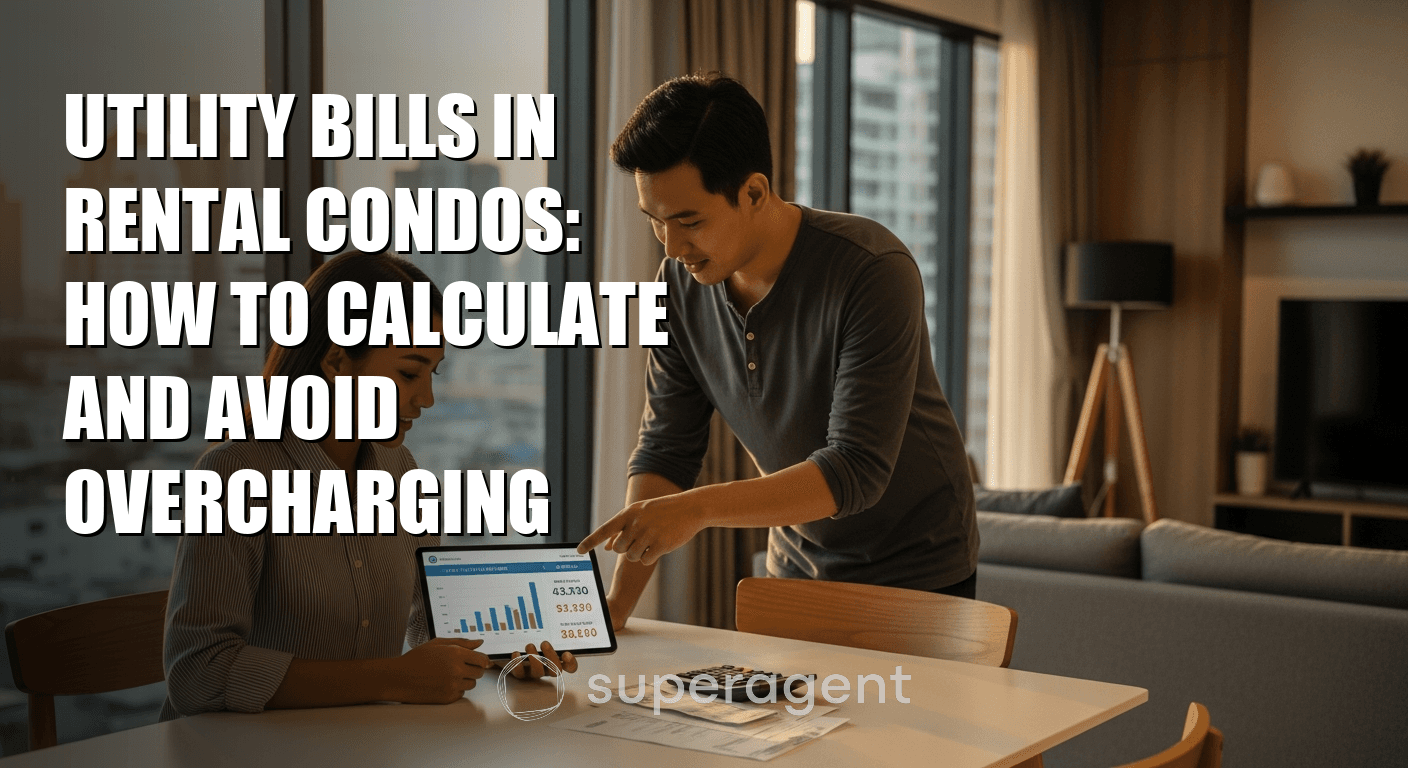
Utility Bills in Rental Condos: How to Calculate and Avoid Overcharging
Guides
Utility Bills in Rental Condos: How to Calculate and Avoid Overcharging
Master the math behind condo utility charges and protect yourself from inflated bills.
Summary
Learn how to calculate and verify ไฟ น้ำ คอนโดเช่า charges accurately. Discover strategies to avoid overpriced utilities and negotiate fair rates with your
You've just signed the lease on that sleek 2-bedroom in Thonglor, and everything feels perfect. Until the first utility bill arrives. Suddenly you're staring at a 3,500 baht electricity charge and a 1,200 baht water bill, wondering if your landlord just added a zero by mistake. Welcome to one of Bangkok's most confusing rental realities: utility costs in condos.
Here's the thing nobody tells you when you move to Bangkok. Unlike most cities where utilities are straightforward, condo water and electricity charges in Thailand operate in a gray zone where landlords often mark up costs, building management adds their own fees, and renters are left squinting at invoices trying to figure out what they actually owe. If you're hunting for an apartment right now or already stuck with bills that feel inflated, this guide breaks down exactly how these charges work, what counts as normal, and how to push back if you're getting overcharged.
How Condo Utilities Actually Get Calculated in Bangkok
Most condo buildings in Bangkok work the same way. The building receives one master meter from the Provincial Electricity Authority for the whole property, and the building management distributes that bill among residents. Water comes through a central system managed by the Bangkok Metropolitan Waterworks Authority, then gets divided up the same way.
Here's where it gets murky. The building management company reads your individual meter, calculates your share, then adds administrative fees ranging from 10 to 30 percent on top of the actual cost. Some buildings claim these fees cover maintenance of water tanks, pump repairs, and meter reading. Others, honestly, seem to just be padding margins.
Let's say your meter shows 250 kilowatt-hours this month. The raw rate from the Provincial Electricity Authority is around 4.50 baht per unit for the first tier. That's 1,125 baht. But your landlord bills you 1,400 baht because they've added their markup. Multiply that across 300 units in a building, and you see why building management keeps things deliberately opaque.
Real Bangkok Pricing: What You Should Actually Pay
Standard electricity rates in Bangkok for residential use sit around 4.50 to 5.50 baht per kilowatt-hour depending on consumption tiers, according to the Metropolitan Electricity Authority of Thailand. Water typically runs 17 to 22 baht per cubic meter for apartment dwellers.
But here's the catch. When your landlord or condo management bills you, they're not showing you those base rates. They're showing you a marked-up figure. An average 1-bedroom condo in central Bangkok areas like Nana, Phrom Phong, or Ekkamai typically runs 2,500 to 3,500 baht monthly for electricity and 800 to 1,200 baht for water if you're living alone and not running constant air conditioning.
A recent market survey by DDproperty Thailand shows that renters in mid-range condos near BTS Asok or MRT Sukhumvit can expect combined utility costs between 3,500 and 4,500 baht monthly. Luxury buildings charge more, sometimes double, because they add premium maintenance and common area costs into residential bills.
The Hidden Charges Nobody Mentions
Beyond base rates, buildings slip in charges for things most renters don't understand. Common area electricity (elevators, hallways, parking lights) gets distributed across all units. Depending on the building, this alone adds 300 to 800 baht to your bill. Water tank maintenance, pump services, and meter reading fees are other frequent additions.
Some buildings in areas like Ploenchit or Sathorn add "green fees" or "environmental maintenance charges" that can range from 100 to 400 baht monthly. When you ask what these cover, answers get vague fast. Most of the time, these are legitimate, but the lack of transparency gives landlords room to inflate them.
I once met a tenant in a mid-range building near Sanam Luang paying 4,200 baht for utilities in a 35-square-meter studio. When she requested an itemized breakdown, building management suddenly "discovered" an error and refunded 600 baht. It happens more often than building managers admit.
How to Spot Overcharging and Push Back
First step: get copies of actual Provincial Electricity Authority and Bangkok Metropolitan Waterworks Authority base rates. You can find them on the official utility websites, and they're public information. Calculate what you should owe before markup, then ask your landlord to itemize exactly what the markup covers.
If your building charges more than 30 percent markup on electricity and 25 percent on water, that's getting aggressive. Fair buildings stay closer to 15 to 20 percent. Put this in writing when you request clarification. Document everything. Lazy landlords often drop disputed charges rather than justify them in writing.
Check your meter readings personally before your landlord does. Many buildings only read meters quarterly, so monthly bills are estimates. If your actual reading shows lower consumption than the estimate, you have grounds to argue. Screenshot your meter, keep records, and reference them in any negotiation.
Pro tip: when viewing a condo before signing a lease, ask current residents what they actually pay monthly. Most will tell you. If multiple people mention figures that seem high compared to the base rates, that building's management is probably aggressive on markups. Walk away if it feels sketchy.
Negotiating Utilities Into Your Lease Agreement
Your strongest move happens before you hand over keys. When discussing rent, explicitly ask whether water and electricity are included or billed separately. Some landlords, especially for 6 or 12-month contracts, will include utilities up to a reasonable cap (say, 3,000 baht combined monthly) to close a deal faster.
Others will offer a fixed utility fee instead of actual meter readings. This usually works in your favor if you use air conditioning heavily or have multiple people in the unit. A fixed 3,500 baht monthly rate beats paying actual charges if your usage runs high.
Put whatever you agree to directly in the contract. If your landlord says, "Don't worry, utilities are normally cheap here," and doesn't document it, you have zero protection when the first inflated bill arrives. Get it in writing, signed, dated.
Renters in buildings around Pratunam or Siam Square often negotiate fixed utility fees at 3,000 to 3,500 baht monthly. This locks in predictability and removes the guessing game of meter readings and mysterious charges.
Common Overcharge Scenarios and How to Respond
- 1-bed, single tenant, moderate AC use: 2,800-3,500 | 4,200+ | Request itemized breakdown, compare to unit consumption history
- Studio, minimal appliances: 1,800-2,400 | 3,100+ | Check meter reading, ask for 3-month average, request adjustment
- 2-bed, family of 3-4, heavy use: 4,500-5,500 | 6,800+ | Verify meter, ask building if there's a fault, request technician visit
- Water bill only (separate from electric): 800-1,200 | 1,600+ | Check for leaks, ask building to verify meter, request leak inspection
That last scenario happens more often than you'd expect. A spike in water charges usually signals a leak somewhere in your unit. Ask your landlord to send a technician before you pay an inflated bill. Leaking toilets and shower seals cost thousands in wasted water, but they're usually fixable for 500 to 1,500 baht.
What "Included" Really Means in Bangkok Condo Rentals
When a listing says utilities are included, clarify immediately whether that means electricity, water, both, or neither. Some landlords use vague language to make rent seem cheaper. You think utilities are covered, but when the bill arrives, suddenly you owe 2,500 baht because only water was included.
Get a definition of included in the lease. Does included mean unlimited usage, or are there caps? A landlord might say electricity is included up to 3,000 baht monthly, and anything above that you pay the excess. Read that carefully before signing.
Buildings popular with expats around Ari, Ekkamai, and Thonglor typically spell out utility terms clearly because their landlords know renters will push for clarity. Buildings with mostly local Thai tenants sometimes leave terms vague, assuming less negotiation. This is one area where being informed gives you real leverage.
Standard market data shows that combined utilities for an average furnished 1-bedroom in Bangkok's mid-market range hover between 3,200 and 4,100 baht monthly across a full year. Seasonal variations matter. Summer (May through October) pushes electric bills up 20 to 40 percent due to air conditioning. Winter actually sees slight decreases.
Once you understand how your building calculates utilities, you've already won half the battle. The other half is staying alert. Check your bills monthly, compare them to past months, and ask questions if numbers spike without explanation. Most landlords count on renters paying silently.
When you're ready to find your next place and want to avoid utility headaches from day one, check out current listings on Superagent. We list transparent utility terms upfront, and our rental market data shows exactly what you should expect to pay in different Bangkok neighborhoods. Better information means better rentals.
You've just signed the lease on that sleek 2-bedroom in Thonglor, and everything feels perfect. Until the first utility bill arrives. Suddenly you're staring at a 3,500 baht electricity charge and a 1,200 baht water bill, wondering if your landlord just added a zero by mistake. Welcome to one of Bangkok's most confusing rental realities: utility costs in condos.
Here's the thing nobody tells you when you move to Bangkok. Unlike most cities where utilities are straightforward, condo water and electricity charges in Thailand operate in a gray zone where landlords often mark up costs, building management adds their own fees, and renters are left squinting at invoices trying to figure out what they actually owe. If you're hunting for an apartment right now or already stuck with bills that feel inflated, this guide breaks down exactly how these charges work, what counts as normal, and how to push back if you're getting overcharged.
How Condo Utilities Actually Get Calculated in Bangkok
Most condo buildings in Bangkok work the same way. The building receives one master meter from the Provincial Electricity Authority for the whole property, and the building management distributes that bill among residents. Water comes through a central system managed by the Bangkok Metropolitan Waterworks Authority, then gets divided up the same way.
Here's where it gets murky. The building management company reads your individual meter, calculates your share, then adds administrative fees ranging from 10 to 30 percent on top of the actual cost. Some buildings claim these fees cover maintenance of water tanks, pump repairs, and meter reading. Others, honestly, seem to just be padding margins.
Let's say your meter shows 250 kilowatt-hours this month. The raw rate from the Provincial Electricity Authority is around 4.50 baht per unit for the first tier. That's 1,125 baht. But your landlord bills you 1,400 baht because they've added their markup. Multiply that across 300 units in a building, and you see why building management keeps things deliberately opaque.
Continue reading after that.
Looking for a condo
to rent?
Leave your name and phone. We'll follow up while you keep reading.
100% Secure
Fast Response
Free Consultation
Real Bangkok Pricing: What You Should Actually Pay
Standard electricity rates in Bangkok for residential use sit around 4.50 to 5.50 baht per kilowatt-hour depending on consumption tiers, according to the Metropolitan Electricity Authority of Thailand. Water typically runs 17 to 22 baht per cubic meter for apartment dwellers.
But here's the catch. When your landlord or condo management bills you, they're not showing you those base rates. They're showing you a marked-up figure. An average 1-bedroom condo in central Bangkok areas like Nana, Phrom Phong, or Ekkamai typically runs 2,500 to 3,500 baht monthly for electricity and 800 to 1,200 baht for water if you're living alone and not running constant air conditioning.
A recent market survey by DDproperty Thailand shows that renters in mid-range condos near BTS Asok or MRT Sukhumvit can expect combined utility costs between 3,500 and 4,500 baht monthly. Luxury buildings charge more, sometimes double, because they add premium maintenance and common area costs into residential bills.
The Hidden Charges Nobody Mentions
Beyond base rates, buildings slip in charges for things most renters don't understand. Common area electricity (elevators, hallways, parking lights) gets distributed across all units. Depending on the building, this alone adds 300 to 800 baht to your bill. Water tank maintenance, pump services, and meter reading fees are other frequent additions.
Some buildings in areas like Ploenchit or Sathorn add "green fees" or "environmental maintenance charges" that can range from 100 to 400 baht monthly. When you ask what these cover, answers get vague fast. Most of the time, these are legitimate, but the lack of transparency gives landlords room to inflate them.
I once met a tenant in a mid-range building near Sanam Luang paying 4,200 baht for utilities in a 35-square-meter studio. When she requested an itemized breakdown, building management suddenly "discovered" an error and refunded 600 baht. It happens more often than building managers admit.
How to Spot Overcharging and Push Back
First step: get copies of actual Provincial Electricity Authority and Bangkok Metropolitan Waterworks Authority base rates. You can find them on the official utility websites, and they're public information. Calculate what you should owe before markup, then ask your landlord to itemize exactly what the markup covers.
If your building charges more than 30 percent markup on electricity and 25 percent on water, that's getting aggressive. Fair buildings stay closer to 15 to 20 percent. Put this in writing when you request clarification. Document everything. Lazy landlords often drop disputed charges rather than justify them in writing.
Check your meter readings personally before your landlord does. Many buildings only read meters quarterly, so monthly bills are estimates. If your actual reading shows lower consumption than the estimate, you have grounds to argue. Screenshot your meter, keep records, and reference them in any negotiation.
Pro tip: when viewing a condo before signing a lease, ask current residents what they actually pay monthly. Most will tell you. If multiple people mention figures that seem high compared to the base rates, that building's management is probably aggressive on markups. Walk away if it feels sketchy.
Negotiating Utilities Into Your Lease Agreement
Your strongest move happens before you hand over keys. When discussing rent, explicitly ask whether water and electricity are included or billed separately. Some landlords, especially for 6 or 12-month contracts, will include utilities up to a reasonable cap (say, 3,000 baht combined monthly) to close a deal faster.
Others will offer a fixed utility fee instead of actual meter readings. This usually works in your favor if you use air conditioning heavily or have multiple people in the unit. A fixed 3,500 baht monthly rate beats paying actual charges if your usage runs high.
Put whatever you agree to directly in the contract. If your landlord says, "Don't worry, utilities are normally cheap here," and doesn't document it, you have zero protection when the first inflated bill arrives. Get it in writing, signed, dated.
Renters in buildings around Pratunam or Siam Square often negotiate fixed utility fees at 3,000 to 3,500 baht monthly. This locks in predictability and removes the guessing game of meter readings and mysterious charges.
Continue reading after that.
Looking for a condo
to rent?
Leave your name and phone. We'll follow up while you keep reading.
100% Secure
Fast Response
Free Consultation
Common Overcharge Scenarios and How to Respond
- 1-bed, single tenant, moderate AC use: 2,800-3,500 | 4,200+ | Request itemized breakdown, compare to unit consumption history
- Studio, minimal appliances: 1,800-2,400 | 3,100+ | Check meter reading, ask for 3-month average, request adjustment
- 2-bed, family of 3-4, heavy use: 4,500-5,500 | 6,800+ | Verify meter, ask building if there's a fault, request technician visit
- Water bill only (separate from electric): 800-1,200 | 1,600+ | Check for leaks, ask building to verify meter, request leak inspection
That last scenario happens more often than you'd expect. A spike in water charges usually signals a leak somewhere in your unit. Ask your landlord to send a technician before you pay an inflated bill. Leaking toilets and shower seals cost thousands in wasted water, but they're usually fixable for 500 to 1,500 baht.
What "Included" Really Means in Bangkok Condo Rentals
When a listing says utilities are included, clarify immediately whether that means electricity, water, both, or neither. Some landlords use vague language to make rent seem cheaper. You think utilities are covered, but when the bill arrives, suddenly you owe 2,500 baht because only water was included.
Get a definition of included in the lease. Does included mean unlimited usage, or are there caps? A landlord might say electricity is included up to 3,000 baht monthly, and anything above that you pay the excess. Read that carefully before signing.
Buildings popular with expats around Ari, Ekkamai, and Thonglor typically spell out utility terms clearly because their landlords know renters will push for clarity. Buildings with mostly local Thai tenants sometimes leave terms vague, assuming less negotiation. This is one area where being informed gives you real leverage.
Standard market data shows that combined utilities for an average furnished 1-bedroom in Bangkok's mid-market range hover between 3,200 and 4,100 baht monthly across a full year. Seasonal variations matter. Summer (May through October) pushes electric bills up 20 to 40 percent due to air conditioning. Winter actually sees slight decreases.
Once you understand how your building calculates utilities, you've already won half the battle. The other half is staying alert. Check your bills monthly, compare them to past months, and ask questions if numbers spike without explanation. Most landlords count on renters paying silently.
When you're ready to find your next place and want to avoid utility headaches from day one, check out current listings on Superagent. We list transparent utility terms upfront, and our rental market data shows exactly what you should expect to pay in different Bangkok neighborhoods. Better information means better rentals.
Share this article
Properties you may like
![[For Rent] CONDO I Las Colinas Condominium I 2 Beds I 3 Baths I 85,000THB/mo](/_next/image?url=https%3A%2F%2Fstorage.googleapis.com%2Fsuperagent-web%2Fattachments%2Flistings%2F6828%2F80f345c4-488e-43b2-b017-c9fbb17b520d-99486dd8-4237-4ba2-9207-01ce4f66b21f-media.jpg&w=3840&q=75)
฿85,000
2 Bed3170 sqm
[For Rent] CONDO I Las Colinas Condominium I 2 Beds I 3 Baths I 85,000THB/mo
Asoke
Condo![[For Rent] CONDO I Ashton Asoke I 1 Bed I 1 Bath I 30,000THB/mo](/_next/image?url=https%3A%2F%2Fstorage.googleapis.com%2Fsuperagent-web%2Fattachments%2Flistings%2F6876%2Fb7ce9bbe-f877-4ff5-bb54-8ad0026db940-1272-4.jpg&w=3840&q=75)
฿30,000
1 Bed135 sqm
[For Rent] CONDO I Ashton Asoke I 1 Bed I 1 Bath I 30,000THB/mo
Asoke
Condo![[For Rent] CONDO I Skyrise Avenue Sukhumvit 64 I 2 Beds I 2 Baths I 27,000THB/mo](/_next/image?url=https%3A%2F%2Fstorage.googleapis.com%2Fsuperagent-web%2Fattachments%2Flistings%2F2001%2F670f91de-c251-4e81-971c-8e30ed2158cd-screenshot-2026-07-05-at-11.38.53-pm.png&w=3840&q=75)
฿27,000
2 Bed252 sqm
[For Rent] CONDO I Skyrise Avenue Sukhumvit 64 I 2 Beds I 2 Baths I 27,000THB/mo
Punnawithi
Condo![[For Rent] CONDO I Park Origin Ratchathewi I Duplex I 2 Beds I 1 Bath I 32,000THB/mo](/_next/image?url=https%3A%2F%2Fstorage.googleapis.com%2Fsuperagent-web%2Fattachments%2Flistings%2F6896%2Fb79a7d21-7533-4b0d-bb19-762ebfafab62-1318-6.jpg&w=3840&q=75)
฿32,000
2 Bed135.9 sqm
[For Rent] CONDO I Park Origin Ratchathewi I Duplex I 2 Beds I 1 Bath I 32,000THB/mo
Ratchathewi
Condo![[For Rent] CONDO I Park Origin Phayathai I Studio I 1 Bath I 28,000THB/mo](/_next/image?url=https%3A%2F%2Fstorage.googleapis.com%2Fsuperagent-web%2Fattachments%2Flistings%2F6757%2Fb226df93-94c6-46fa-aeba-ebfadc7f81b8-1000006042.jpg&w=3840&q=75)
฿28,000
Studio129 sqm
[For Rent] CONDO I Park Origin Phayathai I Studio I 1 Bath I 28,000THB/mo
Phaya Thai
Condo![[For Rent] CONDO I Ideo Mobi Sukhumvit 81 I Duplex I 1 Bed I 1 Bath I 28,000THB/mo](/_next/image?url=https%3A%2F%2Fstorage.googleapis.com%2Fsuperagent-web%2Fattachments%2Flistings%2F1849%2Fc8b2c033-3b5f-4615-b2b0-4972f40141f0-705-13.jpg&w=3840&q=75)
฿28,000
1 Bed143 sqm
[For Rent] CONDO I Ideo Mobi Sukhumvit 81 I Duplex I 1 Bed I 1 Bath I 28,000THB/mo
On Nut
Condo![[For Rent] CONDO I Siamese Sukhumvit 48 I 1 Bed I 1 Bath I 28,000THB/mo](/_next/image?url=https%3A%2F%2Fstorage.googleapis.com%2Fsuperagent-web%2Fattachments%2Flistings%2F6841%2Febc2dce2-2e9b-4e6d-a01c-0cfa619dfa13-1231-6.jpg&w=3840&q=75)
฿28,000
1 Bed144 sqm
[For Rent] CONDO I Siamese Sukhumvit 48 I 1 Bed I 1 Bath I 28,000THB/mo
Condo![[For Rent] CONDO I Ashton Asoke I 1 Bed I 1 Bath I 22,000THB/mo](/_next/image?url=https%3A%2F%2Fstorage.googleapis.com%2Fsuperagent-web%2Fattachments%2Flistings%2F6802%2Fe06b9b73-1207-414a-ab04-1685de0c7eaa-20220808_153124_0.jpg&w=3840&q=75)
฿22,000
1 Bed134 sqm
[For Rent] CONDO I Ashton Asoke I 1 Bed I 1 Bath I 22,000THB/mo
Asoke
Condo![[For Rent] CONDO I HQ Thonglor Soi 4 I 1 Bed I 1 Bath I 35,000 THB/mo](/_next/image?url=https%3A%2F%2Fstorage.googleapis.com%2Fsuperagent-web%2Fattachments%2Flistings%2F1445%2F72352585-1bc2-41a8-bd62-ddcbf8189fe9-376-5.jpg&w=3840&q=75)
฿35,000
1 Bed143.6 sqm
[For Rent] CONDO I HQ Thonglor Soi 4 I 1 Bed I 1 Bath I 35,000 THB/mo
Thonglor
Condo![[For Rent] CONDO I The Master Centrium Asoke - Sukhumvit I Duplex I 2 Beds I 3 Baths I 75,000 THB/mo](/_next/image?url=https%3A%2F%2Fstorage.googleapis.com%2Fsuperagent-web%2Fattachments%2Flistings%2F1545%2F97932b6a-c358-45e4-b5f9-995dbf5a3cf0-441-2.jpg&w=3840&q=75)
฿75,000
2 Bed3150 sqm
[For Rent] CONDO I The Master Centrium Asoke - Sukhumvit I Duplex I 2 Beds I 3 Baths I 75,000 THB/mo
Asoke
CondoMore like this
 In Guides · Superagent EditorialHidden Costs of Renting a Condo in Bangkok Nobody Warns You AboutBangkok condo rent looks affordable until month one hits. Here are the real costs beyond the headline figure that catch most renters off guard.25 May 20261 min read
 In Guides · Superagent EditorialWhat a Long-Vacant Bangkok Condo Unit Is Actually Telling YouA Bangkok condo vacant for months signals overpricing, landlord issues, or real problems. Here is how to read the signs.25 May 20261 min read
 In Guides · Superagent EditorialRed Flags in a Bangkok Rental Contract to Watch Out ForBangkok rental contracts often hide risky clauses. Here are the red flags every tenant must catch before signing any lease.25 May 20261 min read
 In Guides · Superagent EditorialWorking Online from a Condo: How to Choose the Perfect Room for ProductivityLearn how to choose the best condo room for working online with tips on lighting, noise, and furniture setup to maximize productivity.9 May 20261 min read