Condo Maintenance and Repairs for Rental: Owner Responsibilities Guide
Guides
Condo Maintenance and Repairs for Rental: Owner Responsibilities Guide
Learn what landlords must maintain and repair to keep rental condos in top condition
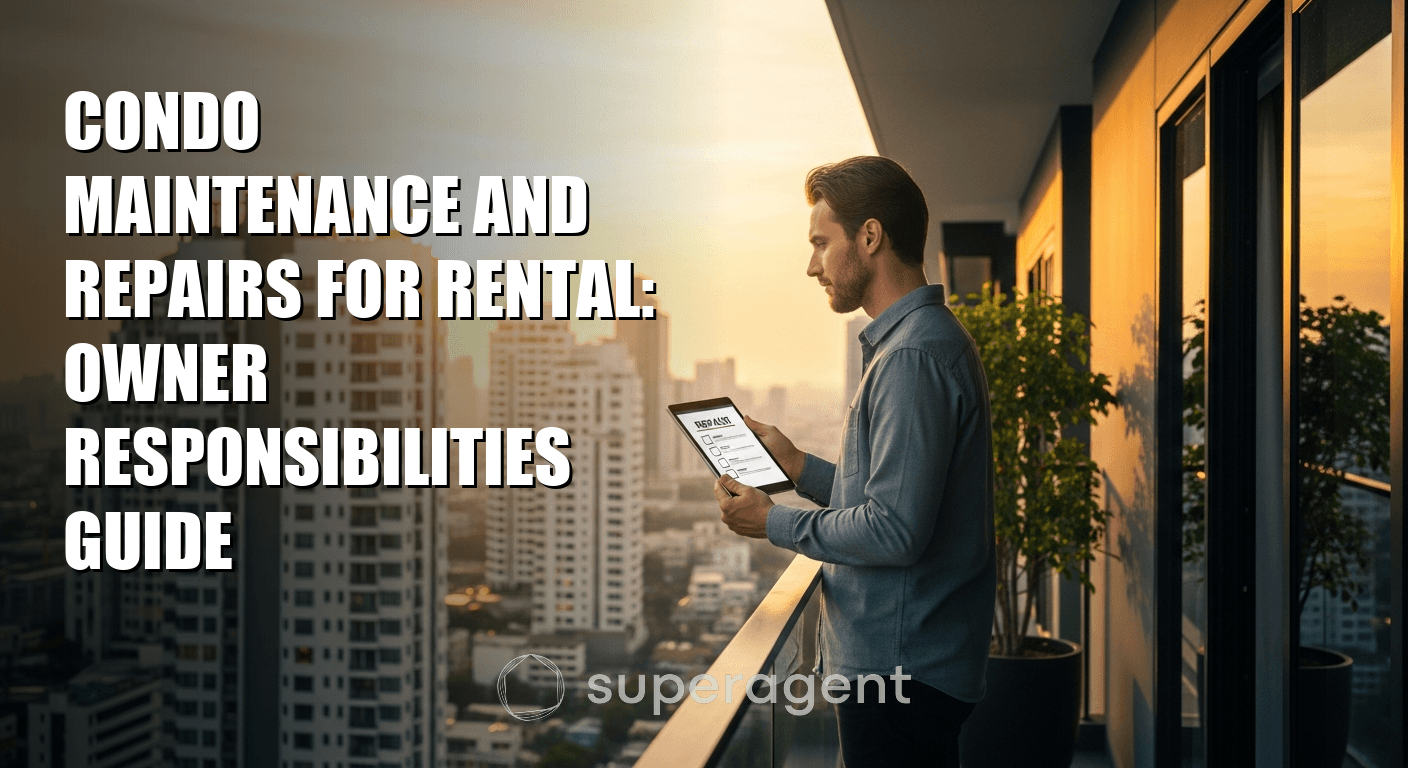
Summary
Understand condo maintenance and repairs for rental properties. Discover owner responsibilities, legal requirements, and cost-effective upkeep strategies.
If you own a condo in Bangkok that you rent out, you already know the market moves fast. One day your tenant is calling about a leaky tap, the next you are dealing with a broken air conditioning unit during the hottest month of the year. The question that keeps most landlords up at night is simple: what maintenance issues are actually your responsibility, and which ones fall on the tenant?
The answer matters more than you think. Get it wrong, and you could lose a good tenant, face legal disputes, or end up bankrupt from repair bills that should have been shared. Get it right, and your condo stays in top shape, your tenants stay happy, and your investment keeps paying off. This guide breaks down exactly what you need to handle as a condo owner in Bangkok, and where tenants pick up the slack.
Structural and Building System Repairs: Your Legal Duty as Owner
Here is the hard truth: anything related to the core structure or shared building systems belongs to you. Thai property law, along with standard Bangkok condo management practices, puts these squarely on the owner's shoulders. This includes the walls, roof, foundation, pipes that run through the building, electrical wiring inside the walls, and water systems that serve the entire building.
Think about it this way. If water is leaking through the ceiling from the unit above, or if the main water line to your unit is corroded and failing, that is on you. The same goes for structural cracks, foundation issues, or damage to the exterior balcony that is part of the building envelope.
A practical example: you own a 2-bedroom condo in Thonglor near BTS Thonglor. The building's main water pipes, which run through the concrete walls, start leaking. This affects not just your unit but several others. The building's property management will contact you as the owner. You are responsible for the repair bill, which could easily run 15,000 to 40,000 THB depending on how extensive the damage is.
Your condo building's management company usually handles these repairs on your behalf, but you will see the bill. Check your lease agreement and the building's house rules carefully. Most reputable buildings in Bangkok, like those managed by major firms near Sukhumvit or Silom, will have clear policies about who pays for what.
Interior Fixtures and Appliances: The Gray Zone
This is where things get tricky. Interior fixtures, appliances, and finishes inside your rental unit sit in a gray zone that depends largely on what you agreed with your tenant at the start of the lease.
Air conditioning units are the most common battleground. If the AC came with the unit when you bought it, many landlords argue it is the tenant's responsibility to maintain and repair it. If you installed a new one before renting it out, it might be yours. The reality is this: you should spell it out clearly in the rental contract. Thai rental contracts do not always cover these details well, so add a clause that specifies maintenance duties for every major appliance.
The same logic applies to refrigerators, washing machines, water heaters, and kitchen appliances. If it came with the unit, make sure the lease says who maintains it. If you provide it as part of the rental package, you should probably cover repairs or offer a maintenance allowance.
Take a real example from Phrom Phong near BTS Phrom Phong. You rent out a 1-bedroom furnished condo for 28,000 THB per month. The air conditioning is 4 years old. The compressor fails. An AC repair in Bangkok runs 3,000 to 8,000 THB for routine service, but replacing a compressor can hit 15,000 to 25,000 THB. If the lease does not specify who pays, you will end up in a dispute with your tenant exactly when you least want one.
Preventive Maintenance and Regular Upkeep: Shared Responsibility
Preventive maintenance is where good landlords separate from the rest. Regular upkeep keeps costs down and keeps tenants in your unit longer. This includes annual AC servicing, checking water pressure, inspecting for leaks, and checking door locks and window hinges.
In Bangkok, the best practice is to schedule AC servicing before the hot season hits, usually in March or April. A professional AC cleaning and check costs around 1,500 to 3,000 THB per unit. This small investment prevents breakdowns that can cost ten times more later.
Water pressure testing should happen at least once a year, especially in older buildings. Soft water filters and water heater tanks need cleaning every 6 months if you live in areas with high mineral content, which describes most of Bangkok. Building management can coordinate this for your whole building, often in bulk, which saves money.
One smart Bangkok landlord in Ari near BTS Ari spent 10,000 THB on preventive AC and plumbing checks every year. Over 5 years, this prevented two major AC failures and one water heater replacement that would have cost 30,000 THB each. His tenants also rated him as responsive and professional, which means less turnover and stable rental income.
Cosmetic Damage and Normal Wear and Tear: Tenant Territory
This is where tenants earn their responsibility. Normal wear and tear, scuffs on walls, minor paint fading, worn door handles, and small scratches on floors all fall on them. If they punch a hole in the wall, that is damage they caused, and they pay for it. If the paint fades from sun exposure over 3 years, that is wear and tear, and you cover it next time they move out.
Thai rental contracts often include a damage deposit for exactly this reason. Standard practice in Bangkok is to take 1 to 2 months of rent as a security deposit. When the tenant moves out, you deduct costs for repairs they caused before returning the rest.
The catch: you need evidence. Take photos on move-in day and move-out day. Document the condition of walls, floors, appliances, and fixtures. Keep receipts for any repairs you do during their tenancy. This protects both you and them from disputes. If your contract does not include this procedure, add it now.
A Bangkok building in Ekkamai near BTS Ekkamai had a tenant who moved out after 2 years. The tenant claimed they should get the full deposit back. But the move-out photos showed three holes in the walls, a broken bathroom tile, and cigarette burns on the curtains. The landlord had receipts for 8,000 THB in repairs. The deposit was 50,000 THB, so 42,000 THB went back. With photos and receipts, it was straightforward and fair.
Building Common Areas and Condo Fees: Non-Negotiable
Your condo building's common areas, lobby, hallways, elevator, parking lot, and security office are maintained through condo fees. These are not optional. You pay them every month, and they cover shared maintenance, utilities, and repairs to common spaces.
Condo fees in Bangkok range widely depending on location and building age. A newer building in Sathorn near BTS Chong Nonsi might charge 6,000 to 10,000 THB per month. An older, smaller building in Rama 9 near MRT Rama 9 might charge 2,000 to 4,000 THB. These fees cover elevator maintenance, lobby upkeep, roof repairs, security, and sometimes water and electricity for common areas.
As the owner, you pay the condo fee. Some landlords pass it to tenants by building it into the rent price. Others negotiate and split it. Whatever you do, make sure the lease spells out who pays. If the condo fee rises, make sure you know your building's rules about who absorbs the increase.
Many Bangkok condo buildings have been raising fees by 5 to 10 percent annually in recent years due to electricity costs and maintenance inflation. If you do not understand your building's fee structure, ask the management office for a breakdown. A 500 THB monthly fee increase might seem small until you multiply it across 12 months and factor it into your rental price.
Know Your Building's Rules and Your Lease Agreement
Every condo building in Bangkok has a set of house rules and regulations. These documents, along with your purchase agreement, form the legal backbone of who pays for what. Some buildings are strict and detailed. Others are vague and open to interpretation.
Before you rent out your condo, get a copy of the building's house rules from the management office. Read them. Then hire a Thai lawyer for an hour to explain the maintenance clauses in your building's rules and in Thai property law. The cost is 2,000 to 4,000 THB and will save you thousands in disputes later.
Your rental lease should clearly state:
1. Who pays for AC servicing and repairs.
2. Who pays for water heater maintenance.
3. Who is responsible for painting and minor cosmetic fixes.
4. What counts as damage the tenant caused versus normal wear.
5. Whether the tenant or you pays condo fees.
6. What emergency repairs you will handle within 24 hours.
Many landlords in Bangkok use templates or copies of friends' leases, but this is risky. Standard Thai contracts often miss critical maintenance clauses that protect you. A proper lease takes 3 to 5 hours with a lawyer to draft correctly, but it is worth every hour.
Emergency Repairs: Response Time Matters
Some repairs cannot wait. A burst water pipe flooding the unit, a broken toilet, a non-functional refrigerator in summer, or a power outage in your circuit breaker are emergencies. Thai consumer protection law and standard Bangkok practice expect landlords to respond quickly to these.
The general rule: emergency repairs should be addressed within 24 hours. Non-emergency repairs can wait up to 7 to 14 days. You should have a maintenance person or contractor on call, or a working relationship with a local building maintenance shop that can respond fast.
In Bangkok, emergency plumbing costs 3,000 to 8,000 THB for a house call plus repair. AC emergency service runs 4,000 to 10,000 THB. Electrical work for urgent issues is similar. Budget for this. You can pass some cost to the tenant if they caused the damage, but if it is a building system failure, you absorb it.
A landlord near Nana BTS Nana had a water heater fail during a tenant's first week. He called a plumber within an hour, had it fixed by evening, and the tenant was grateful. That responsiveness kept them in the unit for 4 years and earned him a positive reputation in the building. Fast response to emergencies is cheaper than tenant turnover.
Comparison of Maintenance Responsibility by Issue Type
- Structural damage (walls, roof, foundation): Yes | No | 15,000 to 100,000+ THB
- Main water or electrical lines: Yes | No | 10,000 to 50,000 THB
- AC servicing and repair: Depends on lease | Depends on lease | 1,500 to 25,000 THB
- Water heater maintenance: Often owner if included | Often tenant if provided | 2,000 to 8,000 THB
- Wall paint and cosmetic fixes: Typically at move-out | Yes, if caused by tenant | 3,000 to 10,000 THB
- Broken window or door frame: Yes if structural | Yes if tenant caused | 5,000 to 20,000 THB
- Condo building common areas: Yes (via condo fees) | No | 2,000 to 10,000 THB monthly
- Normal wear and tear (faded paint, worn carpet): Yes, at move-out | No, not their fault | 5,000 to 15,000 THB
This table reflects typical Bangkok market practices and prices as of 2024. Actual costs vary by location, building age, and contractor rates. Thonglor and Sathorn tend to run 10 to 20 percent higher than areas like Rama 9 or Phetchaburi.
Documentation: Your Best Defense
Keep records. Take photos when a tenant moves in and moves out. Keep receipts for all repairs you pay for. Document any maintenance calls or complaints in writing, not just phone calls. This matters because Thai law and building management expect clear records if disputes arise.
Use a simple maintenance log. Write down the date, issue, who you called, cost, and resolution. Back it up digitally. This takes 5 minutes per entry and protects you completely when a tenant disputes a damage deduction or claims you did not maintain the unit properly.
A landlord in Silom near BTS Chong Nonsi faced a tenant dispute over AC repair costs. Because he had receipts, photos, and a maintenance log dating back 2 years, he won the dispute in mediation within a week. The tenant could not argue with documented evidence.
The reality of owning a rental condo in Bangkok is that maintenance costs are part of the business. Budget for 10 to 15 percent of your monthly rental income to go toward repairs and upkeep. If you rent a 1-bedroom for 28,000 THB per month, set aside 2,800 to 4,200 THB monthly for maintenance. Some months you will spend nothing. Other months you will spend more. This buffer keeps you calm and keeps your condo in shape.
Understanding what you are responsible for as a Bangkok condo owner is the first step. Writing it clearly in your lease is the second. Staying on top of preventive maintenance is the third. Do these three things, and you will own a rental property that tenants want to live in, repairs that do not surprise you, and a business model that actually works.
The next time you get a call about a leaky tap or a broken appliance, you will know exactly whose job it is to fix it. More importantly, your tenant will know too, because it is spelled out in the lease. That is how you build a professional rental operation that lasts.
When you are ready to list your condo or find your next rental property in Bangkok, Superagent makes the process simple. Our platform connects owners with serious tenants and gives you tools to manage maintenance issues, track payments, and keep everything documented in one place. Whether you own in Thonglor, Ekkamai, Rama 9, or anywhere else in Bangkok, Superagent helps you run your rental like a professional.
If you own a condo in Bangkok that you rent out, you already know the market moves fast. One day your tenant is calling about a leaky tap, the next you are dealing with a broken air conditioning unit during the hottest month of the year. The question that keeps most landlords up at night is simple: what maintenance issues are actually your responsibility, and which ones fall on the tenant?
The answer matters more than you think. Get it wrong, and you could lose a good tenant, face legal disputes, or end up bankrupt from repair bills that should have been shared. Get it right, and your condo stays in top shape, your tenants stay happy, and your investment keeps paying off. This guide breaks down exactly what you need to handle as a condo owner in Bangkok, and where tenants pick up the slack.
Structural and Building System Repairs: Your Legal Duty as Owner
Here is the hard truth: anything related to the core structure or shared building systems belongs to you. Thai property law, along with standard Bangkok condo management practices, puts these squarely on the owner's shoulders. This includes the walls, roof, foundation, pipes that run through the building, electrical wiring inside the walls, and water systems that serve the entire building.
Think about it this way. If water is leaking through the ceiling from the unit above, or if the main water line to your unit is corroded and failing, that is on you. The same goes for structural cracks, foundation issues, or damage to the exterior balcony that is part of the building envelope.
A practical example: you own a 2-bedroom condo in Thonglor near BTS Thonglor. The building's main water pipes, which run through the concrete walls, start leaking. This affects not just your unit but several others. The building's property management will contact you as the owner. You are responsible for the repair bill, which could easily run 15,000 to 40,000 THB depending on how extensive the damage is.
Your condo building's management company usually handles these repairs on your behalf, but you will see the bill. Check your lease agreement and the building's house rules carefully. Most reputable buildings in Bangkok, like those managed by major firms near Sukhumvit or Silom, will have clear policies about who pays for what.
Interior Fixtures and Appliances: The Gray Zone
This is where things get tricky. Interior fixtures, appliances, and finishes inside your rental unit sit in a gray zone that depends largely on what you agreed with your tenant at the start of the lease.
Air conditioning units are the most common battleground. If the AC came with the unit when you bought it, many landlords argue it is the tenant's responsibility to maintain and repair it. If you installed a new one before renting it out, it might be yours. The reality is this: you should spell it out clearly in the rental contract. Thai rental contracts do not always cover these details well, so add a clause that specifies maintenance duties for every major appliance.
The same logic applies to refrigerators, washing machines, water heaters, and kitchen appliances. If it came with the unit, make sure the lease says who maintains it. If you provide it as part of the rental package, you should probably cover repairs or offer a maintenance allowance.
Take a real example from Phrom Phong near BTS Phrom Phong. You rent out a 1-bedroom furnished condo for 28,000 THB per month. The air conditioning is 4 years old. The compressor fails. An AC repair in Bangkok runs 3,000 to 8,000 THB for routine service, but replacing a compressor can hit 15,000 to 25,000 THB. If the lease does not specify who pays, you will end up in a dispute with your tenant exactly when you least want one.
Preventive Maintenance and Regular Upkeep: Shared Responsibility
Preventive maintenance is where good landlords separate from the rest. Regular upkeep keeps costs down and keeps tenants in your unit longer. This includes annual AC servicing, checking water pressure, inspecting for leaks, and checking door locks and window hinges.
In Bangkok, the best practice is to schedule AC servicing before the hot season hits, usually in March or April. A professional AC cleaning and check costs around 1,500 to 3,000 THB per unit. This small investment prevents breakdowns that can cost ten times more later.
Water pressure testing should happen at least once a year, especially in older buildings. Soft water filters and water heater tanks need cleaning every 6 months if you live in areas with high mineral content, which describes most of Bangkok. Building management can coordinate this for your whole building, often in bulk, which saves money.
One smart Bangkok landlord in Ari near BTS Ari spent 10,000 THB on preventive AC and plumbing checks every year. Over 5 years, this prevented two major AC failures and one water heater replacement that would have cost 30,000 THB each. His tenants also rated him as responsive and professional, which means less turnover and stable rental income.
Cosmetic Damage and Normal Wear and Tear: Tenant Territory
This is where tenants earn their responsibility. Normal wear and tear, scuffs on walls, minor paint fading, worn door handles, and small scratches on floors all fall on them. If they punch a hole in the wall, that is damage they caused, and they pay for it. If the paint fades from sun exposure over 3 years, that is wear and tear, and you cover it next time they move out.
Thai rental contracts often include a damage deposit for exactly this reason. Standard practice in Bangkok is to take 1 to 2 months of rent as a security deposit. When the tenant moves out, you deduct costs for repairs they caused before returning the rest.
The catch: you need evidence. Take photos on move-in day and move-out day. Document the condition of walls, floors, appliances, and fixtures. Keep receipts for any repairs you do during their tenancy. This protects both you and them from disputes. If your contract does not include this procedure, add it now.
A Bangkok building in Ekkamai near BTS Ekkamai had a tenant who moved out after 2 years. The tenant claimed they should get the full deposit back. But the move-out photos showed three holes in the walls, a broken bathroom tile, and cigarette burns on the curtains. The landlord had receipts for 8,000 THB in repairs. The deposit was 50,000 THB, so 42,000 THB went back. With photos and receipts, it was straightforward and fair.
Building Common Areas and Condo Fees: Non-Negotiable
Your condo building's common areas, lobby, hallways, elevator, parking lot, and security office are maintained through condo fees. These are not optional. You pay them every month, and they cover shared maintenance, utilities, and repairs to common spaces.
Condo fees in Bangkok range widely depending on location and building age. A newer building in Sathorn near BTS Chong Nonsi might charge 6,000 to 10,000 THB per month. An older, smaller building in Rama 9 near MRT Rama 9 might charge 2,000 to 4,000 THB. These fees cover elevator maintenance, lobby upkeep, roof repairs, security, and sometimes water and electricity for common areas.
As the owner, you pay the condo fee. Some landlords pass it to tenants by building it into the rent price. Others negotiate and split it. Whatever you do, make sure the lease spells out who pays. If the condo fee rises, make sure you know your building's rules about who absorbs the increase.
Many Bangkok condo buildings have been raising fees by 5 to 10 percent annually in recent years due to electricity costs and maintenance inflation. If you do not understand your building's fee structure, ask the management office for a breakdown. A 500 THB monthly fee increase might seem small until you multiply it across 12 months and factor it into your rental price.
Know Your Building's Rules and Your Lease Agreement
Every condo building in Bangkok has a set of house rules and regulations. These documents, along with your purchase agreement, form the legal backbone of who pays for what. Some buildings are strict and detailed. Others are vague and open to interpretation.
Before you rent out your condo, get a copy of the building's house rules from the management office. Read them. Then hire a Thai lawyer for an hour to explain the maintenance clauses in your building's rules and in Thai property law. The cost is 2,000 to 4,000 THB and will save you thousands in disputes later.
Talk to us about renting
Share your details and keep reading — we’ll get back to you.
Your rental lease should clearly state:
1. Who pays for AC servicing and repairs.
2. Who pays for water heater maintenance.
3. Who is responsible for painting and minor cosmetic fixes.
4. What counts as damage the tenant caused versus normal wear.
5. Whether the tenant or you pays condo fees.
6. What emergency repairs you will handle within 24 hours.
Many landlords in Bangkok use templates or copies of friends' leases, but this is risky. Standard Thai contracts often miss critical maintenance clauses that protect you. A proper lease takes 3 to 5 hours with a lawyer to draft correctly, but it is worth every hour.
Emergency Repairs: Response Time Matters
Some repairs cannot wait. A burst water pipe flooding the unit, a broken toilet, a non-functional refrigerator in summer, or a power outage in your circuit breaker are emergencies. Thai consumer protection law and standard Bangkok practice expect landlords to respond quickly to these.
The general rule: emergency repairs should be addressed within 24 hours. Non-emergency repairs can wait up to 7 to 14 days. You should have a maintenance person or contractor on call, or a working relationship with a local building maintenance shop that can respond fast.
In Bangkok, emergency plumbing costs 3,000 to 8,000 THB for a house call plus repair. AC emergency service runs 4,000 to 10,000 THB. Electrical work for urgent issues is similar. Budget for this. You can pass some cost to the tenant if they caused the damage, but if it is a building system failure, you absorb it.
A landlord near Nana BTS Nana had a water heater fail during a tenant's first week. He called a plumber within an hour, had it fixed by evening, and the tenant was grateful. That responsiveness kept them in the unit for 4 years and earned him a positive reputation in the building. Fast response to emergencies is cheaper than tenant turnover.
Comparison of Maintenance Responsibility by Issue Type
- Structural damage (walls, roof, foundation): Yes | No | 15,000 to 100,000+ THB
- Main water or electrical lines: Yes | No | 10,000 to 50,000 THB
- AC servicing and repair: Depends on lease | Depends on lease | 1,500 to 25,000 THB
- Water heater maintenance: Often owner if included | Often tenant if provided | 2,000 to 8,000 THB
- Wall paint and cosmetic fixes: Typically at move-out | Yes, if caused by tenant | 3,000 to 10,000 THB
- Broken window or door frame: Yes if structural | Yes if tenant caused | 5,000 to 20,000 THB
- Condo building common areas: Yes (via condo fees) | No | 2,000 to 10,000 THB monthly
- Normal wear and tear (faded paint, worn carpet): Yes, at move-out | No, not their fault | 5,000 to 15,000 THB
This table reflects typical Bangkok market practices and prices as of 2024. Actual costs vary by location, building age, and contractor rates. Thonglor and Sathorn tend to run 10 to 20 percent higher than areas like Rama 9 or Phetchaburi.
Documentation: Your Best Defense
Keep records. Take photos when a tenant moves in and moves out. Keep receipts for all repairs you pay for. Document any maintenance calls or complaints in writing, not just phone calls. This matters because Thai law and building management expect clear records if disputes arise.
Use a simple maintenance log. Write down the date, issue, who you called, cost, and resolution. Back it up digitally. This takes 5 minutes per entry and protects you completely when a tenant disputes a damage deduction or claims you did not maintain the unit properly.
A landlord in Silom near BTS Chong Nonsi faced a tenant dispute over AC repair costs. Because he had receipts, photos, and a maintenance log dating back 2 years, he won the dispute in mediation within a week. The tenant could not argue with documented evidence.
The reality of owning a rental condo in Bangkok is that maintenance costs are part of the business. Budget for 10 to 15 percent of your monthly rental income to go toward repairs and upkeep. If you rent a 1-bedroom for 28,000 THB per month, set aside 2,800 to 4,200 THB monthly for maintenance. Some months you will spend nothing. Other months you will spend more. This buffer keeps you calm and keeps your condo in shape.
Understanding what you are responsible for as a Bangkok condo owner is the first step. Writing it clearly in your lease is the second. Staying on top of preventive maintenance is the third. Do these three things, and you will own a rental property that tenants want to live in, repairs that do not surprise you, and a business model that actually works.
The next time you get a call about a leaky tap or a broken appliance, you will know exactly whose job it is to fix it. More importantly, your tenant will know too, because it is spelled out in the lease. That is how you build a professional rental operation that lasts.
When you are ready to list your condo or find your next rental property in Bangkok, Superagent makes the process simple. Our platform connects owners with serious tenants and gives you tools to manage maintenance issues, track payments, and keep everything documented in one place. Whether you own in Thonglor, Ekkamai, Rama 9, or anywhere else in Bangkok, Superagent helps you run your rental like a professional.
Share this article
Properties you may like
![[For Rent] CONDO I Aguston Sukhumvit 22 I Pet Friendly I 2 Beds I 2 Baths I Rent 55,000THB/mo](/_next/image?url=https%3A%2F%2Fstorage.googleapis.com%2Fsuperagent-web%2Fattachments%2Flistings%2F2266%2Fd3afcd25-6b79-46cb-9f1f-396acdc3dd10-955-3.jpg&w=3840&q=75)
฿55,000
2 Bed295 sqm
[For Rent] CONDO I Aguston Sukhumvit 22 I Pet Friendly I 2 Beds I 2 Baths I Rent 55,000THB/mo
Phrom Phong
Condo![[For Rent] CONDO I SUPALAI PLACE Sukhumvit 39 I 2 Beds I 2 Baths (1 Jacuzzi) I 55,555THB/mo](/_next/image?url=https%3A%2F%2Fstorage.googleapis.com%2Fsuperagent-web%2Fattachments%2Flistings%2F6743%2Fba530743-48b9-4ac6-92d3-c2247e743cf6-01-supalai-place-skv39-2b-link-heaven.jpg&w=3840&q=75)
฿55,555
2 Bed2142 sqm
[For Rent] CONDO I SUPALAI PLACE Sukhumvit 39 I 2 Beds I 2 Baths (1 Jacuzzi) I 55,555THB/mo
Phrom Phong
Condo![[For Rent] CONDO I Maru Ekkamai 2 I Pet friendly I 2 Beds I 2 Baths I 68,000 THB/mo](/_next/image?url=https%3A%2F%2Fstorage.googleapis.com%2Fsuperagent-web%2Fattachments%2Flistings%2F6602%2F9f1d8f71-ee43-435f-9a44-da16c4092c92-968-1.jpg&w=3840&q=75)
฿68,000
2 Bed360 sqm
[For Rent] CONDO I Maru Ekkamai 2 I Pet friendly I 2 Beds I 2 Baths I 68,000 THB/mo
Ekkamai
Condo![[For Rent] CONDO I Noble State 39 I 2 Beds I 2 Baths I 63,000THB/mo](/_next/image?url=https%3A%2F%2Fstorage.googleapis.com%2Fsuperagent-web%2Fattachments%2Flistings%2F2237%2F60eb58f3-eae5-41ed-a80b-406e004f05d8-940-1.jpg&w=3840&q=75)
฿63,000
2 Bed260 sqm
[For Rent] CONDO I Noble State 39 I 2 Beds I 2 Baths I 63,000THB/mo
Phrom Phong
Condo![[For Rent] CONDO I Rhythm Sukhumvit 36-38 I 2 Beds I 2 Baths I 38,999THB/mo](/_next/image?url=https%3A%2F%2Fstorage.googleapis.com%2Fsuperagent-web%2Fattachments%2Flistings%2F1788%2F942a0215-4128-4c2c-a064-f607e84e7aa4-656-2.jpg&w=3840&q=75)
฿38,999
2 Bed256 sqm
[For Rent] CONDO I Rhythm Sukhumvit 36-38 I 2 Beds I 2 Baths I 38,999THB/mo
Thonglor
Condo![[For Rent] CONDO I CLOUD Thonglor-Phetchaburi I 1 Bed I 1 Bath I 22,500THB/mo](/_next/image?url=https%3A%2F%2Fstorage.googleapis.com%2Fsuperagent-web%2Fattachments%2Flistings%2F6742%2F6cef5361-0dac-4dba-98f1-b0d187559c84-1118-1.jpg&w=3840&q=75)
฿22,500
1 Bed132 sqm
[For Rent] CONDO I CLOUD Thonglor-Phetchaburi I 1 Bed I 1 Bath I 22,500THB/mo
Thonglor
Condo![[For Rent] CONDO I City Smart Sukhumvit 18 I 3 Beds I 3 Baths I 65,000mo/THB](/_next/image?url=https%3A%2F%2Fstorage.googleapis.com%2Fsuperagent-web%2Fattachments%2Flistings%2F6741%2Fd371c89d-a913-42c4-a673-e540afae4f46-1116-1.jpg&w=3840&q=75)
฿65,000
3 Bed3125 sqm
[For Rent] CONDO I City Smart Sukhumvit 18 I 3 Beds I 3 Baths I 65,000mo/THB
Condo![[For Rent] CONDO I The Coast Bangkok I 1 Bed I 1 Bath I 20,000mo/THB](/_next/image?url=https%3A%2F%2Fstorage.googleapis.com%2Fsuperagent-web%2Fattachments%2Flistings%2F6740%2F498477ce-4ffa-4e4c-ab08-0e565d9c4bbe-1115-3.jpg&w=3840&q=75)
฿20,000
1 Bed146 sqm
[For Rent] CONDO I The Coast Bangkok I 1 Bed I 1 Bath I 20,000mo/THB
Bang Na
Condo![[For Rent] CONDO I IDEO Sukhumvit-RAMA 4 I 2 Beds I 2 Baths I 55,000mo/THB](/_next/image?url=https%3A%2F%2Fstorage.googleapis.com%2Fsuperagent-web%2Fattachments%2Flistings%2F6739%2F15df221d-5b8e-497c-b7ce-a6b9b6412cab-1113-1.jpg&w=3840&q=75)
฿55,000
2 Bed265 sqm
[For Rent] CONDO I IDEO Sukhumvit-RAMA 4 I 2 Beds I 2 Baths I 55,000mo/THB
Phra Khanong
Condo![[For Rent] CONDO I Downtown 49 I Pet Friendly I 1 Bed I 1 Bath I 23,000mo/THB](/_next/image?url=https%3A%2F%2Fstorage.googleapis.com%2Fsuperagent-web%2Fattachments%2Flistings%2F6738%2F11cf2ffe-1f01-4ccc-991c-2ad608f1ba73-1112-1.jpg&w=3840&q=75)
฿23,000
1 Bed135 sqm
[For Rent] CONDO I Downtown 49 I Pet Friendly I 1 Bed I 1 Bath I 23,000mo/THB
Thonglor
CondoMore like this
 In Guides · Superagent EditorialHidden Costs of Renting a Condo in Bangkok Nobody Warns You AboutBangkok condo rent looks affordable until month one hits. Here are the real costs beyond the headline figure that catch most renters off guard.25 May 20261 min read
 In Guides · Superagent EditorialWhat a Long-Vacant Bangkok Condo Unit Is Actually Telling YouA Bangkok condo vacant for months signals overpricing, landlord issues, or real problems. Here is how to read the signs.25 May 20261 min read
 In Guides · Superagent EditorialRed Flags in a Bangkok Rental Contract to Watch Out ForBangkok rental contracts often hide risky clauses. Here are the red flags every tenant must catch before signing any lease.25 May 20261 min read
 In Guides · Superagent EditorialWorking Online from a Condo: How to Choose the Perfect Room for ProductivityLearn how to choose the best condo room for working online with tips on lighting, noise, and furniture setup to maximize productivity.9 May 20261 min read