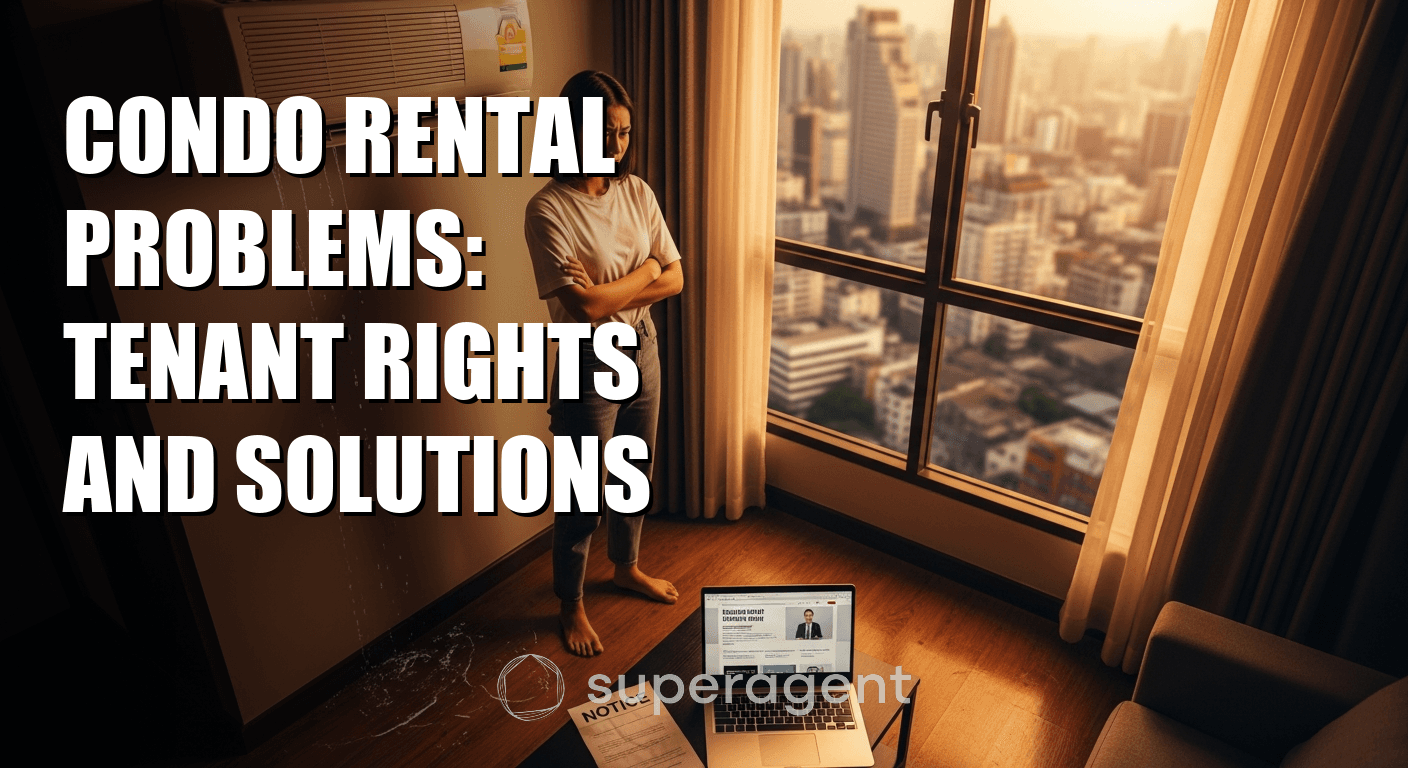
Condo Rental Problems: Tenant Rights and Solutions
Guides
Condo Rental Problems: Tenant Rights and Solutions
Know your rights and how to handle common issues when renting a condo in Bangkok
Summary
เช่าคอนโดแล้วมีปัญหา? Learn essential tenant rights and practical solutions for resolving rental disputes and maintenance issues effectively.
You sign the lease, pay the deposit, collect the keys, and move into what you thought was your dream condo in Bangkok. Then two weeks in, the aircon stops working. Or the water pressure dies. Or your neighbor's construction noise starts at 6 AM and nobody answers your calls. Welcome to renting in Bangkok, where tenant-landlord disputes can turn ugly fast if you don't know your rights.
The truth is, Thai tenant law exists to protect you, but most expats and even local renters don't know what it actually covers. You're not helpless. You have real leverage. And knowing exactly what that leverage is before problems spiral will save you thousands of baht, weeks of stress, and the nightmare of finding emergency housing at 2 AM.
Let's walk through the actual rights you have as a condo renter in Bangkok, what problems tend to blow up, and exactly how to handle them without losing your deposit or getting evicted.
Your Core Rights as a Condo Tenant in Thailand
Thai law treats rental agreements seriously. Under the Apartment Rental Act (and the broader Property Law), you have baseline protections whether your lease is written or not. Most renters have no idea this exists.
First: the landlord must maintain the property in rentable condition. That means working utilities, structural integrity, and compliance with building codes. If your bathroom floods because of poor maintenance, that's the landlord's problem, not yours. If the aircon unit that was working when you moved in dies within a year, the landlord typically has to fix or replace it at their cost, not yours.
Second: you have the right to quiet enjoyment of the property. This means the landlord can't enter without notice (usually 24 hours required), can't harass you, and can't substantially interfere with your use of the unit. Your landlord can't decide to renovate the unit next to yours during your lease term without proper notice and compensation to you for the disruption.
Third: your deposit is protected. The landlord cannot use it for routine maintenance or wear and tear. Deposits exist only for unpaid rent, actual damage beyond normal use, or lease violations. If you leave the unit in the same condition as move-in (normal wear accepted), you get your deposit back in full.
Fourth: rent increases are regulated. You cannot be hit with a surprise 50 percent rent hike mid-lease unless your original contract explicitly allows it. Most Bangkok leases are one year, and the rent cannot be changed without agreed terms in writing.
Here's the catch: all of this only works if you have a written lease, and even then only if you actually enforce your rights. Many landlords count on tenants not knowing these protections exist.
Common Condo Problems in Bangkok and What They Mean
Certain issues come up again and again in Bangkok rental disputes. Knowing which ones are actually your landlord's responsibility saves you money and stress.
Broken or faulty utilities. Your aircon won't turn on. Your hot water heater is dead. The elevator has been broken for two weeks. These are the landlord's problem, full stop. They're required to maintain the property in working order. Document the failure with photos or videos, send the landlord a message requesting repair (Line works, keep screenshots), and set a reasonable deadline, usually 3 to 5 days. If nothing happens, you have grounds to withhold rent or break the lease without penalty.
Water pressure or water quality issues. If water comes out as a trickle or smells wrong, this is a maintenance issue. Many older buildings in areas like Rama 4 or Sukhumvit around soi 19 have aging plumbing. Get a photo of the water pressure issue if possible, and file a written request. If it takes more than a few days to fix, you can argue a rent reduction.
Noise and construction. Your neighbor plays music until 2 AM. Or the building is doing renovations on the floor above you. The landlord must enforce building rules and quiet-enjoyment clauses. If construction happens, you're generally entitled to notice and, in extreme cases, a temporary rent reduction or lease termination without penalty. Check your condo's house rules and your lease terms specifically.
Mold, pest infestations, or structural issues. These are serious. They affect habitability. The landlord must fix them. If they don't within a reasonable timeframe (usually 7 to 14 days), you can terminate the lease and get your deposit back. Take photos and send a formal request with a deadline in writing.
Security deposit disputes. You move out, landlord claims damage and keeps part or all of your deposit. This is where most Bangkok renters get burned. Before you move in, walk through the entire unit with the landlord, photograph everything, and get both of you to sign a move-in condition report. When you move out, do the same thing. Get a move-out checklist signed by both parties. This single step prevents 90 percent of deposit disputes.
Rent Increases and Contract Changes
Your lease says 20,000 baht a month. One year passes. Your landlord tells you the new rent is 24,000 baht. Is this legal?
It depends entirely on what your original contract says. If your lease includes a clause allowing for rent increases (most do not, unless they specify a percentage or a yearly adjustment tied to inflation), and the clause is in writing and you agreed to it, then technically yes. But it must be reasonable and agreed before the new term starts.
If your lease is silent on rent increases, and you've lived in the unit for one year, the landlord cannot simply raise the rent for the next year without a new agreement. You can push back and insist on the original rate. If you disagree on the new rate, and your lease is ending, you have the right to not renew and move out.
Many Bangkok landlords use rent increases as a back-door way to force out tenants they want to replace. If your lease ends and the "new" rent is suddenly 30 percent higher, you can usually negotiate down or find another unit. The market in areas like Thonglor or Phrom Phong for 1-bedroom units typically runs 25,000 to 35,000 THB per month, so use that as your reality check.
Always get rent increase notices in writing. Always negotiate before accepting. And always check what comparable units in your building or neighborhood cost.
What to Do When a Problem Starts
The moment you notice an issue, take these steps in order. Most landlords respond well to the first step. Many disputes escalate only because tenants stay quiet.
Step 1: Document everything. Take photos or videos of the problem. If it's noise, record it (you're allowed to record in your own space). If it's water damage, photograph the wet wall and the stain. If it's an aircon malfunction, show the error code on the unit. Keep all messages, emails, and Line chats with your landlord or property manager.
Step 2: Contact the landlord in writing. Don't call and hope they remember. Use Line, email, or a registered letter. Clearly state the problem, when you first noticed it, and how it affects your ability to use the unit. Request a repair within a specific timeframe, usually 3 to 5 days for urgent issues, 7 to 10 days for others. Keep the tone professional and factual, not angry.
Step 3: Follow up. If you don't hear back within 24 hours, send another message. If the repair hasn't been done within the agreed timeframe, send a follow-up with a second deadline and mention that you're prepared to hire a contractor yourself and deduct the cost from rent (if your lease allows), or to escalate the dispute.
Step 4: Escalate if necessary. Inform the landlord that you're filing a complaint with the local district office (Amphoe) or that you intend to withhold rent until the issue is resolved. Most landlords take this seriously because it creates an official record. In Bangkok, each district has a consumer protection office that can mediate disputes.
Step 5: Involve a third party. If direct negotiation fails, contact the Thailand Consumer Council (if the issue is safety or product-related) or a lawyer specializing in tenant disputes. Most offer free initial consultations. For expats, your embassy's labor or legal assistance line can also point you toward resources.
When You Need to Break the Lease
Sometimes the problem is so bad that you want out, and you don't want to lose your deposit or get sued for early termination.
You have legitimate grounds to break a lease early without penalty if the landlord fails to maintain the property in habitable condition. The exact definition varies, but generally if utilities don't work, there's a health or safety hazard, or the space becomes unsuitable for living, you have grounds.
Example: A condo in Phetchburi has a severe roof leak that damages your furniture and your walls. The landlord drags their feet on repairs. After 14 days of written requests and no fix, you hire a contractor, document everything, send the landlord an invoice and a final notice saying you're terminating the lease due to uninhabitable conditions, and you move out. You keep your deposit and have documentation to support your decision if the landlord disputes it.
The key is always following the written request process. Your landlord can't argue they didn't know if you have a chain of messages and dates. Courts and mediators in Thailand take written records very seriously.
If you want to break the lease for personal reasons (new job, relocating, family issues), you typically owe rent through the remainder of the lease term or must pay a penalty (often one month's rent). This should be in your contract. If it's not, negotiate with your landlord. Many prefer to find a new tenant rather than force a bitter situation.
Protecting Yourself: What to Do Before Signing
Prevention is always cheaper than dispute resolution.
Read the entire contract before signing. Thai lease agreements often have clauses that heavily favor the landlord. Look specifically for clauses about repairs, utilities, noise, noise restrictions, deposit deductions, rent increases, and early termination. If anything seems unfair, ask to modify it or ask for clarification. Most landlords will negotiate on terms before you sign.
Get a proper move-in checklist signed. Walk through the entire unit with the landlord. Photograph every room, every corner, every appliance, and every blemish. Note stains, scratches, broken fixtures, or anything not in working order. Get both of you to sign and date this document. This is your legal proof of the condition you received. When you move out, you'll use this to prove you didn't cause the damage.
Keep utilities in your name if possible. If the electric or water is in the landlord's name, they can use high bills as a reason to fine you or keep your deposit. In Bangkok, utilities are easy to set up. Go to your local PEA (Provincial Electricity Authority) office or water authority and register in your name if the building allows it.
Take photos of your lease and all amendments. Keep them in your phone and in cloud storage. Take a photo of the signed agreement. Keep your rental receipt documentation. These pieces of evidence protect you if a dispute goes to court.
Comparing Your Options When Problems Arise
- Broken utilities (aircon, water, electricity): Yes, must fix immediately | Send written repair request with 3-5 day deadline | Withhold rent or hire contractor and deduct cost
- Pest infestation or mold: Yes, affects habitability | Send written request with 7-day deadline and health documentation | Terminate lease, keep deposit, move out
- Noise from neighbors or construction: Partially, must enforce house rules | Request condo management enforce quiet hours, document noise | Request rent reduction or break lease
- Rent increase mid-lease: No, unless contract specifies it | Reject increase, insist on original rate | Negotiate or plan to relocate at lease end
- Deposit kept unfairly: No, only for damage beyond wear | Request itemized deduction list with photos | File complaint with district office or small claims court
Real Bangkok Scenarios: How These Rights Play Out
You're renting a 1-bedroom near BTS Ari for 22,000 THB a month. The aircon stops working on a Monday in April (hot season). You message the landlord on Monday evening. By Thursday, nothing is done. The unit is 28 degrees Celsius inside. You've sent two follow-up messages. This is a maintenance failure. You now have the right to hire a technician yourself, pay for the repair (usually 2,000 to 4,000 THB for a recharge or part replacement), and deduct it from next month's rent. Document everything with receipts and photos. Send the landlord a professional message stating you've made the repair and deducted the cost from rent, with full documentation attached. Most landlords pay up rather than fight it.
Alternatively: You call the landlord and say, "The aircon hasn't been fixed in three days. I'm prepared to hire a technician today and deduct the cost from rent, or you can arrange it now." Many landlords respond immediately when they realize the financial and legal consequences of their inaction.
Another scenario: You're renting a condo in the Sukhumvit area and water leaks into your unit from the neighbor's unit above. It damages your furniture and causes mold. You photograph everything, send a formal request to the landlord and the condo management with a 5-day deadline, and copy in a health department reference for mold risks. If the landlord doesn't respond or fix it properly within 7 days, you send a final written notice stating you're terminating the lease due to uninhabitable conditions effective 14 days from the letter date. You move out, keep your deposit, and have a documented case if the landlord pursues you.
These aren't hypothetical. They happen constantly in Bangkok's rental market.
Renting a condo in Bangkok comes with real risks if you don't know your rights. But you're not powerless. Thai law protects you on core issues: maintenance, habitability, and deposit protection. The landlord's job is to provide a functional, safe space. Your job is to pay rent on time, don't damage the unit, and document everything in writing.
Most disputes never reach a courtroom because they're resolved through clear communication and documentation. The landlords who cause trouble are counting on tenants not knowing they have options. You have them. Use them calmly, professionally, and in writing.
If you're looking for a rental in Bangkok and want to avoid sketchy landlords, start with platforms that vet both landlords and properties properly. Superagent lists verified condo rentals across Bangkok with clear terms and direct landlord communication, so you start your tenancy on solid ground.
You sign the lease, pay the deposit, collect the keys, and move into what you thought was your dream condo in Bangkok. Then two weeks in, the aircon stops working. Or the water pressure dies. Or your neighbor's construction noise starts at 6 AM and nobody answers your calls. Welcome to renting in Bangkok, where tenant-landlord disputes can turn ugly fast if you don't know your rights.
The truth is, Thai tenant law exists to protect you, but most expats and even local renters don't know what it actually covers. You're not helpless. You have real leverage. And knowing exactly what that leverage is before problems spiral will save you thousands of baht, weeks of stress, and the nightmare of finding emergency housing at 2 AM.
Let's walk through the actual rights you have as a condo renter in Bangkok, what problems tend to blow up, and exactly how to handle them without losing your deposit or getting evicted.
Your Core Rights as a Condo Tenant in Thailand
Thai law treats rental agreements seriously. Under the Apartment Rental Act (and the broader Property Law), you have baseline protections whether your lease is written or not. Most renters have no idea this exists.
First: the landlord must maintain the property in rentable condition. That means working utilities, structural integrity, and compliance with building codes. If your bathroom floods because of poor maintenance, that's the landlord's problem, not yours. If the aircon unit that was working when you moved in dies within a year, the landlord typically has to fix or replace it at their cost, not yours.
Second: you have the right to quiet enjoyment of the property. This means the landlord can't enter without notice (usually 24 hours required), can't harass you, and can't substantially interfere with your use of the unit. Your landlord can't decide to renovate the unit next to yours during your lease term without proper notice and compensation to you for the disruption.
Third: your deposit is protected. The landlord cannot use it for routine maintenance or wear and tear. Deposits exist only for unpaid rent, actual damage beyond normal use, or lease violations. If you leave the unit in the same condition as move-in (normal wear accepted), you get your deposit back in full.
Fourth: rent increases are regulated. You cannot be hit with a surprise 50 percent rent hike mid-lease unless your original contract explicitly allows it. Most Bangkok leases are one year, and the rent cannot be changed without agreed terms in writing.
Here's the catch: all of this only works if you have a written lease, and even then only if you actually enforce your rights. Many landlords count on tenants not knowing these protections exist.
Common Condo Problems in Bangkok and What They Mean
Certain issues come up again and again in Bangkok rental disputes. Knowing which ones are actually your landlord's responsibility saves you money and stress.
Broken or faulty utilities. Your aircon won't turn on. Your hot water heater is dead. The elevator has been broken for two weeks. These are the landlord's problem, full stop. They're required to maintain the property in working order. Document the failure with photos or videos, send the landlord a message requesting repair (Line works, keep screenshots), and set a reasonable deadline, usually 3 to 5 days. If nothing happens, you have grounds to withhold rent or break the lease without penalty.
Continue reading after that.
Looking for a condo
to rent?
Leave your name and phone. We'll follow up while you keep reading.
100% Secure
Fast Response
Free Consultation
Water pressure or water quality issues. If water comes out as a trickle or smells wrong, this is a maintenance issue. Many older buildings in areas like Rama 4 or Sukhumvit around soi 19 have aging plumbing. Get a photo of the water pressure issue if possible, and file a written request. If it takes more than a few days to fix, you can argue a rent reduction.
Noise and construction. Your neighbor plays music until 2 AM. Or the building is doing renovations on the floor above you. The landlord must enforce building rules and quiet-enjoyment clauses. If construction happens, you're generally entitled to notice and, in extreme cases, a temporary rent reduction or lease termination without penalty. Check your condo's house rules and your lease terms specifically.
Mold, pest infestations, or structural issues. These are serious. They affect habitability. The landlord must fix them. If they don't within a reasonable timeframe (usually 7 to 14 days), you can terminate the lease and get your deposit back. Take photos and send a formal request with a deadline in writing.
Security deposit disputes. You move out, landlord claims damage and keeps part or all of your deposit. This is where most Bangkok renters get burned. Before you move in, walk through the entire unit with the landlord, photograph everything, and get both of you to sign a move-in condition report. When you move out, do the same thing. Get a move-out checklist signed by both parties. This single step prevents 90 percent of deposit disputes.
Rent Increases and Contract Changes
Your lease says 20,000 baht a month. One year passes. Your landlord tells you the new rent is 24,000 baht. Is this legal?
It depends entirely on what your original contract says. If your lease includes a clause allowing for rent increases (most do not, unless they specify a percentage or a yearly adjustment tied to inflation), and the clause is in writing and you agreed to it, then technically yes. But it must be reasonable and agreed before the new term starts.
If your lease is silent on rent increases, and you've lived in the unit for one year, the landlord cannot simply raise the rent for the next year without a new agreement. You can push back and insist on the original rate. If you disagree on the new rate, and your lease is ending, you have the right to not renew and move out.
Many Bangkok landlords use rent increases as a back-door way to force out tenants they want to replace. If your lease ends and the "new" rent is suddenly 30 percent higher, you can usually negotiate down or find another unit. The market in areas like Thonglor or Phrom Phong for 1-bedroom units typically runs 25,000 to 35,000 THB per month, so use that as your reality check.
Always get rent increase notices in writing. Always negotiate before accepting. And always check what comparable units in your building or neighborhood cost.
What to Do When a Problem Starts
The moment you notice an issue, take these steps in order. Most landlords respond well to the first step. Many disputes escalate only because tenants stay quiet.
Step 1: Document everything. Take photos or videos of the problem. If it's noise, record it (you're allowed to record in your own space). If it's water damage, photograph the wet wall and the stain. If it's an aircon malfunction, show the error code on the unit. Keep all messages, emails, and Line chats with your landlord or property manager.
Step 2: Contact the landlord in writing. Don't call and hope they remember. Use Line, email, or a registered letter. Clearly state the problem, when you first noticed it, and how it affects your ability to use the unit. Request a repair within a specific timeframe, usually 3 to 5 days for urgent issues, 7 to 10 days for others. Keep the tone professional and factual, not angry.
Step 3: Follow up. If you don't hear back within 24 hours, send another message. If the repair hasn't been done within the agreed timeframe, send a follow-up with a second deadline and mention that you're prepared to hire a contractor yourself and deduct the cost from rent (if your lease allows), or to escalate the dispute.
Step 4: Escalate if necessary. Inform the landlord that you're filing a complaint with the local district office (Amphoe) or that you intend to withhold rent until the issue is resolved. Most landlords take this seriously because it creates an official record. In Bangkok, each district has a consumer protection office that can mediate disputes.
Step 5: Involve a third party. If direct negotiation fails, contact the Thailand Consumer Council (if the issue is safety or product-related) or a lawyer specializing in tenant disputes. Most offer free initial consultations. For expats, your embassy's labor or legal assistance line can also point you toward resources.
When You Need to Break the Lease
Sometimes the problem is so bad that you want out, and you don't want to lose your deposit or get sued for early termination.
You have legitimate grounds to break a lease early without penalty if the landlord fails to maintain the property in habitable condition. The exact definition varies, but generally if utilities don't work, there's a health or safety hazard, or the space becomes unsuitable for living, you have grounds.
Example: A condo in Phetchburi has a severe roof leak that damages your furniture and your walls. The landlord drags their feet on repairs. After 14 days of written requests and no fix, you hire a contractor, document everything, send the landlord an invoice and a final notice saying you're terminating the lease due to uninhabitable conditions, and you move out. You keep your deposit and have documentation to support your decision if the landlord disputes it.
The key is always following the written request process. Your landlord can't argue they didn't know if you have a chain of messages and dates. Courts and mediators in Thailand take written records very seriously.
If you want to break the lease for personal reasons (new job, relocating, family issues), you typically owe rent through the remainder of the lease term or must pay a penalty (often one month's rent). This should be in your contract. If it's not, negotiate with your landlord. Many prefer to find a new tenant rather than force a bitter situation.
Protecting Yourself: What to Do Before Signing
Prevention is always cheaper than dispute resolution.
Read the entire contract before signing. Thai lease agreements often have clauses that heavily favor the landlord. Look specifically for clauses about repairs, utilities, noise, noise restrictions, deposit deductions, rent increases, and early termination. If anything seems unfair, ask to modify it or ask for clarification. Most landlords will negotiate on terms before you sign.
Get a proper move-in checklist signed. Walk through the entire unit with the landlord. Photograph every room, every corner, every appliance, and every blemish. Note stains, scratches, broken fixtures, or anything not in working order. Get both of you to sign and date this document. This is your legal proof of the condition you received. When you move out, you'll use this to prove you didn't cause the damage.
Continue reading after that.
Looking for a condo
to rent?
Leave your name and phone. We'll follow up while you keep reading.
100% Secure
Fast Response
Free Consultation
Keep utilities in your name if possible. If the electric or water is in the landlord's name, they can use high bills as a reason to fine you or keep your deposit. In Bangkok, utilities are easy to set up. Go to your local PEA (Provincial Electricity Authority) office or water authority and register in your name if the building allows it.
Take photos of your lease and all amendments. Keep them in your phone and in cloud storage. Take a photo of the signed agreement. Keep your rental receipt documentation. These pieces of evidence protect you if a dispute goes to court.
Comparing Your Options When Problems Arise
- Broken utilities (aircon, water, electricity): Yes, must fix immediately | Send written repair request with 3-5 day deadline | Withhold rent or hire contractor and deduct cost
- Pest infestation or mold: Yes, affects habitability | Send written request with 7-day deadline and health documentation | Terminate lease, keep deposit, move out
- Noise from neighbors or construction: Partially, must enforce house rules | Request condo management enforce quiet hours, document noise | Request rent reduction or break lease
- Rent increase mid-lease: No, unless contract specifies it | Reject increase, insist on original rate | Negotiate or plan to relocate at lease end
- Deposit kept unfairly: No, only for damage beyond wear | Request itemized deduction list with photos | File complaint with district office or small claims court
Real Bangkok Scenarios: How These Rights Play Out
You're renting a 1-bedroom near BTS Ari for 22,000 THB a month. The aircon stops working on a Monday in April (hot season). You message the landlord on Monday evening. By Thursday, nothing is done. The unit is 28 degrees Celsius inside. You've sent two follow-up messages. This is a maintenance failure. You now have the right to hire a technician yourself, pay for the repair (usually 2,000 to 4,000 THB for a recharge or part replacement), and deduct it from next month's rent. Document everything with receipts and photos. Send the landlord a professional message stating you've made the repair and deducted the cost from rent, with full documentation attached. Most landlords pay up rather than fight it.
Alternatively: You call the landlord and say, "The aircon hasn't been fixed in three days. I'm prepared to hire a technician today and deduct the cost from rent, or you can arrange it now." Many landlords respond immediately when they realize the financial and legal consequences of their inaction.
Another scenario: You're renting a condo in the Sukhumvit area and water leaks into your unit from the neighbor's unit above. It damages your furniture and causes mold. You photograph everything, send a formal request to the landlord and the condo management with a 5-day deadline, and copy in a health department reference for mold risks. If the landlord doesn't respond or fix it properly within 7 days, you send a final written notice stating you're terminating the lease due to uninhabitable conditions effective 14 days from the letter date. You move out, keep your deposit, and have a documented case if the landlord pursues you.
These aren't hypothetical. They happen constantly in Bangkok's rental market.
Renting a condo in Bangkok comes with real risks if you don't know your rights. But you're not powerless. Thai law protects you on core issues: maintenance, habitability, and deposit protection. The landlord's job is to provide a functional, safe space. Your job is to pay rent on time, don't damage the unit, and document everything in writing.
Most disputes never reach a courtroom because they're resolved through clear communication and documentation. The landlords who cause trouble are counting on tenants not knowing they have options. You have them. Use them calmly, professionally, and in writing.
If you're looking for a rental in Bangkok and want to avoid sketchy landlords, start with platforms that vet both landlords and properties properly. Superagent lists verified condo rentals across Bangkok with clear terms and direct landlord communication, so you start your tenancy on solid ground.
Share this article
Properties you may like
![[For Rent] CONDO I Las Colinas Condominium I 2 Beds I 3 Baths I 85,000THB/mo](/_next/image?url=https%3A%2F%2Fstorage.googleapis.com%2Fsuperagent-web%2Fattachments%2Flistings%2F6828%2F80f345c4-488e-43b2-b017-c9fbb17b520d-99486dd8-4237-4ba2-9207-01ce4f66b21f-media.jpg&w=3840&q=75)
฿85,000
2 Bed3170 sqm
[For Rent] CONDO I Las Colinas Condominium I 2 Beds I 3 Baths I 85,000THB/mo
Asoke
Condo![[For Rent] CONDO I Ashton Asoke I 1 Bed I 1 Bath I 30,000THB/mo](/_next/image?url=https%3A%2F%2Fstorage.googleapis.com%2Fsuperagent-web%2Fattachments%2Flistings%2F6876%2Fb7ce9bbe-f877-4ff5-bb54-8ad0026db940-1272-4.jpg&w=3840&q=75)
฿30,000
1 Bed135 sqm
[For Rent] CONDO I Ashton Asoke I 1 Bed I 1 Bath I 30,000THB/mo
Asoke
Condo![[For Rent] CONDO I Skyrise Avenue Sukhumvit 64 I 2 Beds I 2 Baths I 27,000THB/mo](/_next/image?url=https%3A%2F%2Fstorage.googleapis.com%2Fsuperagent-web%2Fattachments%2Flistings%2F2001%2F670f91de-c251-4e81-971c-8e30ed2158cd-screenshot-2026-07-05-at-11.38.53-pm.png&w=3840&q=75)
฿27,000
2 Bed252 sqm
[For Rent] CONDO I Skyrise Avenue Sukhumvit 64 I 2 Beds I 2 Baths I 27,000THB/mo
Punnawithi
Condo![[For Rent] CONDO I Park Origin Ratchathewi I Duplex I 2 Beds I 1 Bath I 32,000THB/mo](/_next/image?url=https%3A%2F%2Fstorage.googleapis.com%2Fsuperagent-web%2Fattachments%2Flistings%2F6896%2Fb79a7d21-7533-4b0d-bb19-762ebfafab62-1318-6.jpg&w=3840&q=75)
฿32,000
2 Bed135.9 sqm
[For Rent] CONDO I Park Origin Ratchathewi I Duplex I 2 Beds I 1 Bath I 32,000THB/mo
Ratchathewi
Condo![[For Rent] CONDO I Park Origin Phayathai I Studio I 1 Bath I 28,000THB/mo](/_next/image?url=https%3A%2F%2Fstorage.googleapis.com%2Fsuperagent-web%2Fattachments%2Flistings%2F6757%2Fb226df93-94c6-46fa-aeba-ebfadc7f81b8-1000006042.jpg&w=3840&q=75)
฿28,000
Studio129 sqm
[For Rent] CONDO I Park Origin Phayathai I Studio I 1 Bath I 28,000THB/mo
Phaya Thai
Condo![[For Rent] CONDO I Ideo Mobi Sukhumvit 81 I Duplex I 1 Bed I 1 Bath I 28,000THB/mo](/_next/image?url=https%3A%2F%2Fstorage.googleapis.com%2Fsuperagent-web%2Fattachments%2Flistings%2F1849%2Fc8b2c033-3b5f-4615-b2b0-4972f40141f0-705-13.jpg&w=3840&q=75)
฿28,000
1 Bed143 sqm
[For Rent] CONDO I Ideo Mobi Sukhumvit 81 I Duplex I 1 Bed I 1 Bath I 28,000THB/mo
On Nut
Condo![[For Rent] CONDO I Siamese Sukhumvit 48 I 1 Bed I 1 Bath I 28,000THB/mo](/_next/image?url=https%3A%2F%2Fstorage.googleapis.com%2Fsuperagent-web%2Fattachments%2Flistings%2F6841%2Febc2dce2-2e9b-4e6d-a01c-0cfa619dfa13-1231-6.jpg&w=3840&q=75)
฿28,000
1 Bed144 sqm
[For Rent] CONDO I Siamese Sukhumvit 48 I 1 Bed I 1 Bath I 28,000THB/mo
Condo![[For Rent] CONDO I Ashton Asoke I 1 Bed I 1 Bath I 22,000THB/mo](/_next/image?url=https%3A%2F%2Fstorage.googleapis.com%2Fsuperagent-web%2Fattachments%2Flistings%2F6802%2Fe06b9b73-1207-414a-ab04-1685de0c7eaa-20220808_153124_0.jpg&w=3840&q=75)
฿22,000
1 Bed134 sqm
[For Rent] CONDO I Ashton Asoke I 1 Bed I 1 Bath I 22,000THB/mo
Asoke
Condo![[For Rent] CONDO I HQ Thonglor Soi 4 I 1 Bed I 1 Bath I 35,000 THB/mo](/_next/image?url=https%3A%2F%2Fstorage.googleapis.com%2Fsuperagent-web%2Fattachments%2Flistings%2F1445%2F72352585-1bc2-41a8-bd62-ddcbf8189fe9-376-5.jpg&w=3840&q=75)
฿35,000
1 Bed143.6 sqm
[For Rent] CONDO I HQ Thonglor Soi 4 I 1 Bed I 1 Bath I 35,000 THB/mo
Thonglor
Condo![[For Rent] CONDO I The Master Centrium Asoke - Sukhumvit I Duplex I 2 Beds I 3 Baths I 75,000 THB/mo](/_next/image?url=https%3A%2F%2Fstorage.googleapis.com%2Fsuperagent-web%2Fattachments%2Flistings%2F1545%2F97932b6a-c358-45e4-b5f9-995dbf5a3cf0-441-2.jpg&w=3840&q=75)
฿75,000
2 Bed3150 sqm
[For Rent] CONDO I The Master Centrium Asoke - Sukhumvit I Duplex I 2 Beds I 3 Baths I 75,000 THB/mo
Asoke
CondoMore like this
 In Guides · Superagent EditorialHidden Costs of Renting a Condo in Bangkok Nobody Warns You AboutBangkok condo rent looks affordable until month one hits. Here are the real costs beyond the headline figure that catch most renters off guard.25 May 20261 min read
 In Guides · Superagent EditorialWhat a Long-Vacant Bangkok Condo Unit Is Actually Telling YouA Bangkok condo vacant for months signals overpricing, landlord issues, or real problems. Here is how to read the signs.25 May 20261 min read
 In Guides · Superagent EditorialRed Flags in a Bangkok Rental Contract to Watch Out ForBangkok rental contracts often hide risky clauses. Here are the red flags every tenant must catch before signing any lease.25 May 20261 min read
 In Guides · Superagent EditorialWorking Online from a Condo: How to Choose the Perfect Room for ProductivityLearn how to choose the best condo room for working online with tips on lighting, noise, and furniture setup to maximize productivity.9 May 20261 min read