How to File a Complaint Against a Landlord in Bangkok: Steps and Agencies
Guides
How to File a Complaint Against a Landlord in Bangkok: Steps and Agencies
Know your rights and learn the proper legal channels to report unfair landlord practices.
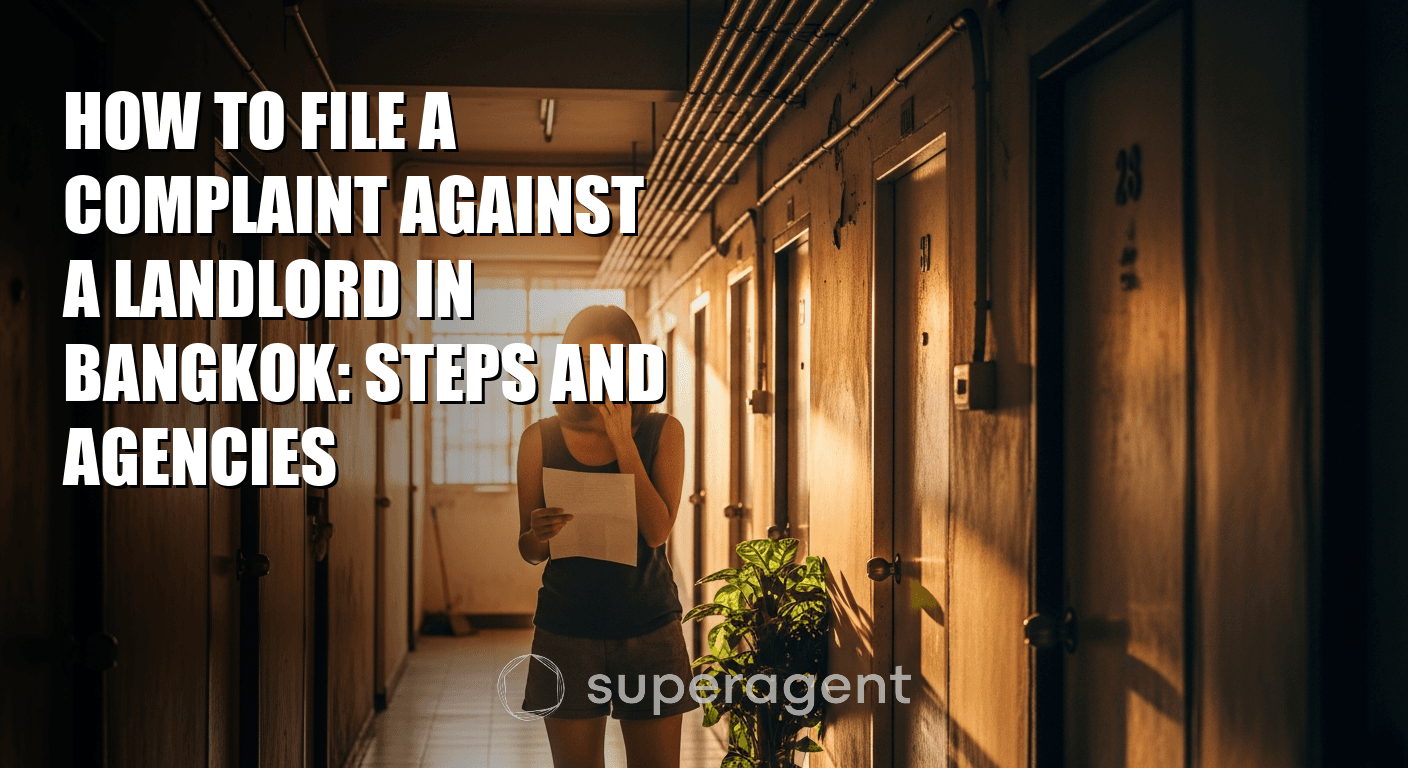
Summary
Learn how to file a rental house complaint in Bangkok with step-by-step guidance on agencies that handle tenant disputes and landlord violations.
You signed a rental contract, paid your deposit, and moved into that condo in Thonglor or Ari thinking everything was sorted. Then your landlord stops responding to maintenance requests, keeps your security deposit without explanation, or tries to raise rent mid-lease without notice. Suddenly you're wondering: what actually happens next? Can I report this? Who do I even call in Bangkok?
The truth is, tenant rights in Thailand exist, but they're not always obvious. Most people don't know where to start when a landlord takes advantage of them. This guide walks you through exactly what to do, who handles what, and which Bangkok offices will actually listen to your complaint.
Why Landlord Disputes Happen More Often Than You'd Think
Bangkok's rental market moves fast. Condos change hands, management companies get lazy, and small misunderstandings turn into big headaches. A landlord in the Rama 9 area might not respond to your water pressure issue for months. Another in Sukhumvit might try to keep your 100,000 THB deposit after you move out, claiming mysterious damages.
The problem isn't that Thai law doesn't protect tenants. It does. The problem is that most renters don't know the law exists or don't know which office handles complaints. You might call the local police box and get redirected three times. Or you might assume small landlords can do whatever they want because they own the building.
According to data from rental platforms in Bangkok, deposit disputes and maintenance neglect rank in the top three tenant complaints year over year. Having a clear action plan puts you on the right side of the law immediately.
Document Everything Before You Complain
Before you file any report, gather proof. This is non-negotiable. A complaint without documentation is just a complaint. A complaint with evidence is a case.
Take photos and videos of every issue. Water stains on the ceiling? Screenshot it. Broken air conditioning unit? Film it and note the date and time in the video. Keep all text messages, emails, and Line chats with your landlord or property manager. Write down the exact dates you requested repairs and when the landlord responded or ignored you. Save receipts if you paid for emergency repairs yourself.
If the issue involves the deposit, get a copy of the original contract showing the exact amount. Review the condition report you signed when you moved in. Most contracts in Bangkok include a checklist of the unit's condition. Compare that to your current photos. This becomes your strongest evidence.
Store everything in a folder on your phone and email it to yourself. You'll need these files ready when you walk into any government office.
The Bangkok Office of Community Relations: Your First Stop
The Office of Community Relations, also called the Subdistrict Administrative Office in your local area, is where most tenant complaints land first. Every soi in Bangkok has one. These offices are staffed with people trained to handle landlord disputes, and they work with tenants for free.
If you rent in the Phrom Phong area near the BTS Phrom Phong station, your subdistrict office is in that same area. Google "Subdistrict Administrative Office" plus your soi name. You'll find the address and phone number instantly. Hours are usually 8:30 AM to 4:30 PM, Monday through Friday.
Bring your lease, photos, messages, and any other documentation. Explain the situation clearly. The office will try to mediate between you and the landlord first. They might call your landlord and ask them to fix the problem or return your deposit. For many disputes, this solves it without going further.
If mediation doesn't work, they'll guide you to the next step. They might refer you to the Consumer Protection Board or to small claims court, depending on the type of complaint.
The Consumer Protection Board: For Deposit and Contract Violations
If your landlord refuses to return a deposit, charges you for damages that weren't documented, or violates the terms of your contract without cause, the Consumer Protection Board handles these cases.
This is the agency that deals with unfair business practices. Keeping a security deposit without legitimate reason counts. Charging you hidden fees counts. Trying to break your lease early without legal grounds counts. You can file a complaint in person at any Consumer Protection Board office in Bangkok, or online through their website.
The main Bangkok office is located downtown and accepts walk-in complaints. You'll need your lease, deposit receipt, photos of the unit's condition when you moved in and moved out, and written communication with the landlord about the dispute. The board can order the landlord to return your money plus compensation in some cases.
Processing typically takes 30 to 60 days. The board will investigate, contact the landlord, and make a decision. If they rule in your favor, the landlord has to comply or face further legal action.
Small Claims Court: When Bigger Money Is at Stake
If the disputed amount is large, the landlord refuses to cooperate, or multiple violations have occurred, you might take it to the Civil Court. Small claims court in Thailand handles disputes up to 100,000 THB without needing a lawyer.
This is not something you do alone. Small claims court has specific filing procedures, forms that must be filled out exactly right, and deadlines you cannot miss. You'll need to hire a lawyer or someone experienced with Thai legal processes. Cost varies, but expect 5,000 to 15,000 THB in legal fees for straightforward cases.
The court is located in the Dindaeng area near the MRT Chatuchak Park station for many central Bangkok cases. Filing takes time and requires patience, but when you win, it's legally binding. The landlord cannot appeal small claims rulings for disputes under 100,000 THB.
This option makes sense if your deposit was 80,000 THB and the landlord is refusing to return it, or if you paid for significant repairs yourself that the landlord should have covered. Small disputes about minor maintenance typically don't justify the lawyer fees.
The Police: When Things Get Criminal
In rare cases, a landlord's actions cross into criminal territory. If they lock you out without proper legal notice, confiscate your belongings, or physically threaten you over a dispute, you can file a police report.
Every soi in Bangkok has a local police box, often called a "sathanee tamruad." Walk in with your documentation. Explain that you believe a crime has been committed. The police will take a statement and file a report. They may investigate or may advise you to pursue the matter through civil court instead, depending on what happened.
Police reports become important if your case later goes to court, because they create an official record. However, minor disputes like refused repairs or slow deposit returns are not criminal matters. The police will likely tell you to use the Consumer Protection Board or small claims court instead.
Who Handles What: A Quick Reference
- Deposit not returned: Consumer Protection Board or Small Claims Court | Free to 10,000 THB | 30 to 90 days
- Maintenance ignored: Subdistrict Office (mediation first) | Free | 7 to 30 days
- Unlawful eviction: Police, then Civil Court | 0 to 20,000 THB | 60 to 180 days
- Contract violation: Consumer Protection Board | Free | 30 to 60 days
- Threats or violence: Police Box (sathanee tamruad) | Free | 1 to 7 days for report
Real Bangkok Example: The Deposit That Vanished
Take Sara, who rented a one-bedroom in Ari near the BTS Ari station for 28,000 THB per month. She paid a 100,000 THB deposit when she signed the lease in early 2023. After two years, she moved out, left the unit clean, and requested her deposit back. The landlord claimed there was water damage and withheld 40,000 THB, refusing to explain where the damage claim came from.
Sara had photos from move-in showing the unit in good condition. She had messages from the landlord saying "no issues" during her tenancy. She filed a complaint with the Consumer Protection Board with all her documentation. The board investigated, found no evidence of damage, and ordered the landlord to return the full 100,000 THB plus 10,000 THB in compensation within 30 days. The landlord complied.
Without taking action, Sara would have lost 40,000 THB. With one free complaint filed in the right place, she recovered everything plus a penalty.
Practical Next Steps Right Now
If you're currently in a dispute with your landlord in Bangkok, do this today. First, gather all documentation and store it somewhere safe. Second, identify which office handles your specific problem using the reference table above. Third, call or visit that office this week. Most Bangkok government offices are friendly to tenants, especially when you show up prepared with evidence.
The Consumer Protection Board offices across Bangkok process dozens of tenant complaints every month. The Subdistrict Offices mediate disputes constantly. These systems exist to help you, but they only work when you take the first step.
For accurate and current contact information for your specific subdistrict, visit the Land Department website, which maintains listings of all local administrative offices. You can also search for property-specific legal questions on DDproperty.com, which publishes regular guides on tenant rights in Thailand. Many landlord disputes in Bangkok also get resolved faster when both parties have clear lease terms from the start.
When you're searching for your next rental in Bangkok, use Superagent.co to find verified properties with transparent lease terms and professional landlords who respond. A good match at the beginning eliminates disputes later.
You signed a rental contract, paid your deposit, and moved into that condo in Thonglor or Ari thinking everything was sorted. Then your landlord stops responding to maintenance requests, keeps your security deposit without explanation, or tries to raise rent mid-lease without notice. Suddenly you're wondering: what actually happens next? Can I report this? Who do I even call in Bangkok?
The truth is, tenant rights in Thailand exist, but they're not always obvious. Most people don't know where to start when a landlord takes advantage of them. This guide walks you through exactly what to do, who handles what, and which Bangkok offices will actually listen to your complaint.
Why Landlord Disputes Happen More Often Than You'd Think
Bangkok's rental market moves fast. Condos change hands, management companies get lazy, and small misunderstandings turn into big headaches. A landlord in the Rama 9 area might not respond to your water pressure issue for months. Another in Sukhumvit might try to keep your 100,000 THB deposit after you move out, claiming mysterious damages.
The problem isn't that Thai law doesn't protect tenants. It does. The problem is that most renters don't know the law exists or don't know which office handles complaints. You might call the local police box and get redirected three times. Or you might assume small landlords can do whatever they want because they own the building.
According to data from rental platforms in Bangkok, deposit disputes and maintenance neglect rank in the top three tenant complaints year over year. Having a clear action plan puts you on the right side of the law immediately.
Document Everything Before You Complain
Before you file any report, gather proof. This is non-negotiable. A complaint without documentation is just a complaint. A complaint with evidence is a case.
Take photos and videos of every issue. Water stains on the ceiling? Screenshot it. Broken air conditioning unit? Film it and note the date and time in the video. Keep all text messages, emails, and Line chats with your landlord or property manager. Write down the exact dates you requested repairs and when the landlord responded or ignored you. Save receipts if you paid for emergency repairs yourself.
If the issue involves the deposit, get a copy of the original contract showing the exact amount. Review the condition report you signed when you moved in. Most contracts in Bangkok include a checklist of the unit's condition. Compare that to your current photos. This becomes your strongest evidence.
Store everything in a folder on your phone and email it to yourself. You'll need these files ready when you walk into any government office.
The Bangkok Office of Community Relations: Your First Stop
The Office of Community Relations, also called the Subdistrict Administrative Office in your local area, is where most tenant complaints land first. Every soi in Bangkok has one. These offices are staffed with people trained to handle landlord disputes, and they work with tenants for free.
If you rent in the Phrom Phong area near the BTS Phrom Phong station, your subdistrict office is in that same area. Google "Subdistrict Administrative Office" plus your soi name. You'll find the address and phone number instantly. Hours are usually 8:30 AM to 4:30 PM, Monday through Friday.
Bring your lease, photos, messages, and any other documentation. Explain the situation clearly. The office will try to mediate between you and the landlord first. They might call your landlord and ask them to fix the problem or return your deposit. For many disputes, this solves it without going further.
If mediation doesn't work, they'll guide you to the next step. They might refer you to the Consumer Protection Board or to small claims court, depending on the type of complaint.
The Consumer Protection Board: For Deposit and Contract Violations
If your landlord refuses to return a deposit, charges you for damages that weren't documented, or violates the terms of your contract without cause, the Consumer Protection Board handles these cases.
This is the agency that deals with unfair business practices. Keeping a security deposit without legitimate reason counts. Charging you hidden fees counts. Trying to break your lease early without legal grounds counts. You can file a complaint in person at any Consumer Protection Board office in Bangkok, or online through their website.
The main Bangkok office is located downtown and accepts walk-in complaints. You'll need your lease, deposit receipt, photos of the unit's condition when you moved in and moved out, and written communication with the landlord about the dispute. The board can order the landlord to return your money plus compensation in some cases.
Processing typically takes 30 to 60 days. The board will investigate, contact the landlord, and make a decision. If they rule in your favor, the landlord has to comply or face further legal action.
Small Claims Court: When Bigger Money Is at Stake
If the disputed amount is large, the landlord refuses to cooperate, or multiple violations have occurred, you might take it to the Civil Court. Small claims court in Thailand handles disputes up to 100,000 THB without needing a lawyer.
This is not something you do alone. Small claims court has specific filing procedures, forms that must be filled out exactly right, and deadlines you cannot miss. You'll need to hire a lawyer or someone experienced with Thai legal processes. Cost varies, but expect 5,000 to 15,000 THB in legal fees for straightforward cases.
The court is located in the Dindaeng area near the MRT Chatuchak Park station for many central Bangkok cases. Filing takes time and requires patience, but when you win, it's legally binding. The landlord cannot appeal small claims rulings for disputes under 100,000 THB.
This option makes sense if your deposit was 80,000 THB and the landlord is refusing to return it, or if you paid for significant repairs yourself that the landlord should have covered. Small disputes about minor maintenance typically don't justify the lawyer fees.
Talk to us about renting
Share your details and keep reading — we’ll get back to you.
The Police: When Things Get Criminal
In rare cases, a landlord's actions cross into criminal territory. If they lock you out without proper legal notice, confiscate your belongings, or physically threaten you over a dispute, you can file a police report.
Every soi in Bangkok has a local police box, often called a "sathanee tamruad." Walk in with your documentation. Explain that you believe a crime has been committed. The police will take a statement and file a report. They may investigate or may advise you to pursue the matter through civil court instead, depending on what happened.
Police reports become important if your case later goes to court, because they create an official record. However, minor disputes like refused repairs or slow deposit returns are not criminal matters. The police will likely tell you to use the Consumer Protection Board or small claims court instead.
Who Handles What: A Quick Reference
- Deposit not returned: Consumer Protection Board or Small Claims Court | Free to 10,000 THB | 30 to 90 days
- Maintenance ignored: Subdistrict Office (mediation first) | Free | 7 to 30 days
- Unlawful eviction: Police, then Civil Court | 0 to 20,000 THB | 60 to 180 days
- Contract violation: Consumer Protection Board | Free | 30 to 60 days
- Threats or violence: Police Box (sathanee tamruad) | Free | 1 to 7 days for report
Real Bangkok Example: The Deposit That Vanished
Take Sara, who rented a one-bedroom in Ari near the BTS Ari station for 28,000 THB per month. She paid a 100,000 THB deposit when she signed the lease in early 2023. After two years, she moved out, left the unit clean, and requested her deposit back. The landlord claimed there was water damage and withheld 40,000 THB, refusing to explain where the damage claim came from.
Sara had photos from move-in showing the unit in good condition. She had messages from the landlord saying "no issues" during her tenancy. She filed a complaint with the Consumer Protection Board with all her documentation. The board investigated, found no evidence of damage, and ordered the landlord to return the full 100,000 THB plus 10,000 THB in compensation within 30 days. The landlord complied.
Without taking action, Sara would have lost 40,000 THB. With one free complaint filed in the right place, she recovered everything plus a penalty.
Practical Next Steps Right Now
If you're currently in a dispute with your landlord in Bangkok, do this today. First, gather all documentation and store it somewhere safe. Second, identify which office handles your specific problem using the reference table above. Third, call or visit that office this week. Most Bangkok government offices are friendly to tenants, especially when you show up prepared with evidence.
The Consumer Protection Board offices across Bangkok process dozens of tenant complaints every month. The Subdistrict Offices mediate disputes constantly. These systems exist to help you, but they only work when you take the first step.
For accurate and current contact information for your specific subdistrict, visit the Land Department website, which maintains listings of all local administrative offices. You can also search for property-specific legal questions on DDproperty.com, which publishes regular guides on tenant rights in Thailand. Many landlord disputes in Bangkok also get resolved faster when both parties have clear lease terms from the start.
When you're searching for your next rental in Bangkok, use Superagent.co to find verified properties with transparent lease terms and professional landlords who respond. A good match at the beginning eliminates disputes later.
Share this article
Properties you may like
![[For Rent] CONDO I Aguston Sukhumvit 22 I Pet Friendly I 2 Beds I 2 Baths I Rent 55,000THB/mo](/_next/image?url=https%3A%2F%2Fstorage.googleapis.com%2Fsuperagent-web%2Fattachments%2Flistings%2F2266%2Fd3afcd25-6b79-46cb-9f1f-396acdc3dd10-955-3.jpg&w=3840&q=75)
฿55,000
2 Bed295 sqm
[For Rent] CONDO I Aguston Sukhumvit 22 I Pet Friendly I 2 Beds I 2 Baths I Rent 55,000THB/mo
Phrom Phong
Condo![[For Rent] CONDO I SUPALAI PLACE Sukhumvit 39 I 2 Beds I 2 Baths (1 Jacuzzi) I 55,555THB/mo](/_next/image?url=https%3A%2F%2Fstorage.googleapis.com%2Fsuperagent-web%2Fattachments%2Flistings%2F6743%2Fba530743-48b9-4ac6-92d3-c2247e743cf6-01-supalai-place-skv39-2b-link-heaven.jpg&w=3840&q=75)
฿55,555
2 Bed2142 sqm
[For Rent] CONDO I SUPALAI PLACE Sukhumvit 39 I 2 Beds I 2 Baths (1 Jacuzzi) I 55,555THB/mo
Phrom Phong
Condo![[For Rent] CONDO I Maru Ekkamai 2 I Pet friendly I 2 Beds I 2 Baths I 68,000 THB/mo](/_next/image?url=https%3A%2F%2Fstorage.googleapis.com%2Fsuperagent-web%2Fattachments%2Flistings%2F6602%2F9f1d8f71-ee43-435f-9a44-da16c4092c92-968-1.jpg&w=3840&q=75)
฿68,000
2 Bed360 sqm
[For Rent] CONDO I Maru Ekkamai 2 I Pet friendly I 2 Beds I 2 Baths I 68,000 THB/mo
Ekkamai
Condo![[For Rent] CONDO I Noble State 39 I 2 Beds I 2 Baths I 63,000THB/mo](/_next/image?url=https%3A%2F%2Fstorage.googleapis.com%2Fsuperagent-web%2Fattachments%2Flistings%2F2237%2F60eb58f3-eae5-41ed-a80b-406e004f05d8-940-1.jpg&w=3840&q=75)
฿63,000
2 Bed260 sqm
[For Rent] CONDO I Noble State 39 I 2 Beds I 2 Baths I 63,000THB/mo
Phrom Phong
Condo![[For Rent] CONDO I Rhythm Sukhumvit 36-38 I 2 Beds I 2 Baths I 38,999THB/mo](/_next/image?url=https%3A%2F%2Fstorage.googleapis.com%2Fsuperagent-web%2Fattachments%2Flistings%2F1788%2F942a0215-4128-4c2c-a064-f607e84e7aa4-656-2.jpg&w=3840&q=75)
฿38,999
2 Bed256 sqm
[For Rent] CONDO I Rhythm Sukhumvit 36-38 I 2 Beds I 2 Baths I 38,999THB/mo
Thonglor
Condo![[For Rent] CONDO I CLOUD Thonglor-Phetchaburi I 1 Bed I 1 Bath I 22,500THB/mo](/_next/image?url=https%3A%2F%2Fstorage.googleapis.com%2Fsuperagent-web%2Fattachments%2Flistings%2F6742%2F6cef5361-0dac-4dba-98f1-b0d187559c84-1118-1.jpg&w=3840&q=75)
฿22,500
1 Bed132 sqm
[For Rent] CONDO I CLOUD Thonglor-Phetchaburi I 1 Bed I 1 Bath I 22,500THB/mo
Thonglor
Condo![[For Rent] CONDO I City Smart Sukhumvit 18 I 3 Beds I 3 Baths I 65,000mo/THB](/_next/image?url=https%3A%2F%2Fstorage.googleapis.com%2Fsuperagent-web%2Fattachments%2Flistings%2F6741%2Fd371c89d-a913-42c4-a673-e540afae4f46-1116-1.jpg&w=3840&q=75)
฿65,000
3 Bed3125 sqm
[For Rent] CONDO I City Smart Sukhumvit 18 I 3 Beds I 3 Baths I 65,000mo/THB
Condo![[For Rent] CONDO I The Coast Bangkok I 1 Bed I 1 Bath I 20,000mo/THB](/_next/image?url=https%3A%2F%2Fstorage.googleapis.com%2Fsuperagent-web%2Fattachments%2Flistings%2F6740%2F498477ce-4ffa-4e4c-ab08-0e565d9c4bbe-1115-3.jpg&w=3840&q=75)
฿20,000
1 Bed146 sqm
[For Rent] CONDO I The Coast Bangkok I 1 Bed I 1 Bath I 20,000mo/THB
Bang Na
Condo![[For Rent] CONDO I IDEO Sukhumvit-RAMA 4 I 2 Beds I 2 Baths I 55,000mo/THB](/_next/image?url=https%3A%2F%2Fstorage.googleapis.com%2Fsuperagent-web%2Fattachments%2Flistings%2F6739%2F15df221d-5b8e-497c-b7ce-a6b9b6412cab-1113-1.jpg&w=3840&q=75)
฿55,000
2 Bed265 sqm
[For Rent] CONDO I IDEO Sukhumvit-RAMA 4 I 2 Beds I 2 Baths I 55,000mo/THB
Phra Khanong
Condo![[For Rent] CONDO I Downtown 49 I Pet Friendly I 1 Bed I 1 Bath I 23,000mo/THB](/_next/image?url=https%3A%2F%2Fstorage.googleapis.com%2Fsuperagent-web%2Fattachments%2Flistings%2F6738%2F11cf2ffe-1f01-4ccc-991c-2ad608f1ba73-1112-1.jpg&w=3840&q=75)
฿23,000
1 Bed135 sqm
[For Rent] CONDO I Downtown 49 I Pet Friendly I 1 Bed I 1 Bath I 23,000mo/THB
Thonglor
CondoMore like this
 In Guides · Superagent EditorialHidden Costs of Renting a Condo in Bangkok Nobody Warns You AboutBangkok condo rent looks affordable until month one hits. Here are the real costs beyond the headline figure that catch most renters off guard.25 May 20261 min read
 In Guides · Superagent EditorialWhat a Long-Vacant Bangkok Condo Unit Is Actually Telling YouA Bangkok condo vacant for months signals overpricing, landlord issues, or real problems. Here is how to read the signs.25 May 20261 min read
 In Guides · Superagent EditorialRed Flags in a Bangkok Rental Contract to Watch Out ForBangkok rental contracts often hide risky clauses. Here are the red flags every tenant must catch before signing any lease.25 May 20261 min read
 In Guides · Superagent EditorialWorking Online from a Condo: How to Choose the Perfect Room for ProductivityLearn how to choose the best condo room for working online with tips on lighting, noise, and furniture setup to maximize productivity.9 May 20261 min read