What Foreign Renters Need to Know About Condo Lease Agreements in Thailand
Guides
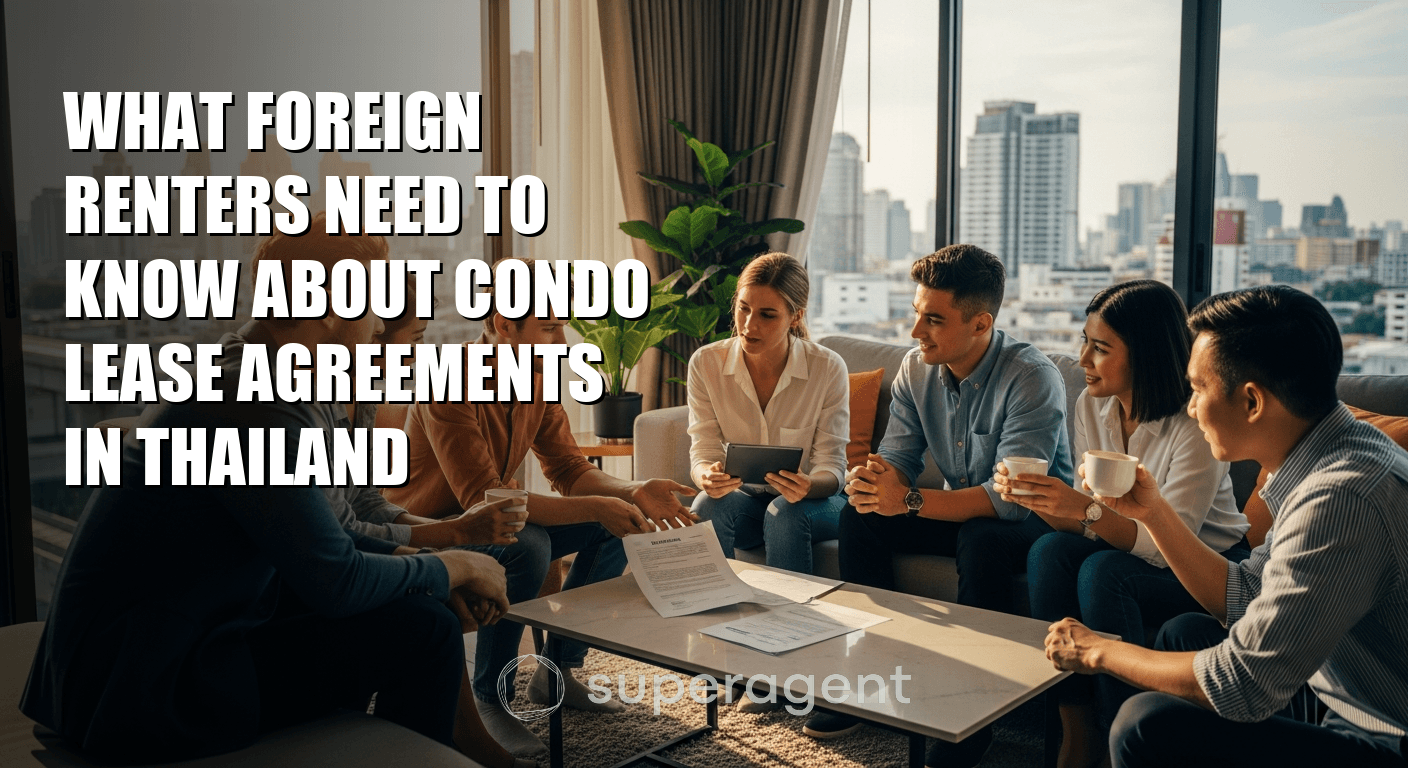
What Foreign Renters Need to Know About Condo Lease Agreements in Thailand
Essential clauses and legal requirements for expats signing rental contracts in Bangkok
Summary
Foreign renters signing condo lease agreements in Thailand must understand key contract terms, deposit requirements, and local rental laws to protect their
You've landed a job in Bangkok, signed the employment contract, and now you're hunting for a condo. The rental market is moving fast, your Thai is limited, and suddenly you're staring at a lease agreement written partly in Thai and partly in English, wondering what you're actually signing. Sound familiar? This is where most expats hit a wall, and honestly, getting it wrong can cost you serious money or months of headaches.
The good news: renting a condo as a foreigner in Thailand is straightforward once you know what clauses to hunt for, what your actual legal rights are, and which parts of the contract are non-negotiable versus flexible. I've seen people lose deposits over missed utilities clauses, get stuck with maintenance charges that weren't spelled out, and discover their landlord can't actually enforce half the rules they wrote in.
Let's walk through exactly what should be in your rental agreement, what you should push back on, and how to protect yourself.
The Core Clauses That Have to Be in Every Condo Lease
A solid rental contract needs to cover the basics: who is renting, what property they are renting, how long, and for how much money. But the devil is in how these are written.
Your lease needs to name you as the tenant, spell out the exact unit number (like 12/25 Sukhumvit Soi 39, Building X), the move-in date, and the move-out date. This sounds obvious, but I've seen leases with blank dates or unit numbers left to be filled in later, which creates legal ambiguity. Get it in writing with no gaps.
The rental price and payment terms must be crystal clear. Is it 35,000 THB per month? When is it due, to whom, and where? Some landlords expect bank transfer to a Thai account, others want cash. Does the amount include utilities, or are water and electricity billed separately? This matters hugely. A condo at 30,000 THB can turn into 35,000 to 38,000 THB once you add utilities and building fees if those aren't locked into the base rent.
The lease period should specify whether it is a 6-month, 1-year, or longer term. Many Bangkok condos now run 12-month minimum leases for foreigners, especially in prime BTS Thonglor and Phrom Phong areas where demand from international tenants is highest. Shorter leases exist, but expect to pay a premium for flexibility.
Deposit, Security, and What "Refundable" Actually Means
Most Bangkok condo landlords ask for one month's rent as a security deposit, sometimes two months. The critical thing: your contract must state clearly what deductions the landlord can make and what triggers those deductions.
A common trap is the landlord claiming "damage" that existed before you moved in. Your contract should require a detailed move-in inspection with photos. If the lease doesn't mention this, you have zero defense against the landlord saying the wall scratch or small stain was your fault. Walk through the unit before signing, take your own photos, and get the landlord to sign off on the condition.
Watch for language about "normal wear and tear" versus landlord-charged repairs. Some leases charge you for ANY damage, even a worn-out air filter, others only for actual damage beyond normal use. The better contracts spell out that normal maintenance is the landlord's responsibility and your deposit covers only damage you caused.
I know someone in a Phrom Phong condo who lost 15,000 THB of their 30,000 THB deposit because the contract said the landlord could deduct for "general maintenance" without itemizing what that meant. Get specificity. Ask: what exactly costs money? Repainted walls, broken appliances, damaged floors? And at what price? If you can, negotiate a clause stating the landlord must provide repair quotes and itemize every deduction, with evidence.
Utilities, Building Fees, and Hidden Costs That Kill Budgets
Your contract should spell out whether the rent includes utilities or if you pay separately. In most Bangkok condos, you pay water, electricity, and internet on top of base rent. The building also charges a common area maintenance fee, sometimes called "sinking fund" or "building fee," which goes toward hallway cleaning, security, elevator maintenance, and pool upkeep.
Here is where it gets tricky: some leases say the landlord covers building fees as part of rent, others pass them entirely to you, and some split them. Average building fees in central Bangkok run 1,500 to 4,000 THB per month depending on amenities and building class. That is not pocket change. Clarify this in writing before you sign.
Electricity is charged at tiered rates in Thailand. A unit with a foreign tenant and multiple air conditioners might run 3,000 to 6,000 THB monthly depending on usage. Get the meter reading on move-in day and have the landlord sign off so there is no dispute later about inherited charges. The same goes for water. Most Bangkok units cost 300 to 800 THB monthly for water, but again, get the initial reading in writing.
Internet and cable are typically your responsibility. Bangkok internet is fast and cheap, usually 400 to 800 THB monthly for fiber. But confirm in the lease whether the building has an exclusive internet provider or if you can choose your own. Some older condo buildings only allow one provider, which limits your options.
Pet Policies, Guest Rules, and What You Cannot Do
Many Bangkok condos restrict or ban pets altogether. If you have a dog or cat, this must be negotiated before you sign. Some landlords charge a pet deposit (additional 5,000 to 15,000 THB) or monthly pet fee (500 to 2,000 THB). Get it in the contract. Do not rely on a verbal agreement, because when you move out the landlord can suddenly claim you violated the lease and keep your deposit.
Guest policies vary wildly. Some buildings require you to register guests, others allow unlimited visitors, and some have strict rules about overnight guests or extended stays. If you are expecting frequent visitors or are thinking of short-term subletting, verify the lease allows it. Many Bangkok landlords forbid subletting entirely or require written permission.
Smoking bans are increasingly common in Bangkok condos. Some units are non-smoking, some allow it. If this matters to you, confirm it is in the lease. The same goes for making alterations: can you paint walls, drill for shelves, change the flooring? Most contracts prohibit major changes, but minor ones are usually negotiable if you get permission in writing and agree to restore the unit before moving out.
I worked with a tenant in a Sukhumvit Soi 26 building who wanted to install additional shelving. The contract said no alterations without landlord approval, but once the landlord agreed in writing as an addendum, there was no dispute. Without that written approval, the landlord could have claimed breach and charged restoration costs.
Renewal, Termination, and What Happens When the Lease Ends
Your lease must state how renewal works. Does it automatically renew? Do you need to give written notice by a certain date, like 30 or 60 days before expiration? What happens if neither party says anything? Some contracts default to renewal at the same terms, others terminate automatically and require a new lease if you want to stay.
Early termination clauses are crucial, especially if you might leave Bangkok before the lease expires. Some contracts allow you to end early with 30 days notice but no penalty. Others charge a penalty equal to one or two months' rent if you leave before the term ends. This can cost you thousands of baht, so negotiate it upfront if you see the possibility of an early move.
What if the landlord wants you out? The contract should specify how much notice they must give and under what circumstances they can terminate. Strong contracts protect the tenant by requiring landlords to give at least 60 days notice and limiting reasons for termination (like the building being demolished or the landlord moving back in to live).
Move-out inspection and final accounting should be in the lease too. Who inspects the unit, how long after you move out does the landlord have to return your deposit, and how will deductions be itemized? Standard practice is inspection within 7 to 14 days, with the deposit returned within 30 days of move-out.
Language, Thai Law, and Enforceability
Here is something most expats miss: Thai law applies to condo rentals in Thailand, even if the contract is written in English. If there is a dispute and the contract is in English but Thai is your landlord's first language, a Thai court will still apply Thai rental law, which actually favors tenants in many ways.
According to Thailand's Department of Lands, residential rental agreements should comply with the Land Code and Civil and Commercial Code. A contract that violates these laws is unenforceable, even if you both signed it.
For example, Thai law says a landlord cannot retain your security deposit indefinitely or make unreasonable deductions. If the contract tries to give the landlord unlimited claim to the deposit, that clause is void under Thai law. Similarly, the landlord cannot charge you for normal building maintenance or infrastructure they are required to provide.
Get a bilingual contract if possible, or have a Thai-speaking friend or lawyer review it. Many international housing agencies and expat community groups in Bangkok offer contract review services for free or low cost. Do not skip this step for a 12-month lease on a 35,000 THB monthly rent.
Many professional landlords in Sukhumvit, Silom, and Thonglor areas now provide English versions of leases. If you are renting through a management company or property agent like those on DDproperty, ask for both English and Thai versions side by side so you can spot discrepancies.
A Quick Comparison of What Should and Should Not Be in Your Lease
- Exact unit address and number: Yes | N/A | No blanks or "to be confirmed"
- Monthly rent and payment method: Yes | N/A | Specify bank transfer, cash, or check
- Utilities included or separate: Yes | N/A | Avoid vague "to be arranged"
- Building fees and insurance breakdown: Yes | N/A | Clarify who pays what
- Security deposit amount and refund terms: Yes | N/A | Include deduction limits
- Move-in inspection clause: Yes | N/A | Requires dated photos and signatures
- Pet policy and charges: Yes, if applicable | N/A | Get written approval or explicit ban
- Guest and sublet policies: Yes | N/A | Affects your flexibility
- Lease term (6, 12 months): Yes | N/A | Be clear on renewal automatic or not
- Early termination penalties: Yes | N/A | Know your exit costs upfront
- Landlord's right to enter unit: Yes | Unrestricted access | Should require 24-hour notice
- Unlimited landlord deduction authority: No | Yes | Violates Thai rental law
- Landlord charges for normal maintenance: No | Yes | Building owner's responsibility
- Tenant forfeits tenant rights under Thai law: No | Yes | Unenforceable regardless of signature
Renting a condo as a foreigner in Bangkok is absolutely doable and straightforward if you know what to look for in your contract. The key is specificity: vague language always favors the landlord in a dispute, so push for clarity on every line. Rent amount, utilities, deposit, pets, guests, termination terms, and move-out procedures should all be spelled out in writing.
Most Bangkok landlords are reasonable and expect professional, clear agreements just like you do. The ones who resist details or insist on vague terms are the ones you want to avoid anyway. A good lease protects both sides and prevents misunderstandings that cost money and stress.
Take time to read your lease carefully, ask questions in writing, and get a Thai-speaking person to review if you are unsure. Your deposit and your peace of mind for the next 12 months depend on it. When you are ready to start searching for a unit that meets your needs with a landlord who handles contracts professionally, Superagent can help you find verified listings across Bangkok with clarity on every lease detail.
You've landed a job in Bangkok, signed the employment contract, and now you're hunting for a condo. The rental market is moving fast, your Thai is limited, and suddenly you're staring at a lease agreement written partly in Thai and partly in English, wondering what you're actually signing. Sound familiar? This is where most expats hit a wall, and honestly, getting it wrong can cost you serious money or months of headaches.
The good news: renting a condo as a foreigner in Thailand is straightforward once you know what clauses to hunt for, what your actual legal rights are, and which parts of the contract are non-negotiable versus flexible. I've seen people lose deposits over missed utilities clauses, get stuck with maintenance charges that weren't spelled out, and discover their landlord can't actually enforce half the rules they wrote in.
Let's walk through exactly what should be in your rental agreement, what you should push back on, and how to protect yourself.
The Core Clauses That Have to Be in Every Condo Lease
A solid rental contract needs to cover the basics: who is renting, what property they are renting, how long, and for how much money. But the devil is in how these are written.
Your lease needs to name you as the tenant, spell out the exact unit number (like 12/25 Sukhumvit Soi 39, Building X), the move-in date, and the move-out date. This sounds obvious, but I've seen leases with blank dates or unit numbers left to be filled in later, which creates legal ambiguity. Get it in writing with no gaps.
The rental price and payment terms must be crystal clear. Is it 35,000 THB per month? When is it due, to whom, and where? Some landlords expect bank transfer to a Thai account, others want cash. Does the amount include utilities, or are water and electricity billed separately? This matters hugely. A condo at 30,000 THB can turn into 35,000 to 38,000 THB once you add utilities and building fees if those aren't locked into the base rent.
The lease period should specify whether it is a 6-month, 1-year, or longer term. Many Bangkok condos now run 12-month minimum leases for foreigners, especially in prime BTS Thonglor and Phrom Phong areas where demand from international tenants is highest. Shorter leases exist, but expect to pay a premium for flexibility.
Deposit, Security, and What "Refundable" Actually Means
Most Bangkok condo landlords ask for one month's rent as a security deposit, sometimes two months. The critical thing: your contract must state clearly what deductions the landlord can make and what triggers those deductions.
A common trap is the landlord claiming "damage" that existed before you moved in. Your contract should require a detailed move-in inspection with photos. If the lease doesn't mention this, you have zero defense against the landlord saying the wall scratch or small stain was your fault. Walk through the unit before signing, take your own photos, and get the landlord to sign off on the condition.
Watch for language about "normal wear and tear" versus landlord-charged repairs. Some leases charge you for ANY damage, even a worn-out air filter, others only for actual damage beyond normal use. The better contracts spell out that normal maintenance is the landlord's responsibility and your deposit covers only damage you caused.
I know someone in a Phrom Phong condo who lost 15,000 THB of their 30,000 THB deposit because the contract said the landlord could deduct for "general maintenance" without itemizing what that meant. Get specificity. Ask: what exactly costs money? Repainted walls, broken appliances, damaged floors? And at what price? If you can, negotiate a clause stating the landlord must provide repair quotes and itemize every deduction, with evidence.
Utilities, Building Fees, and Hidden Costs That Kill Budgets
Your contract should spell out whether the rent includes utilities or if you pay separately. In most Bangkok condos, you pay water, electricity, and internet on top of base rent. The building also charges a common area maintenance fee, sometimes called "sinking fund" or "building fee," which goes toward hallway cleaning, security, elevator maintenance, and pool upkeep.
Here is where it gets tricky: some leases say the landlord covers building fees as part of rent, others pass them entirely to you, and some split them. Average building fees in central Bangkok run 1,500 to 4,000 THB per month depending on amenities and building class. That is not pocket change. Clarify this in writing before you sign.
Electricity is charged at tiered rates in Thailand. A unit with a foreign tenant and multiple air conditioners might run 3,000 to 6,000 THB monthly depending on usage. Get the meter reading on move-in day and have the landlord sign off so there is no dispute later about inherited charges. The same goes for water. Most Bangkok units cost 300 to 800 THB monthly for water, but again, get the initial reading in writing.
Internet and cable are typically your responsibility. Bangkok internet is fast and cheap, usually 400 to 800 THB monthly for fiber. But confirm in the lease whether the building has an exclusive internet provider or if you can choose your own. Some older condo buildings only allow one provider, which limits your options.
Pet Policies, Guest Rules, and What You Cannot Do
Many Bangkok condos restrict or ban pets altogether. If you have a dog or cat, this must be negotiated before you sign. Some landlords charge a pet deposit (additional 5,000 to 15,000 THB) or monthly pet fee (500 to 2,000 THB). Get it in the contract. Do not rely on a verbal agreement, because when you move out the landlord can suddenly claim you violated the lease and keep your deposit.
Guest policies vary wildly. Some buildings require you to register guests, others allow unlimited visitors, and some have strict rules about overnight guests or extended stays. If you are expecting frequent visitors or are thinking of short-term subletting, verify the lease allows it. Many Bangkok landlords forbid subletting entirely or require written permission.
Smoking bans are increasingly common in Bangkok condos. Some units are non-smoking, some allow it. If this matters to you, confirm it is in the lease. The same goes for making alterations: can you paint walls, drill for shelves, change the flooring? Most contracts prohibit major changes, but minor ones are usually negotiable if you get permission in writing and agree to restore the unit before moving out.
I worked with a tenant in a Sukhumvit Soi 26 building who wanted to install additional shelving. The contract said no alterations without landlord approval, but once the landlord agreed in writing as an addendum, there was no dispute. Without that written approval, the landlord could have claimed breach and charged restoration costs.
Renewal, Termination, and What Happens When the Lease Ends
Your lease must state how renewal works. Does it automatically renew? Do you need to give written notice by a certain date, like 30 or 60 days before expiration? What happens if neither party says anything? Some contracts default to renewal at the same terms, others terminate automatically and require a new lease if you want to stay.
Talk to us about renting
Share your details and keep reading — we’ll get back to you.
Early termination clauses are crucial, especially if you might leave Bangkok before the lease expires. Some contracts allow you to end early with 30 days notice but no penalty. Others charge a penalty equal to one or two months' rent if you leave before the term ends. This can cost you thousands of baht, so negotiate it upfront if you see the possibility of an early move.
What if the landlord wants you out? The contract should specify how much notice they must give and under what circumstances they can terminate. Strong contracts protect the tenant by requiring landlords to give at least 60 days notice and limiting reasons for termination (like the building being demolished or the landlord moving back in to live).
Move-out inspection and final accounting should be in the lease too. Who inspects the unit, how long after you move out does the landlord have to return your deposit, and how will deductions be itemized? Standard practice is inspection within 7 to 14 days, with the deposit returned within 30 days of move-out.
Language, Thai Law, and Enforceability
Here is something most expats miss: Thai law applies to condo rentals in Thailand, even if the contract is written in English. If there is a dispute and the contract is in English but Thai is your landlord's first language, a Thai court will still apply Thai rental law, which actually favors tenants in many ways.
According to Thailand's Department of Lands, residential rental agreements should comply with the Land Code and Civil and Commercial Code. A contract that violates these laws is unenforceable, even if you both signed it.
For example, Thai law says a landlord cannot retain your security deposit indefinitely or make unreasonable deductions. If the contract tries to give the landlord unlimited claim to the deposit, that clause is void under Thai law. Similarly, the landlord cannot charge you for normal building maintenance or infrastructure they are required to provide.
Get a bilingual contract if possible, or have a Thai-speaking friend or lawyer review it. Many international housing agencies and expat community groups in Bangkok offer contract review services for free or low cost. Do not skip this step for a 12-month lease on a 35,000 THB monthly rent.
Many professional landlords in Sukhumvit, Silom, and Thonglor areas now provide English versions of leases. If you are renting through a management company or property agent like those on DDproperty, ask for both English and Thai versions side by side so you can spot discrepancies.
A Quick Comparison of What Should and Should Not Be in Your Lease
- Exact unit address and number: Yes | N/A | No blanks or "to be confirmed"
- Monthly rent and payment method: Yes | N/A | Specify bank transfer, cash, or check
- Utilities included or separate: Yes | N/A | Avoid vague "to be arranged"
- Building fees and insurance breakdown: Yes | N/A | Clarify who pays what
- Security deposit amount and refund terms: Yes | N/A | Include deduction limits
- Move-in inspection clause: Yes | N/A | Requires dated photos and signatures
- Pet policy and charges: Yes, if applicable | N/A | Get written approval or explicit ban
- Guest and sublet policies: Yes | N/A | Affects your flexibility
- Lease term (6, 12 months): Yes | N/A | Be clear on renewal automatic or not
- Early termination penalties: Yes | N/A | Know your exit costs upfront
- Landlord's right to enter unit: Yes | Unrestricted access | Should require 24-hour notice
- Unlimited landlord deduction authority: No | Yes | Violates Thai rental law
- Landlord charges for normal maintenance: No | Yes | Building owner's responsibility
- Tenant forfeits tenant rights under Thai law: No | Yes | Unenforceable regardless of signature
Renting a condo as a foreigner in Bangkok is absolutely doable and straightforward if you know what to look for in your contract. The key is specificity: vague language always favors the landlord in a dispute, so push for clarity on every line. Rent amount, utilities, deposit, pets, guests, termination terms, and move-out procedures should all be spelled out in writing.
Most Bangkok landlords are reasonable and expect professional, clear agreements just like you do. The ones who resist details or insist on vague terms are the ones you want to avoid anyway. A good lease protects both sides and prevents misunderstandings that cost money and stress.
Take time to read your lease carefully, ask questions in writing, and get a Thai-speaking person to review if you are unsure. Your deposit and your peace of mind for the next 12 months depend on it. When you are ready to start searching for a unit that meets your needs with a landlord who handles contracts professionally, Superagent can help you find verified listings across Bangkok with clarity on every lease detail.
Share this article
Properties you may like
![[For Rent] CONDO I Aguston Sukhumvit 22 I Pet Friendly I 2 Beds I 2 Baths I Rent 55,000THB/mo](/_next/image?url=https%3A%2F%2Fstorage.googleapis.com%2Fsuperagent-web%2Fattachments%2Flistings%2F2266%2Fd3afcd25-6b79-46cb-9f1f-396acdc3dd10-955-3.jpg&w=3840&q=75)
฿55,000
2 Bed295 sqm
[For Rent] CONDO I Aguston Sukhumvit 22 I Pet Friendly I 2 Beds I 2 Baths I Rent 55,000THB/mo
Phrom Phong
Condo![[For Rent] CONDO I SUPALAI PLACE Sukhumvit 39 I 2 Beds I 2 Baths (1 Jacuzzi) I 55,555THB/mo](/_next/image?url=https%3A%2F%2Fstorage.googleapis.com%2Fsuperagent-web%2Fattachments%2Flistings%2F6743%2Fba530743-48b9-4ac6-92d3-c2247e743cf6-01-supalai-place-skv39-2b-link-heaven.jpg&w=3840&q=75)
฿55,555
2 Bed2142 sqm
[For Rent] CONDO I SUPALAI PLACE Sukhumvit 39 I 2 Beds I 2 Baths (1 Jacuzzi) I 55,555THB/mo
Phrom Phong
Condo![[For Rent] CONDO I Maru Ekkamai 2 I Pet friendly I 2 Beds I 2 Baths I 68,000 THB/mo](/_next/image?url=https%3A%2F%2Fstorage.googleapis.com%2Fsuperagent-web%2Fattachments%2Flistings%2F6602%2F9f1d8f71-ee43-435f-9a44-da16c4092c92-968-1.jpg&w=3840&q=75)
฿68,000
2 Bed360 sqm
[For Rent] CONDO I Maru Ekkamai 2 I Pet friendly I 2 Beds I 2 Baths I 68,000 THB/mo
Ekkamai
Condo![[For Rent] CONDO I Noble State 39 I 2 Beds I 2 Baths I 63,000THB/mo](/_next/image?url=https%3A%2F%2Fstorage.googleapis.com%2Fsuperagent-web%2Fattachments%2Flistings%2F2237%2F60eb58f3-eae5-41ed-a80b-406e004f05d8-940-1.jpg&w=3840&q=75)
฿63,000
2 Bed260 sqm
[For Rent] CONDO I Noble State 39 I 2 Beds I 2 Baths I 63,000THB/mo
Phrom Phong
Condo![[For Rent] CONDO I Rhythm Sukhumvit 36-38 I 2 Beds I 2 Baths I 38,999THB/mo](/_next/image?url=https%3A%2F%2Fstorage.googleapis.com%2Fsuperagent-web%2Fattachments%2Flistings%2F1788%2F942a0215-4128-4c2c-a064-f607e84e7aa4-656-2.jpg&w=3840&q=75)
฿38,999
2 Bed256 sqm
[For Rent] CONDO I Rhythm Sukhumvit 36-38 I 2 Beds I 2 Baths I 38,999THB/mo
Thonglor
Condo![[For Rent] CONDO I CLOUD Thonglor-Phetchaburi I 1 Bed I 1 Bath I 22,500THB/mo](/_next/image?url=https%3A%2F%2Fstorage.googleapis.com%2Fsuperagent-web%2Fattachments%2Flistings%2F6742%2F6cef5361-0dac-4dba-98f1-b0d187559c84-1118-1.jpg&w=3840&q=75)
฿22,500
1 Bed132 sqm
[For Rent] CONDO I CLOUD Thonglor-Phetchaburi I 1 Bed I 1 Bath I 22,500THB/mo
Thonglor
Condo![[For Rent] CONDO I City Smart Sukhumvit 18 I 3 Beds I 3 Baths I 65,000mo/THB](/_next/image?url=https%3A%2F%2Fstorage.googleapis.com%2Fsuperagent-web%2Fattachments%2Flistings%2F6741%2Fd371c89d-a913-42c4-a673-e540afae4f46-1116-1.jpg&w=3840&q=75)
฿65,000
3 Bed3125 sqm
[For Rent] CONDO I City Smart Sukhumvit 18 I 3 Beds I 3 Baths I 65,000mo/THB
Condo![[For Rent] CONDO I The Coast Bangkok I 1 Bed I 1 Bath I 20,000mo/THB](/_next/image?url=https%3A%2F%2Fstorage.googleapis.com%2Fsuperagent-web%2Fattachments%2Flistings%2F6740%2F498477ce-4ffa-4e4c-ab08-0e565d9c4bbe-1115-3.jpg&w=3840&q=75)
฿20,000
1 Bed146 sqm
[For Rent] CONDO I The Coast Bangkok I 1 Bed I 1 Bath I 20,000mo/THB
Bang Na
Condo![[For Rent] CONDO I IDEO Sukhumvit-RAMA 4 I 2 Beds I 2 Baths I 55,000mo/THB](/_next/image?url=https%3A%2F%2Fstorage.googleapis.com%2Fsuperagent-web%2Fattachments%2Flistings%2F6739%2F15df221d-5b8e-497c-b7ce-a6b9b6412cab-1113-1.jpg&w=3840&q=75)
฿55,000
2 Bed265 sqm
[For Rent] CONDO I IDEO Sukhumvit-RAMA 4 I 2 Beds I 2 Baths I 55,000mo/THB
Phra Khanong
Condo![[For Rent] CONDO I Downtown 49 I Pet Friendly I 1 Bed I 1 Bath I 23,000mo/THB](/_next/image?url=https%3A%2F%2Fstorage.googleapis.com%2Fsuperagent-web%2Fattachments%2Flistings%2F6738%2F11cf2ffe-1f01-4ccc-991c-2ad608f1ba73-1112-1.jpg&w=3840&q=75)
฿23,000
1 Bed135 sqm
[For Rent] CONDO I Downtown 49 I Pet Friendly I 1 Bed I 1 Bath I 23,000mo/THB
Thonglor
CondoMore like this
 In Guides · Superagent EditorialHidden Costs of Renting a Condo in Bangkok Nobody Warns You AboutBangkok condo rent looks affordable until month one hits. Here are the real costs beyond the headline figure that catch most renters off guard.25 May 20261 min read
 In Guides · Superagent EditorialWhat a Long-Vacant Bangkok Condo Unit Is Actually Telling YouA Bangkok condo vacant for months signals overpricing, landlord issues, or real problems. Here is how to read the signs.25 May 20261 min read
 In Guides · Superagent EditorialRed Flags in a Bangkok Rental Contract to Watch Out ForBangkok rental contracts often hide risky clauses. Here are the red flags every tenant must catch before signing any lease.25 May 20261 min read
 In Guides · Superagent EditorialWorking Online from a Condo: How to Choose the Perfect Room for ProductivityLearn how to choose the best condo room for working online with tips on lighting, noise, and furniture setup to maximize productivity.9 May 20261 min read